



Via iStockphoto / @babybelusa TikTok/@thebaldestbitch TikTok
A man has called out a new Babybel cheese for leaning into America’s obsession with protein without substantial difference in protein.
A man has called out a new Babybel cheese for leaning into America’s obsession with protein. He argues that the new Mini Babybel Protein offers little nutritional difference from existing varieties.
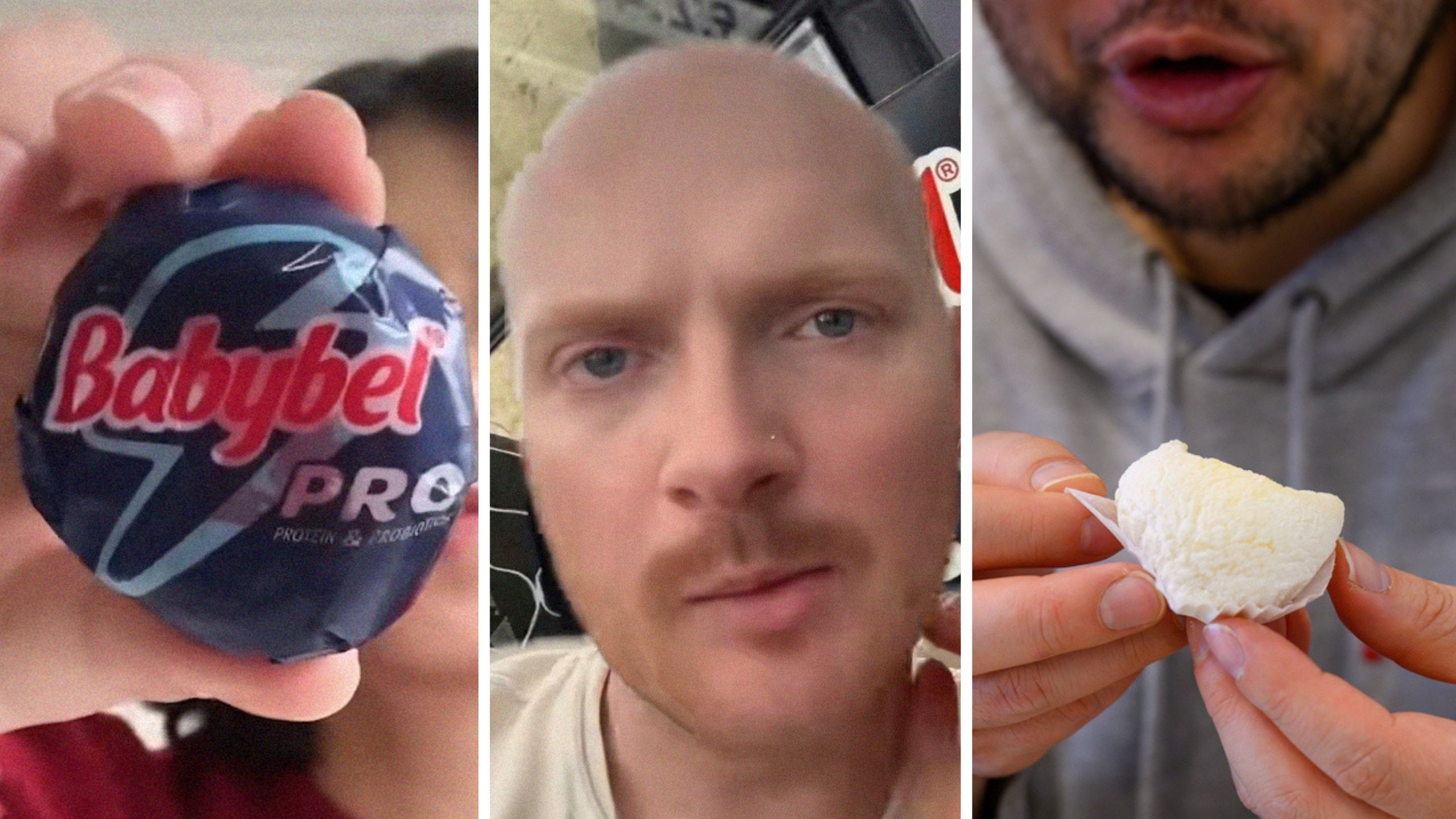
On Aug. 29, a man, TikToker @thebaldestb—-, compared Babybel Protein with the original Mini Babybel and Mini Babybel Light in a video that has amassed 3.9 million views as of Wednesday. “Would you like to see a perfect example of how ridiculous the food and fitness industry has got?” he asked.
Mini Babybel Protein Cheese Snacks
He pointed to the new product and explained its marketing. “It’s called the Babybel Protein,” he said. “It has 26 grams of protein per 100 grams. That’s 5.2 grams per portion.”
The new cheese sits alongside the original Babybel and Babybel Light products. That placement initially made him question how different the protein version really was. “You’d be fair to think this new protein version must be full of protein,” he said.
Babybel markets the product as a pre- or post-workout snack that provides protein. The man then compared the nutritional labels across all three varieties. “The Babybel Protein does indeed boast 5.2 grams of protein per item,” he said. “She’s only 0.8 grams more than an original.”
He also noted an even smaller difference compared with Babybel Light. “It is 0.2 grams of protein more than a light,” he said. “0.2 grams. A fifth of a gram more protein than the one that’s already on the market,” he said.
He argued that the branding makes the difference seem more significant than it actually is. “You can turn it black; you can add a lightning symbol all you want,” he said. “That is bollocks.”
He questioned the broader obsession with adding protein claims to everyday foods. “All I’m saying is the protein pandemic has got us in a chokehold, and I think we all need to calm down,” he said.
Is There An Issue With Bel Branding This Product As High Protein?
Babybel Protein appears to be part of a broader push toward high-protein snacks. Bel introduced the product in the U.K. in May 2025, citing growing consumer demand for protein-rich diets. Bel later confirmed that it launched Babybel Protein in France, the U.K., and the U.S. during 2025.
U.S. law prohibits food labeling that makes false or misleading claims. The FTC also requires advertisers to support objective product claims with evidence. That does not mean Babybel’s marketing qualifies as deceptive. The company can accurately state how much protein the product contains. The question would center on whether its overall presentation creates a materially misleading impression.
Are We Really In A ‘Protein Pandemic?’
Marketing foods around protein has also become increasingly common. Bel itself says Babybel Protein responds to growing demand for higher-protein foods. Brands now regularly add protein-focused messaging to familiar snacks and everyday foods.
The Babybel launch reflects a much larger shift across the food industry. More companies now market everyday foods around their protein content. In 2024, 71% of Americans said they were trying to consume protein, up from 59% in 2022.
That demand has pushed protein beyond traditional shakes and bars. Food manufacturers now promote protein in snacks, cereals, coffee, desserts, and other familiar products. The strategy makes sense for brands because consumers increasingly associate protein with health, muscle building, energy, and weight management. Additionally, Cargill found that 61% of consumers increased their protein intake in 2024.
@thebaldestbitch
BroBible reached out for comment to @thebaldestbitch via TikTok direct message and the TikTok comment section and Bel via email