



iStockphoto
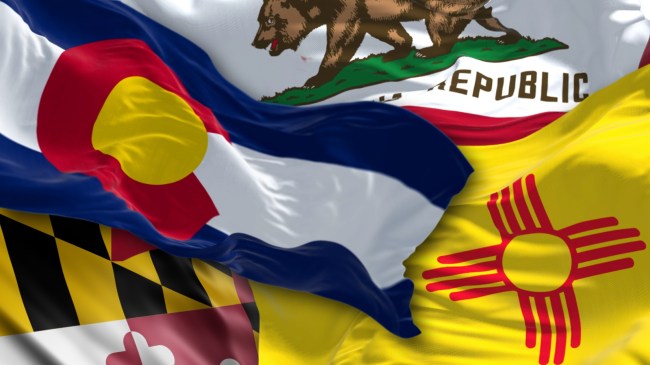
Colorado, California, Maryland, and New Mexico state flags
People across the United States are united by the American flag, but every single state is also represented by one of its own. However, they are not created equal, and there are more than a few that really stand out from the pack.
Here are the origin stories behind the best state flags in America
A number of states used flags and banners to establish an identity before the United States was officially formed (the seal on the one Rhode Island currently uses can be traced all the way back to 1940).
The original American flag was designed in 1775, and most states have had at least a couple of versions they’ve flown alongside the stars and stripes over the course of their history. Most of them are pretty underwhelming when it comes to their aesthetic appeal, but there are certainly some exceptions to that rule.
Before I dive in, I’d like to acknowledge that I’m probably angering countless Texans by failing to include the Lone Star State on this list, but I just call it like I see it.
Maryland
iStockphoto
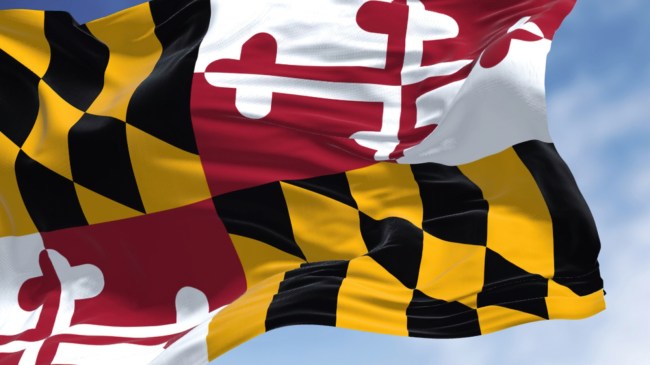
Maryland state flag
I’m not listing these in any particular order, but if I were, Maryland would probably be taking the top spot.
Maryland became the seventh state in 1788, but it didn’t officially adopt its eye-catching flag until 1904. However, the design was officially unveiled at the Centennial Exposition in Philadelphia in 1876 (although it’s unclear who was responsible for it).
The state flag of Maryland is one of a number with links to the Confederacy, as the two distinct designs can be traced back to banners that were flown during the Civil War.
The yellow and black portion was carried by Union troops and was taken from the coat of arms of George Calvert, the Englishman who served as the Secretary of State under King James I in the 1600s. He was the 1st Baron Baltimore and signed the royal charter that led to the English settling in Maryland, and his title inspired the name of what became its biggest city.
The red and white, on the other hand, was favored by the soldiers from Maryland who fought for the South. It was taken from a coat of arms Calvert inherited when his father married a wealthy heiress from the Crossland family, which lent its name to that banner.
Arizona
iStockphoto
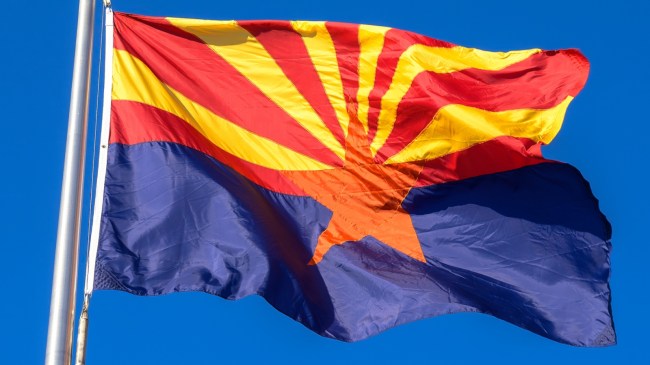
Arizona state flag
I’m going to devote the next four entries to the states that comprise the Four Corners, as it almost seems like they got together at some point and collectively decided they need to whip up some flags that put the rest of the country to shame.
We’ll kick things off with Arizona, which was designed in 1910 by Colonel Charles Harris of the state’s National Guard before it was adopted as the flag in 1917.
The top portion consists of 13 red and yellow rays, with the number being a nod to the original colonies and the colors referencing the flag of Spain, which Francisco Vazquez de Coronado carried into the region in the 1540s during his quest to find El Dorado and the Seven Cities of Gold.
The blue on the bottom half is one of two of the state colors of Arizona (gold being the other), and it is the exact same hue as the blue on the American flag (the same can be said for the red). The star at the center is copper, which is a nod to the state’s status as the country’s largest producer of that particular precious metal.
New Mexico
iStockphoto
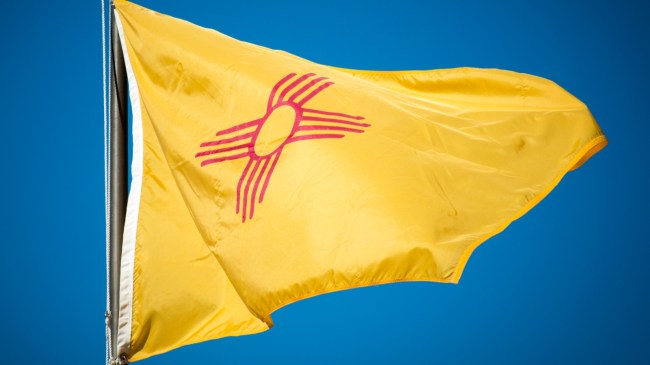
Next up, we have Arizona’s neighbor to the east: New Mexico, which shares a couple of colors with Maryland but sits on the opposite end of the spectrum when it comes to complexity.
New Mexico initially adopted what was known as the “Twitchell flag” in 1915, an absolute monstrosity that was mercifully replaced after the state’s chapter of the Daughters of the American Revolution launched a contest for a new one in 1923.
The winner was a Santa Fe resident named Harry Mera, who dreamed up the design that was sewn by his wife, Reba, and officially adopted in 1925. It is brilliant in its simplicity and features a yellow background emblazoned with the sacred red sun symbol used by the indigenous Zia people.
The “Circle of Life” at the center features four rays jutting out from four points, and that number is of particular significance to that culture, representing the distinct seasons, times of day (sunrise, noon, sunset, and night), and stages of life (childhood, youth, adulthood, and old age).
Colorado
iStockphoto
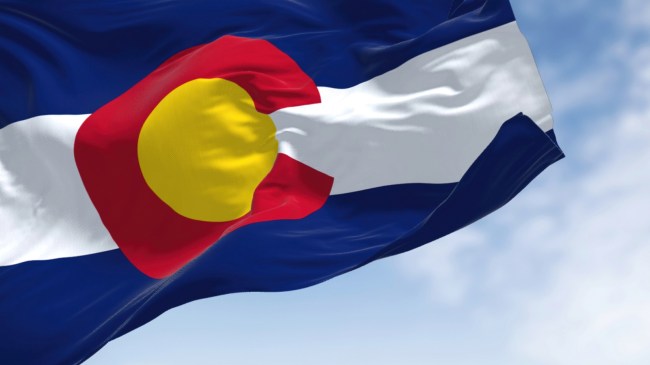
The Outkast song “So Fresh, So Clean” springs to mind whenever I come across the Colorado flag, as it sums up the essence of one that doesn’t really push any boundaries but still manages to stick the landing.
There were a couple of precursors to this flag before the Colorado chapter of the Daughters of the American Revolution put together a design in 1910 that fell a bit flat. An alternative was also floated by a state senator, but it was cast aside after Andrew Carson, the president of the Ohio Society of Colorado, submitted the flag that served as the basis for the current one.
He wasn’t necessarily breaking any new ground with the red, white, and blue motif, with those colors meant to represent the state’s soil, snow, and skies.
However, it all came together with the help of the “C” (which references to the state’s name, Centennial State nickname, and columbine, its official flower), which surrounds the yellow circle signifying the sunshine and its gold mining industry.
That letter was initially smaller and placed on the left of the white stripe between the two blue ones, but it was enlarged for the current design, which has been the standard since 1964.
Utah
iStockphoto
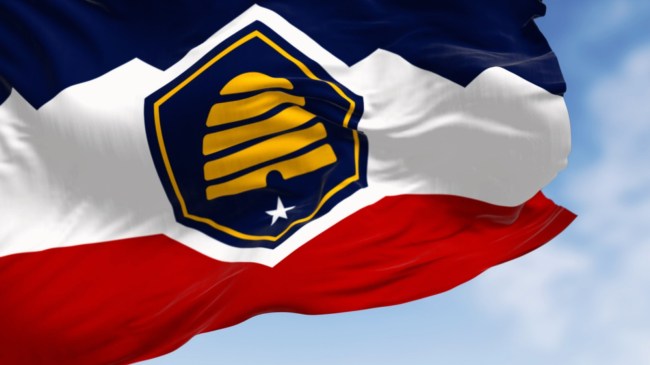
There’s plenty of crossover between Colorado and Utah on the color front, and it’s a bit hard to argue the latter didn’t draw inspiration from its neighbor to the east when you consider this one is a very recent addition that was adopted in 2024.
The Beehive State originally had an objectively mediocre flag inspired by the Great Seal of the United States (which was initially adopted in 1911). A number of state politicians started pushing for a revamp toward the end of the 2010s, and Senator Daniel McCay ultimately commissioned a task force that launched a design contest.
More than 5,700 proposals were submitted, and a number of professional artists harnessed public feedback to hone the final design.
It features a ton of symbolism, including red canyons, white mountains, and blue skies. There’s also a hexagon that surrounds the industrious beehive at the center, which is a nod to the shape of the honeycomb inside it.
Wyoming
iStockphoto
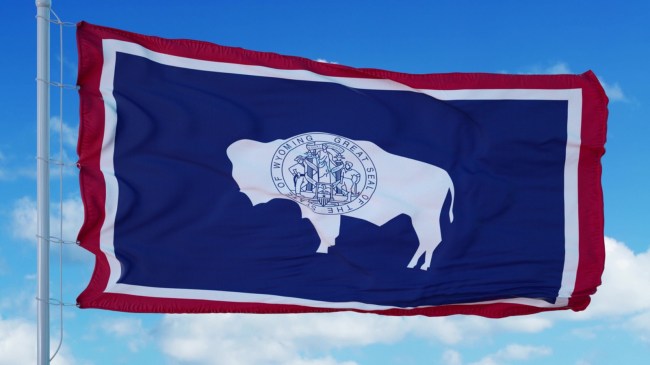
The next two entries on this list prominently feature animals that are (or, in the case of the next one, were) native to the state, which is the case with the bison that sits smack dab in the middle of the state flag for Wyoming.
It turns out the Daughters of the American Revolution were on a big state flag kick in the 1910s, as the ones that ran the chapter in Wyoming dangled a $20 prize to drum up interest for the contest that was held in 1916.
The winner was Verna Keays, who also went the red, white, and blue route (the first a Slightly Problematic nod to Native Americans and the blood of the first pioneers who settled there, the second signifying purity, and the last inspired by the skies and mountains).
However, the main attraction is the bison that’s stamped with the state seal, which has been at the center of the flag since it was adopted in 1917.
California
iStockphoto
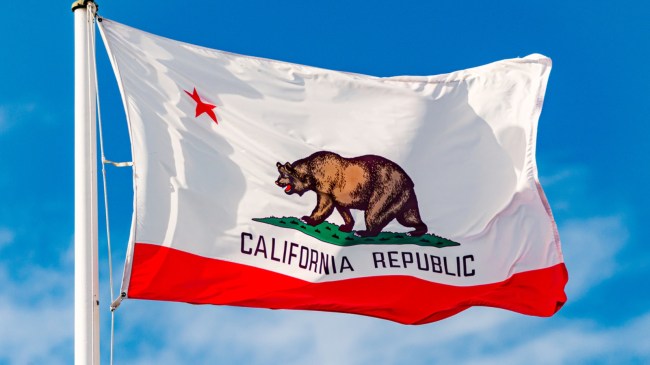
I’d probably rank the state flag of California on a lower tier than the flags I’ve mentioned so far, but I can’t help but include it thanks to its almost rustic charm.
As you may be able to surmise from the “Republic” next to the state’s name, this flag is a relic of a time when California was not, in fact, a state.
The current design can trace its origins back to the one of Peter Storm, who threw a star and one of the grizzly bears that roamed the state at the time on a flag that was raised in Sonoma in 1846 during the revolt that led to the territory breaking away from Mexican rule before joining the United States.
An updated version was adopted in 1911, and it was tweaked for a cleaner look in 1952 to create the version used to this day.
South Carolina
iStockphoto
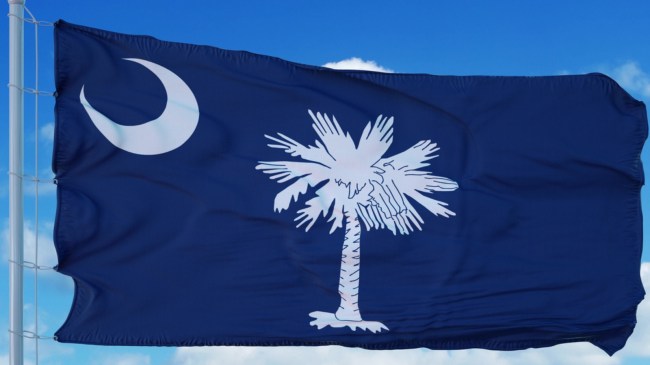
South Carolina’s state flag has a history that stretches back to 1775, which is when Colonel William Moultrie was tapped to concoct a design for troops to carry during the Revolutionary War.
He drew inspiration from their blue uniforms for the background, and the heraldry-derived crescents on their hats were responsible for a white moon in the top left corner emblazoned with “LIBERTY.”
A flag with a palmetto tree and a star was raised when the state found itself butting heads with the federal government over tariffs in the 1830s, and an amalgamation featuring the tree and Moultrie’s crescent was officially adopted in 1861.
South Carolina has struggled to officially standardize the design since then, but it’s pretty obvious which state you’re looking at when you see it.