


Via iStockphoto / @higherupwellness TikTok
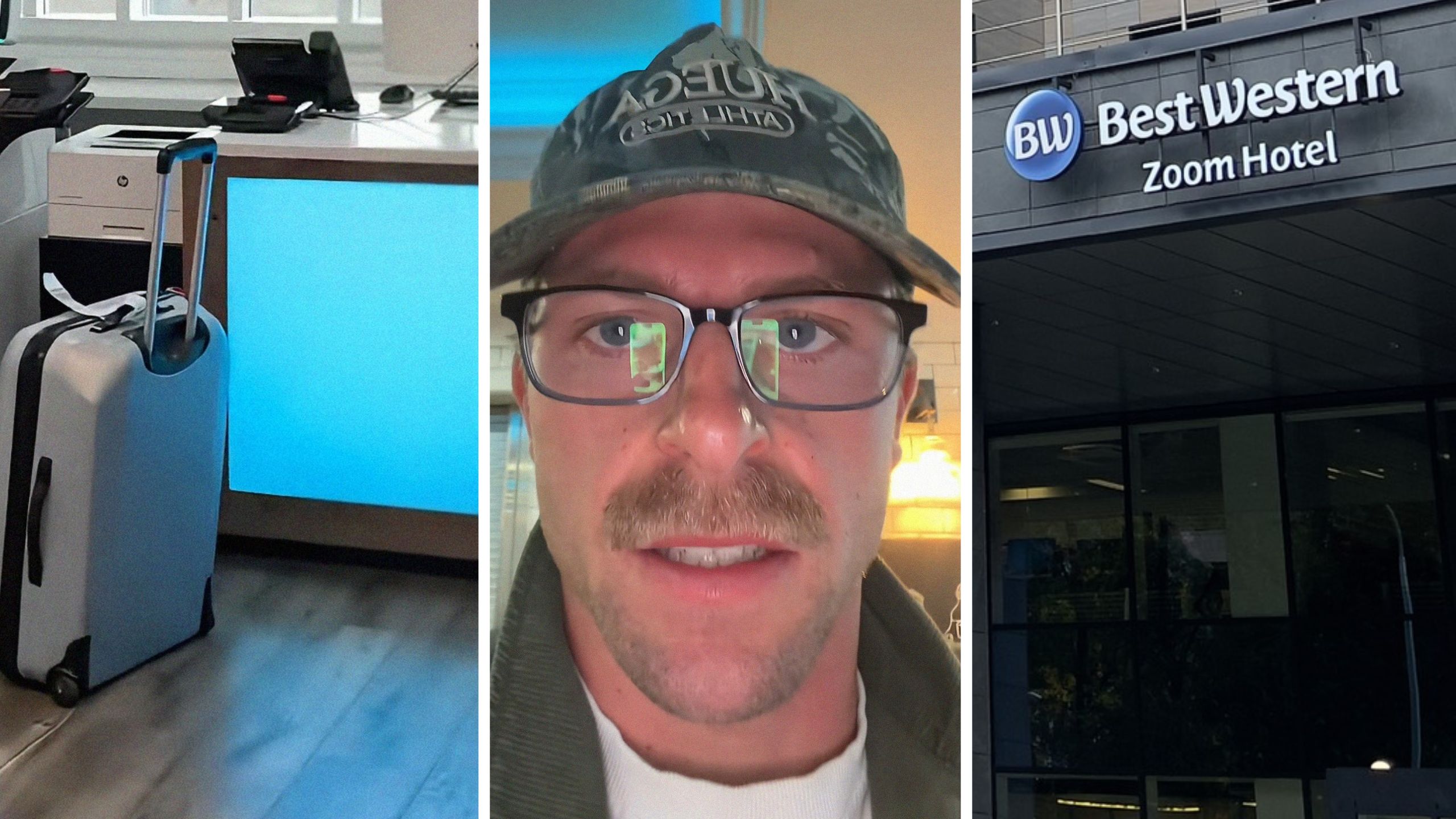
A hotel guest is bewildered after discovering that his Best Western location has customers check in through a video call.
A hotel guest is bewildered after discovering that his Best Western location requires customers to check in through a video call with a remote employee. Viewers are questioning whether this practice is becoming more common.
On Nov. 14, a man documented his Best Western experience in a viral video that has received over 228,000 views as of Wednesday.
“I have never seen some shit like this in my entire life,” he says.
What Was Different About This Best Western?
In a video, the guest documents his unusual check-in experience at a hotel in San Jose, California. Instead of finding a front desk staffed by employees, he encounters a self-service kiosk connected to a remote worker.
“I’m at a hotel in San Jose, and there are no employees,” he says.
The guest explains that he must complete the check-in process over Zoom with an employee who appears to work overseas. “It’s a check-in on Zoom on a kiosk with someone in India, and he’s doing a very poor job,” he adds.
He grows increasingly frustrated as he watches the interaction unfold. “This is so f—— dystopian and weird,” he says. “Like, there’s nobody here. I don’t like this at all.”
The experience leaves him wondering whether remote hotel check-ins have become standard practice in Northern California. “Is this normal in California?” he asks.
People Feel The Same Way
Overwhelmingly, the comments echoed the customer’s frustration.
“We’ve gotta bring back human connection, this is insane,” wrote one commenter.
“Just walk away…. If they lose 90% of their business, they’ll go back to the original model,” commented another.
“The day I encounter this myself, I will never come back to a Best Western or a Best Western Plus,” added a third.
Is Remote Hotel Check-In Becoming More Common?
The practice reflects a broader shift toward hotel automation, but fully remote front desks remain less established than self-service kiosks.
Hotels increasingly use technology to reduce staffing costs, shorten check-in lines, and manage routine guest interactions. These properties often operate with tighter profit margins.
Staffing shortages also contribute to the shift. A November 2026 hospitality industry briefing reports that more than half of surveyed U.S. hotels struggle with understaffing. It also estimates that roughly 30% of reservations at hotels offering kiosks now use them.
However, hotels using self-service kiosks do not necessarily eliminate their physical front desks. The San Jose incident represents a more extreme version of automation that replaces an in-person receptionist with an employee working remotely.
And it isn’t the first time guests have encountered the arrangement. In August 2025, a video showing a similar setup at a La Quinta Inn in Sunrise, Florida, went viral. The hotel connected guests to a remote receptionist through a video screen.
The practice has also drawn attention from travel publications. Frommer’s investigated the La Quinta incident and found that the company had not approved the technology. Wyndham Hotels & Resorts told the publication that its brand standards require an employee to remain physically stationed at the front desk. The company also said the franchisee agreed to remove the kiosk.
Brobible reached out to @higherupwellness via TikTok direct message and the TikTok comment section, and to Best Western via email.