



A cocktail recipe was supposedly lost for decades and faded into obscurity. Then the recipe suddenly gained notoriety during a cocktail renaissance. Here’s when it made a comeback and why one bartender thinks people should try the Boulevardier.
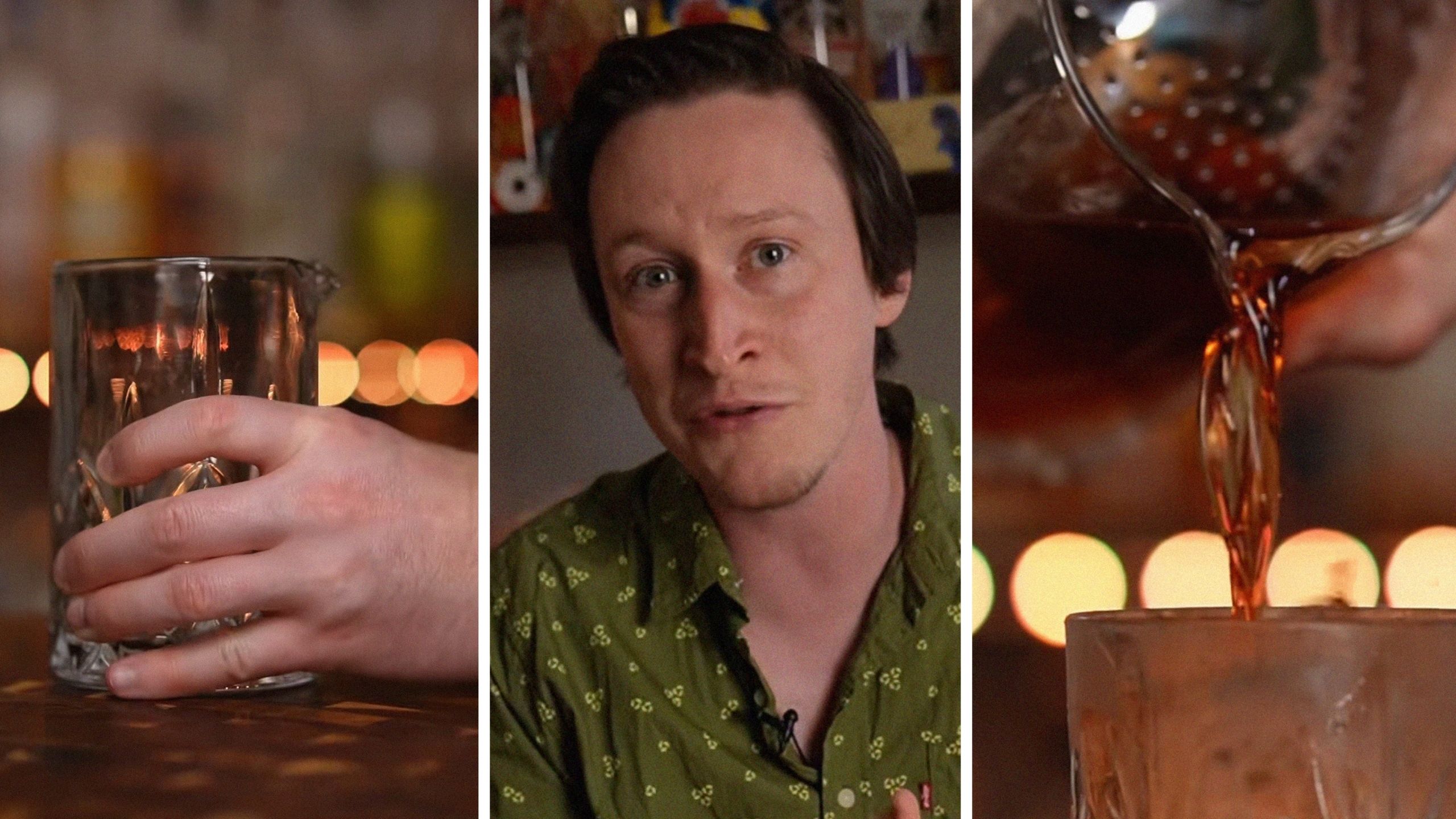
Drink Deeper (@drink.deeper), a “cocktail storyteller,” posted a video that received more than 45,000 views. In it, he tells the story of the Boulevardier, a classic cocktail that typically contains three ingredients in a simple ratio: one-third Campari, one-third Italian vermouth, and one-third bourbon whiskey.
The Boulevardier
Drink Deeper, who posts a variety of cocktails on his account, digs into the history of the Boulevardier and paints a picture of its forgotten origin story.
The storyteller begins describing the height of the Prohibition era.
“Its origins actually go all the way back to the Roaring ’20s when the 18th Amendment had just launched Prohibition into full swing,” he says. The content creator recalls that historically, the Roaring ‘20s failed to stop people from drinking. Rather, it led to many Americans fleeing to Paris during the Années folles.
Then he discusses the drink’s creator, Erskine Gwynne, whom he says was “a descendant of the Vanderbilt family, who found himself joining the likes of F. Scott Fitzgerald and Ernest Hemingway as yet another author fleeing to the global center for the arts, Paris.”
Drink Deeper says that the very first mention of the drink came about through a connection. Gwynne, who was the creator of a literary magazine called Le Boulevardier, met a man named Harry McElhone. McElhone was providing drink recipes for a book called “Barflies and Cocktails.” According to some sources, that’s a part of the reason why the recipe bled into ink.
In reality, McElhone didn’t write the section about Gwynne’s cocktail. Rather, the book’s writer, Arthur Moss, included the recipe in a section of the publication called “Cocktails Round Town.” Moss was the editor for Gwynne’s literary magazine, thus establishing how the recipe may have captured a page in “Barflies and Cocktails.”
The Boulevardier’s Slow Rise
Gwynne was a New York-born writer who lived in Paris for a large portion of his life. Just as Drink Deeper described, he was related to the famed Vanderbilts and made a name for himself with his literary magazine, “Le Boulevardier,” which published from 1927 to 1932.
The drink didn’t gain popularity after it was mentioned in “Barflies and Cocktails.” Instead, it prematurely faded out of memory and slipped in and out of cocktail guides for decades. Scant descriptions of the same drink appeared in publications in the ‘30s. Bar Vademecum reports one recipe for the cocktail appearing in a book in the ‘40s, with a few popping up in the ‘50s, ‘60s, and ‘70s. But from then on, there’s little mention of the cocktail.
Despite the slow crawl toward fame, the cocktail hit a stride in the late 2000s. Bar Vademecum credits Ted Haigh’s “Vintage Spirits and Forgotten Cocktails” as the contemporary publication that reintroduced the drink during the cocktail renaissance. It gained traction quickly. In 2014, The New York Times even wrote an article on the cocktail’s resurgence, mentioning that it appeared on menus in cities and states across the country.
Is The Cocktail Any Good?
Even though there’s deep history surrounding this forgotten bourbon-based cocktail, it raises the question: Is it even worth trying?
Drink Deeper argues it is. In his video, he told his audience that “It is strong, it’s herbal, and it’s sweet without being too sweet thanks to that bitterness from the Campari. I mean, Erskine, he truly created a masterpiece with this one, so I’ve gotta rate it a 7.5.”
For some viewers, the 7.5 score seemed low considering the cocktail was a supposed “masterpiece.” In the comment section, viewers joked about the low score. Drink Deeper simply said, “I’m a tough critic.”
In a response to BroBible, Drink Deeper shared how he came across the Boulevardier’s backstory.
UPDATE: “I love the drink so I want to understand where it came from. And I feel grateful that people are interested in the stories I find when I fall down these cocktail rabbit holes. But I’m also a big history buff so I’m always happy to find a reason to dig into the past,” he shared. “Though much of my historical knowledge is through the lens of alcoholic beverages because I find their story to be especially compelling. It’s basically the story of human civilization and how it has evolved. It’s funny – I could probably list more cocktails people were drinking during the Civil War than actual battles.”
When it came to his 7.5 score, Drink Deeper added, “Nothing will beat a good Old Fashioned for me but the Boulevardier gets close. And, for me, it’s not so much about the score because that’s honestly not very useful information for people. Why should you care what some guy on the internet thinks of the cocktail?”
@drink.deeper This Cocktail Was Lost For 80 Years #cocktails #history negroni #fyp