



via California Department of Fish and Wildlife's Post
Another Southern California poaching bust, another round of cite-and-release.
A few weeks ago, it was six guys and a baby stroller full of poached lobster at the Santa Monica Pier.
This week it’s the Palos Verdes coastline, where California Department of Fish and Wildlife officers made two separate poaching cases in a single late-night patrol earlier in July.
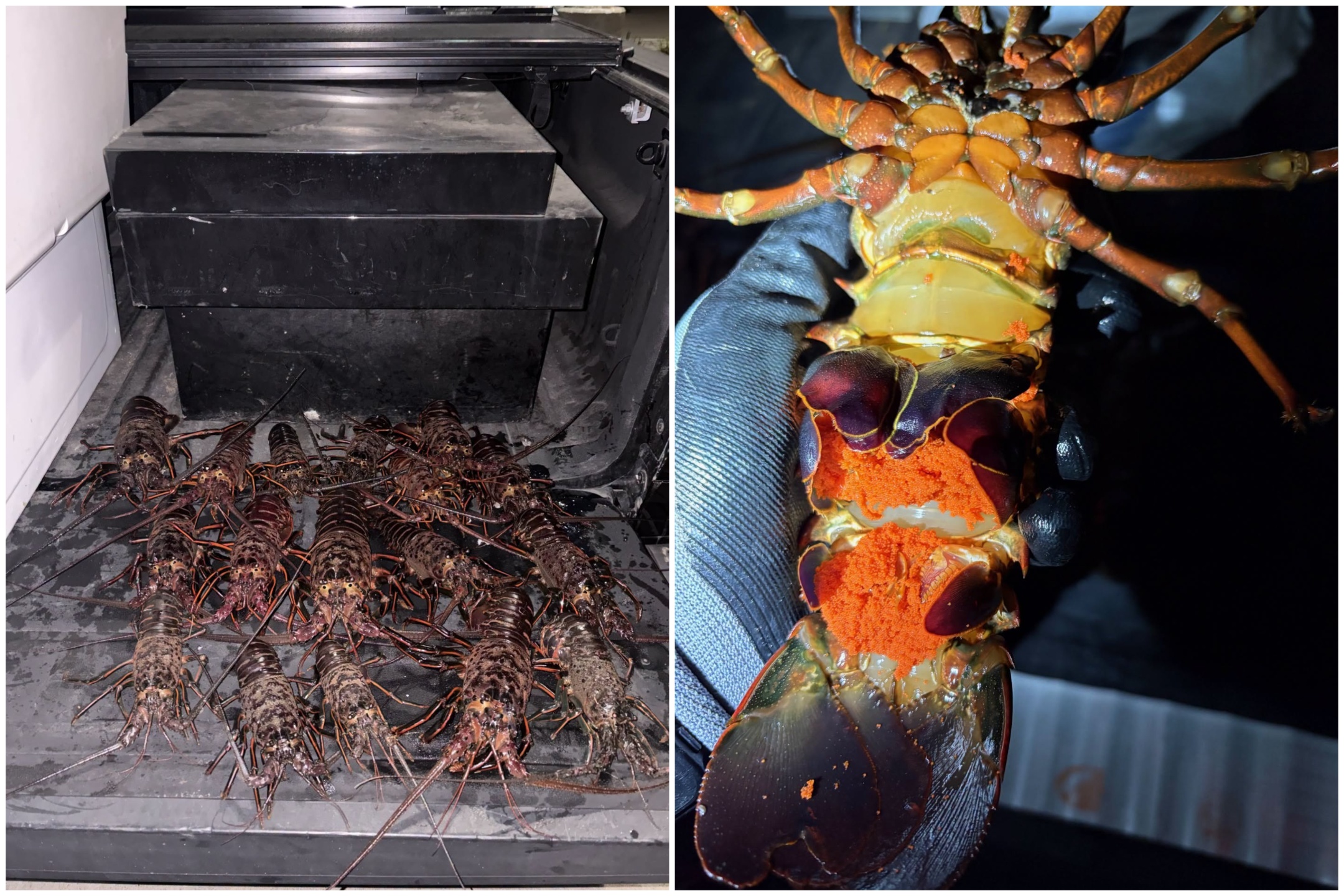
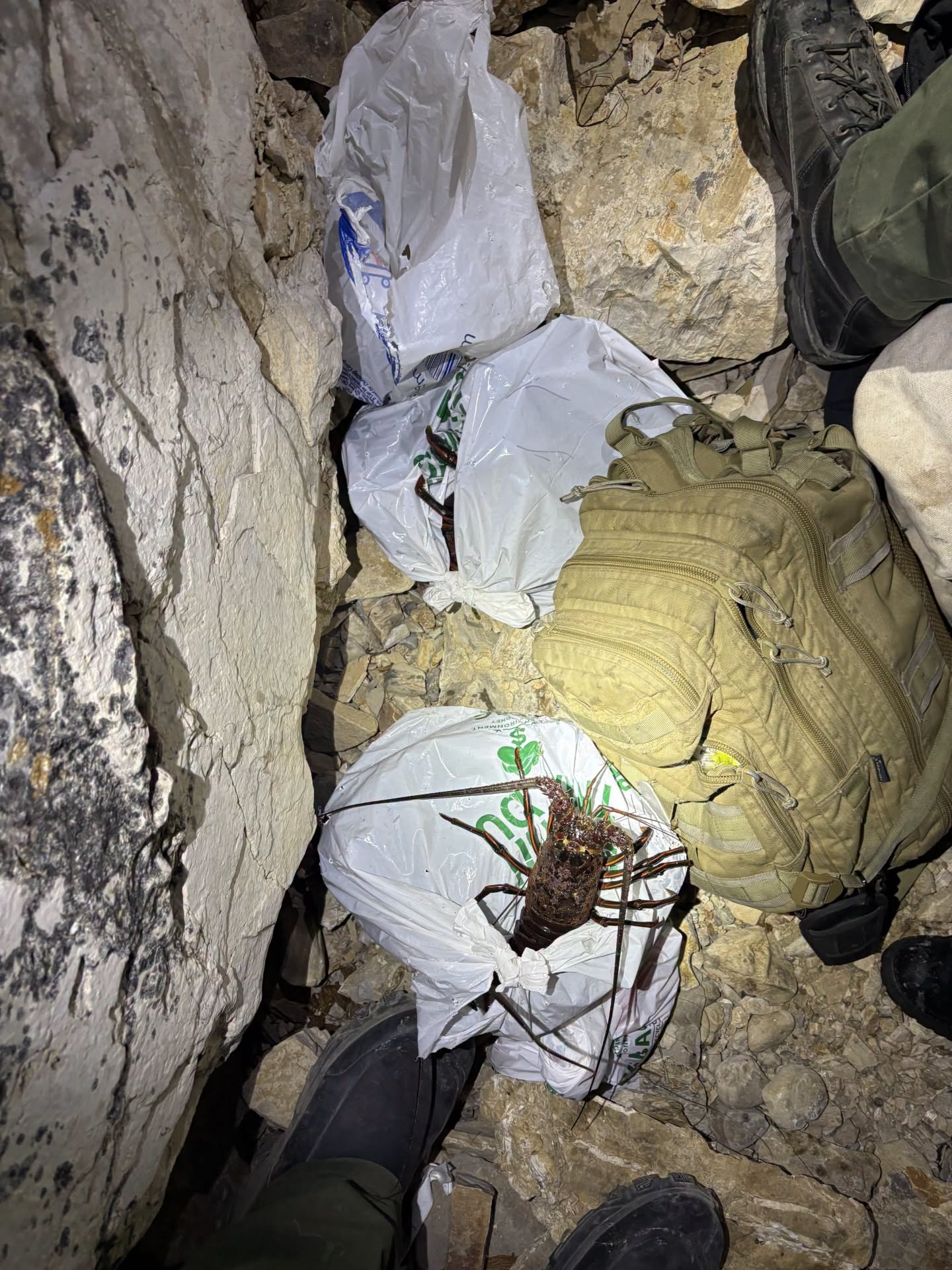
In the first, officers watched three men pull five spiny lobsters out of the water during the closed season. In the second, two more were working a remote stretch of coast: one had three lobsters on him, the other had nine, sealed in bags and hidden in the rocks. Several were egg-bearing females. When officers searched the rocks, they found lobster eggs scattered everywhere.
California Department of Fish and Wildlife's Post
This is an important detail. A single female spiny lobster can carry up to 800,000 eggs, which is the whole reason the season closes from March until early October. Pull a female in July and you’re potentially robbing California’s coastal waters of hundreds of thousands of new lobsters to keep the fishery sustainable.
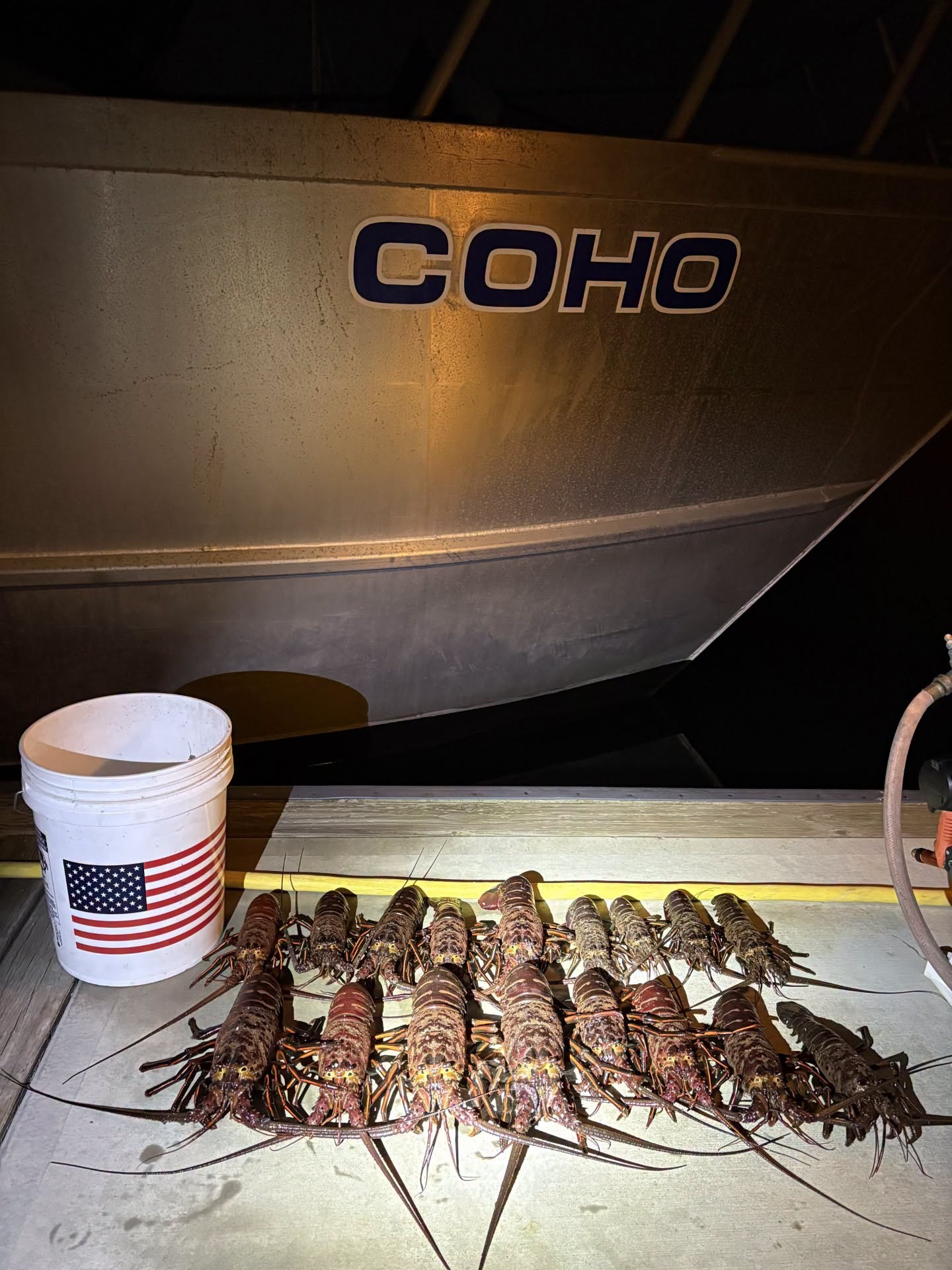
According to a Facebook post from CDFW, officers arrested all five and seized seventeen lobsters, returning every one of them to the ocean alive. Then everyone got cited and released, which is where the CDFW’s Facebook post turned into a referendum on the justice system when it comes to illegal seafood poaching. The top complaint was close to unanimous: a citation is a joke. Commenters wanted trucks confiscated, fines that hurt, jail time, names and faces posted.
Nine lobsters, though, is a couple of dinners. A few hundred bucks slipped to someone who knows someone. That’s a guy who wanted free surf and turf and treated the closed season as optional. The 236-lobster truck hauls, like the San Pedro bust last year, are the actual commercial machine, the stuff that feeds the export market to China. California law can barely tell the two apart.
Both get charged out of the same misdemeanor box.
via California Department of Fish and Wildlife's Post
And the wardens are the wrong thing for the comment section mobs to be mad at. A citation is what the code hands them for a first-time recreational violation; the fine and the jail time get decided later by a judge. A few hundred field wardens cover 1,100 miles of California coast, which is why these busts feel like whack-a-mole, and they almost certainly are.
The seventeen lobsters from Palos Verdes are back in the water, and the eggs on the rocks are gone.
You can put a lobster back. You can’t put back the season it was going to make.
See it happening? CDFW’s CalTIP line runs 24/7 at 888-334-2258.