



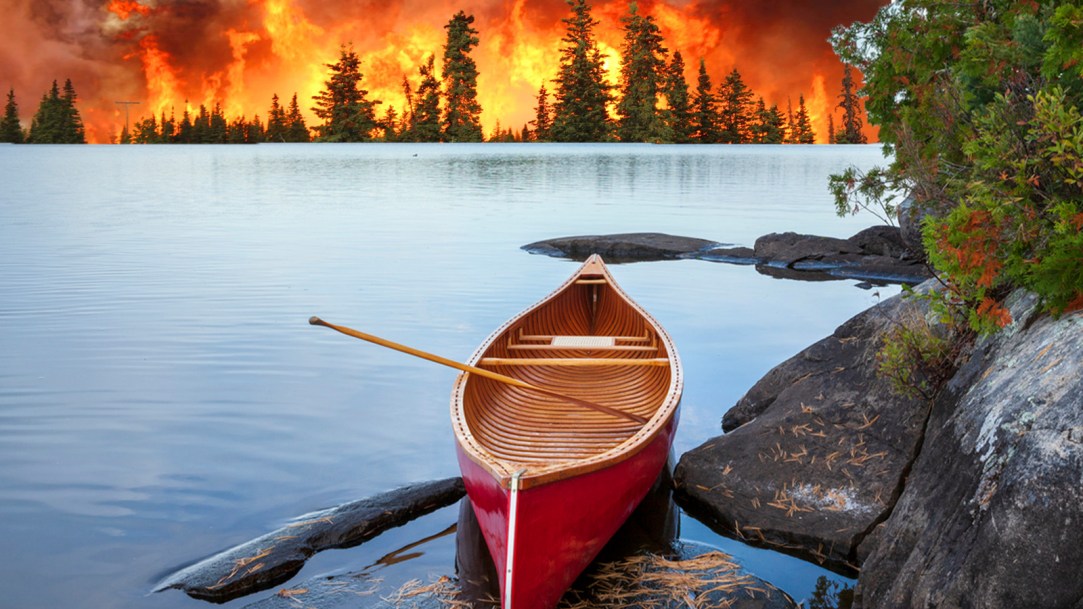
YMCA Camp Widjiwagan was forced to evacuate its campers as large wildfires continue to burn across northern Minnesota. Counselors at the wilderness camp also decided to sink their historic canoes in a brilliant effort for preservation.
They hope it will not be necessary.
As of this writing, it is unknown how long the camp will be closed. However, the raging wildfires remain active near the Canada border so it may not be safe to reopen for quite some time.
Camp Widjiwagan had to shut down due to the Minnesota fires.
Founded in 1929, Camp Widjiwagan is located on Burntside Lake near Ely, Minnesota. Its mission is to “develop, in young people, respect for self, community, and the environment, through wilderness adventure and environmental education.”
The YMCA-affiliated summer camp is located less than 15 miles from the ‘Camp Fire’ in Fall Lake Township. The fire has burned approximately 4,500 acres over the last few weeks. Crews continue to battle the flames.
As a result, Camp Widjiwagan was forced to evacuate on July 15. Although it did not reach ‘Go’ status in the ‘Ready, Set, Go’ wildfire protocols, the YMCA’s Emergency Action Plans require camps to start evacuating once they’re designated ‘Set’ status as a precaution. About 70 to 80 families and campers were affected. They are all safe.
“The most important update is that everyone is safe. The majority of campers are currently evacuating, and we’re grateful for the preparation and teamwork that have made the process smooth and orderly. We’re connecting directly with families with additional details.”
The decision was made, in large part, because of poor air quality. The nearby fires continue to blanket the entire region with a thick layer of smoke and one small shift in the direction of the wind could send the flames right toward the camp. It is not safe.
Historic canoes are submerged in the lake.
Although Camp Widjiwagan is not currently in the direct line of the fires, the staff decided to take extra steps to protect its fleet of canoes by sinking them in the lake. 19 historic boats were weighed down with boulders and submerged.
Each boat was turned on its side and allowed to fill with water. Each sunken canoe was then weighed down by two boulders in the stern and two in the bow. They were then tied together and tied to the shore.
This way, should the fire turn toward the camp, its canoes cannot be touched by the flames. The boats are underwater.
Why bother? The wooden frame of each canoe was hand-sawed by renowned canoe-maker Joe Seliga before the canvas is stretched over them. Some of them are predate World War II. The fleet is a part of history.
Campers are specifically instructed that no wooden canoe’s canvas hull can touch rock or sand. Each canoe is numbered and tracked throughout the summer. They are symbols of the past. They hold great sentimental value for the camp and for the archives.
By sinking the canoes, they are protected. Counselors will remove them from the lake when the time comes for a safe return.