



Via iStockphoto / @diegotown TikTok
This one cat owner swears that when they’re not around, their cat can talk. And they seem to have caught it on camera.
Pet owners—whether they have a dog, cat, turtle, or anything else—talk to their animals constantly, never expecting an answer back beyond a bark or a snuggle. But this one cat owner swears that when they’re not around, their cat can talk, and they seem to have caught it on camera. Do you believe it, or do you think it’s just a coincidence?
In a viral video with more than 855,000 views, report account @diegotown shared a clip that has turned some people into true believers, validated others, and brought out the skeptics.
“Am I going crazy or did I catch my cat speaking English!?” the text overlay on the video reads.
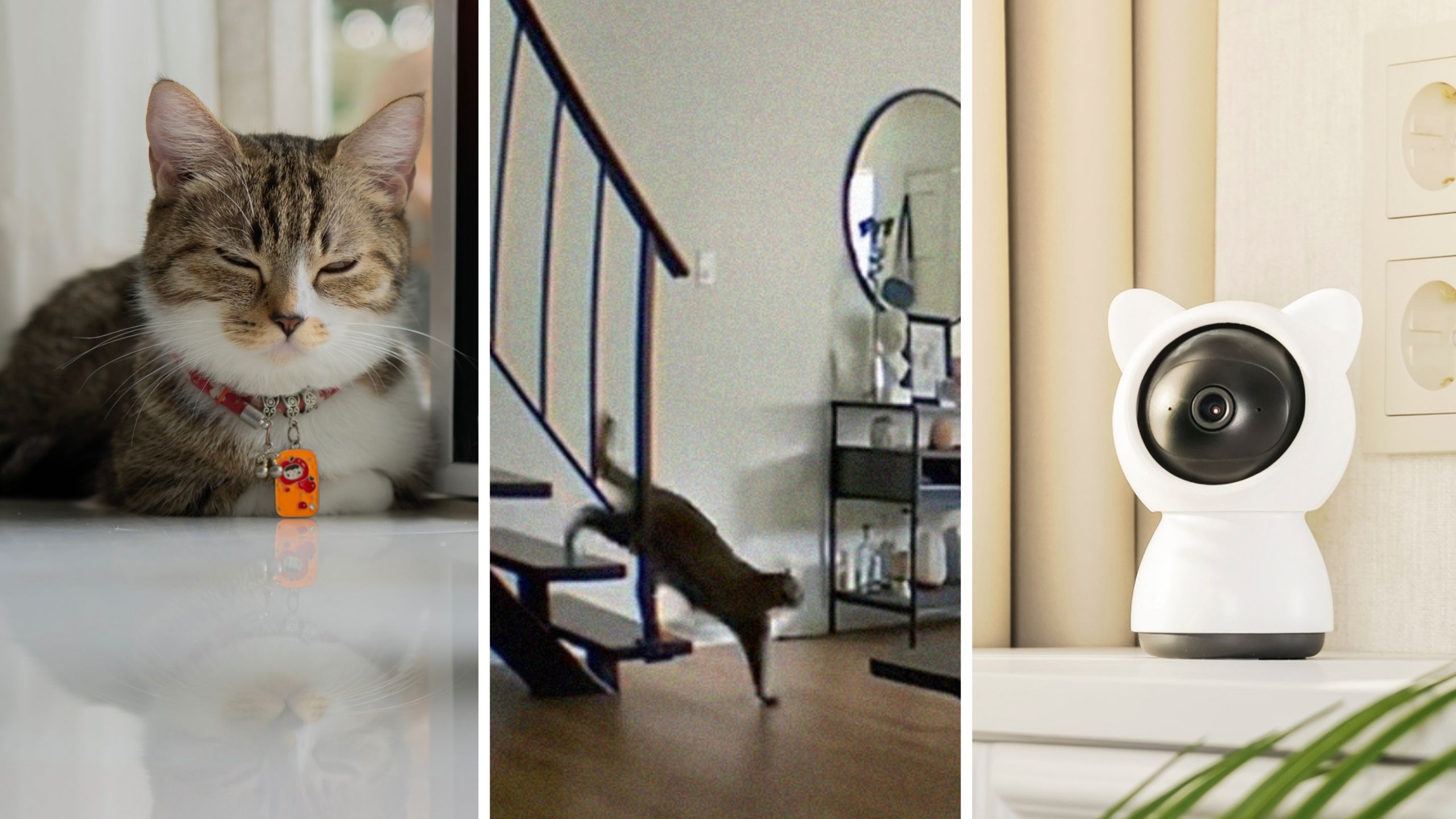
The footage appears to be from another creator’s home security camera. In it, you see what appears to be a grey cat coming down a staircase. When the cat gets down to the living room, its meow sounds distinctly like it’s saying, “Mom, where are you? Mom?”
Can Cats Mimic Human Speech?
Short answer: Not really, no matter how convincing a clip sounds.
Cats are capable of roughly 21 different vocalizations, but these are simple expressions of states like pain, pleasure, or need, not language in the human sense, AdoptAPet explains.
Cats also don’t combine sounds the way humans combine phonemes into words, and their vocal cords aren’t physically built for it.
“Physically, their vocal cords are not suited for the breadth of sounds we classify as speech,” pet behavior expert Josh Wiesenfeld told the outlet. “Although they can produce a wide variety of utterances, they lack the physical structure necessary for articulate speech.”
As for viral clips where a cat seems to clearly say something, AdoptAPet points to a few likely explanations: audio editing before posting or simple priming—if a viewer already expects to hear a specific phrase (because someone said it moments before in the video or because the caption told them what to listen for), it becomes much easier for an ambiguous sound to click into place as that phrase once they know what to listen for.
Types Of Meows And What They Actually Mean
Adult cats meow almost exclusively to communicate with humans, not other cats. It’s a vocalization that starts in kittenhood as a way to call for their mother. And cats that live with humans never really grow out of it, according to Modern Cat.
A few of the most common sounds and what they tend to signal:
- Standard meow: Generally a request for something like attention, food, or access to a room. Though it can also just be a “welcome home” greeting.
- Rapid-fire meows: A more urgent version, essentially saying “pay attention to me right now.”
- Long, drawn-out “meowww”: Often signals worry, annoyance, or objection to something.
- High-pitched meow: Usually indicates surprise, pain, or distress; it can sound almost like a yelp.
- Chirps and trills: Learned in kittenhood, these bird-like sounds were originally used by mother cats to tell kittens to follow her. Adult cats may use them to get an owner’s attention or show excitement.
- Chatter: The teeth-chattering sound cats make watching birds or squirrels through a window, thought to reflect predatory excitement mixed with frustration at not being able to reach the prey.
- Yowl: A longer, moaning sound tied to worry, territorial issues, mating, or general discomfort.
- Hiss or growl: A clear warning sign that a cat feels threatened, usually paired with defensive body language, like an arched back or flattened ears.
Some breeds tend to be chattier than others. Cats of Asian origin like Siamese, Bengal, and Turkish Van breeds are generally more vocal, while Persians, Russian Blues, and Maine Coons tend to be quieter. Though individual personality can override the general pattern.
Experts group cat vocalizations into four broader categories: murmur patterns (purrs and trills), vowel patterns (meows and their variations), articulated patterns (chirps and chattering tied to frustration), and strained intensity patterns (warnings like hisses and growls), according to The Spruce Pets.
Note that sudden or excessive meowing that’s new for a cat can be a sign of an actual health issue (like pain, thyroid problems, kidney or heart issues, or cognitive decline in older cats), so a vet visit is worth ruling that out before assuming it’s just a demanding cat being a demanding cat.
‘I Swear I’ve Heard Them’
The comments were full of people insisting they heard the exact same thing, along with others sharing their own stories and experiences.
“Cats meow to mimick human talking, some cats are just really good at it. They understand English so I suppose the ones that can meow really good could speak it. Merv the cat does it really well,” a top comment read.
“They do talk I swear I’ve heard them no one ever believes me,” a person said.
“You can never leave that poor baby alone again,” another wrote.
“Yes, my Russian blue, says good morning mom,” a commenter shared.
BroBible reached out to @diegotown via TikTok direct message and comment. We’ll be sure to update this if she responds.