


Robert Hanashiro / USA TODAY NETWORK
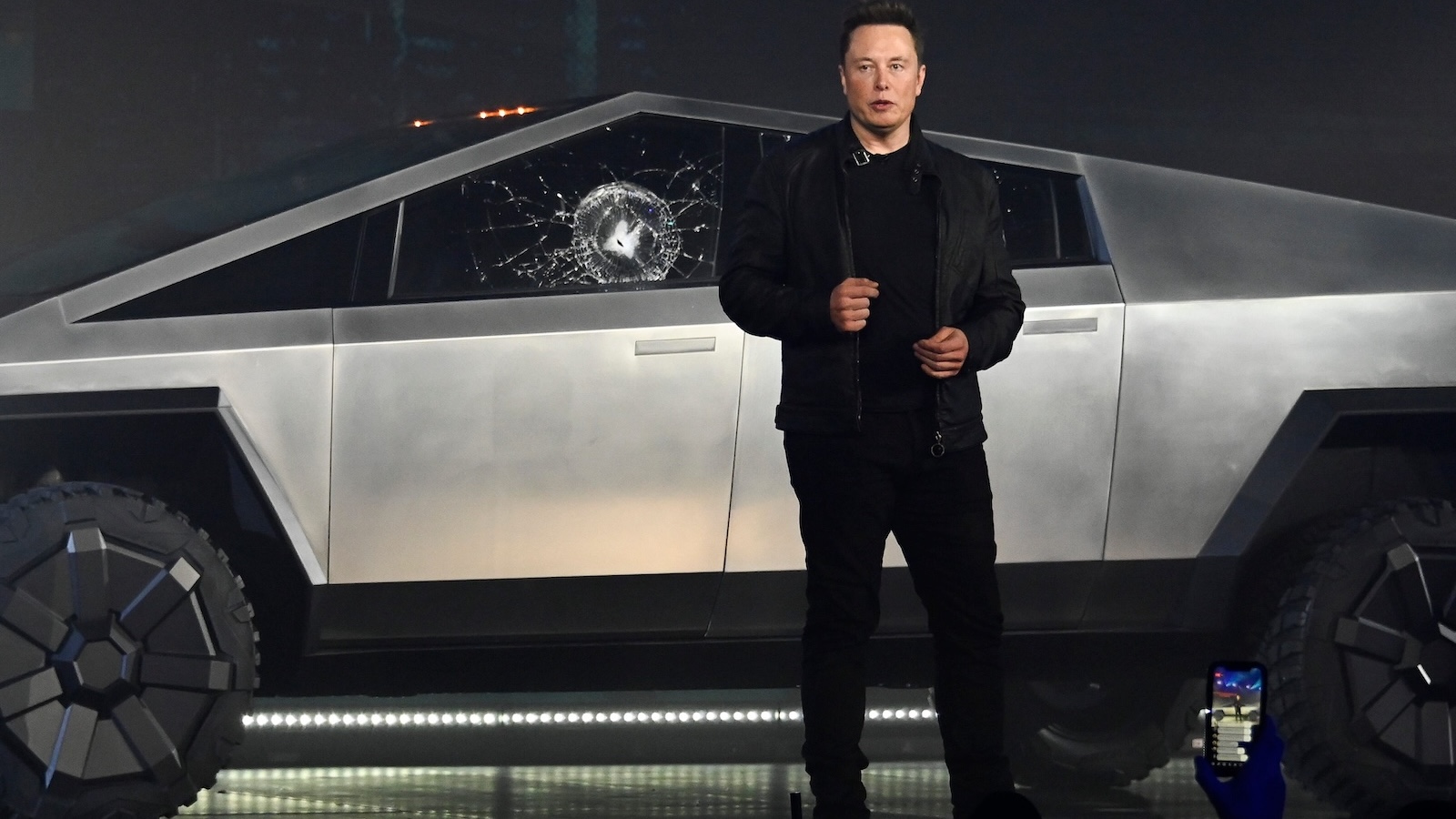
Elon Musk announced Tesla is scaling back production of Cybertrucks
Not that it matters to the world’s first trillionaire — whatever that actually means — but it’s been an expensive week for Elon Musk. Not only did he flush $450 million — including a reported $224 million in Texas — down the toilet during this recent election cycle, but he essentially admitted defeat on one of his highest-profile pet projects, Tesla’s much-maligned Cybertruck.
Despite the fact that Elon Musk spent years pitching the Cybertruck as the future of the pickup truck, the 55-year-old South African tech oligarch announced on Friday, November 6, that Tesla will wind down Cybertruck production at its Texas factory around the middle of 2027 to make room for more Cybercab robotaxis.
Elon Musk says Tesla will wind down Cybertruck production in Texas in mid-2027
In a post on social media, Musk said the company was making the change “to make room for increased Cybercab production.”
Tesla will be winding down production of the Cybertruck at Gigafactory Texas around the middle of next year to make room for increased Cybercab production
— Elon Musk (@elonmusk) November 6, 2026
While Musk specifically referred to production at Gigafactory Texas — thus making it unclear whether production could move elsewhere or end entirely — Austin is Tesla’s only known facility equipped to manufacture the truck’s specialized components.
Either way, it signals a remarkable retreat for a vehicle that only began customer deliveries in 2023. That is a long way from the 250,000 annual sales Musk had predicted around the start of production.
Yahoo Finance reported that cumulative sales since launch were only around 71,000, citing Cox Automotive’s Kelley Blue Book estimates. The outlet also noted that the original promises of a starting price below $40,000 and as much as 500 miles of range for the top model never materialized. Kelley Blue Book estimates also put U.S. Cybertruck sales at 20,237 in 2025, down 48% from 38,965 in 2024.
Now, Tesla is directing that factory capacity toward the Cybercab, a vehicle designed without a steering wheel or pedals and central to Musk’s ambitions for an autonomous ride-hailing business.
The shift follows Tesla’s decision to end Model S and Model X production and use their Fremont factory space for Optimus humanoid robots. Whether robotaxis and robots ultimately deliver on Musk’s expectations to a greater extent than the Cybertruck remains to be seen.