



Across the United States, municipalities are seeing the construction of numerous massive data centers.
While these data centers are often advertised as being beneficial for the local community, there’s not a lot of evidence to suggest this is actually the case. Brookings notes that data centers don’t bring in as many local jobs as industry advocates claim, with many estimates overstating their effect by a factor of three.
Not only that, but many locals report negative effects of data centers. This can include reduced property values, noise and light pollution, and even making their water supply unusable.
Still, some local governments are seeing the proposed financial benefits of data centers and are incentivizing companies to build. One way they’re doing this is by increasing their electrical capacity—and, as one TikTok user recently learned, bulldozing homes to do so.
What Happened To This Woman’s Home?
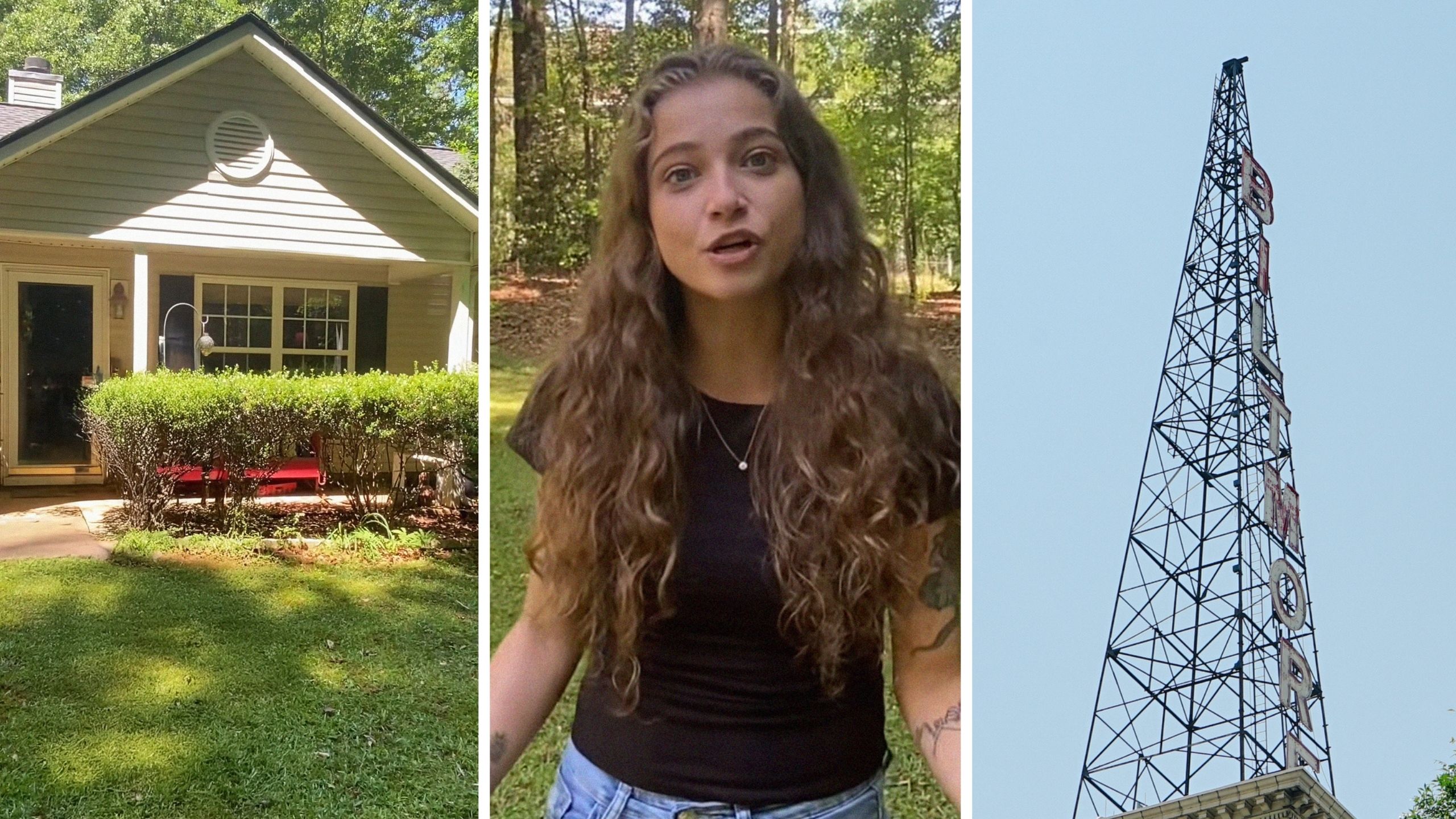
In a video with over 2.7 million views, TikTok user Ansley Brown (@ansleysgarden) explains that her mother may need to say goodbye to the home she’s owned for over 20 years.
The reason? Coweta County, Georgia, is building a massive data center. To do this, they need to increase electrical capacity—and to do that, Georgia Power needs to get rid of some houses that are in the way of their plans.
“My childhood home is being taken by Georgia Power. They are going to bulldoze this entire property to the ground. We don’t have a choice in this,” she explains. “They are going to be expanding these power lines. Why? For the data centers. All of this is for the data centers.”
In a follow-up video, she explains that the house is being taken via eminent domain. Not only is relocation difficult for her mother, as she has animals and is on a fixed income, but the government’s offer on the home was lower than the recent selling price of a nearby home. Furthermore, Brown says that her mother simply doesn’t want to leave.
“It doesn’t matter. My mom doesn’t wanna move,” Brown declares. “Why should she have to? She’s owned her house since 2002. 2002! We’re in 2026, and they’re taking it, demolishing it flat—forever. Gone.”
Is This Really Happening?
So, there are two issues at play here. The first is the construction of a data center; the second is the increase in the changes that must be made to the power grid to accommodate it.
Regarding the first, this appears to be connected to the controversial new Project Sail. This is a data center slated to be built in Coweta County. The proposal for Project Sail is massive: a campus with nine buildings totalling around 4.34 million square feet.
According to Fox 5, the power required for just this data center alone is 900 megawatts. This could power between 360,000 and 810,000 homes, depending on the season and type of home.
In December 2025, Georgia Power announced a $16 billion plan to expand its generating capacity by 10 gigawatts over the next five years. According to DeSmog, a company spokesperson claimed that around 80 percent of that new generation capacity will be used to power data centers. That said, the Georgia Power website claims “this project is not being built to serve a specific customer or facility.”
Additionally, Georgia Power appears to be using easements, acquisitions, and eminent domain, taking houses and property from people like Brown’s mother.
Can Georgia Power Do That?
Yes—though residents aren’t going down without a fight.
To start, many residents are challenging the construction of the data center. A group of residents is currently suing the county over its decision to rezone the data center area from “rural” to “industrial,” thus allowing for the development of the data center plan.
Furthermore, others are getting informed on eminent domain and how they can challenge it. According to local outlet The Advance, a meeting was recently held at the First Baptist Church in Lyons, Georgia. This meeting was to inform citizens of their rights in this situation.
In short, in the state of Georgia, Georgia Power may be protected in its actions.
“The law gives a lot of deference to companies like Georgia Power, like Georgia Transmission,” explained Eminent Domain Attorney Jordan Walker, as quoted by The Advance. “These utility companies, semi-private companies, have this ability to condemn [what] is delegated to them through statute under Georgia law … They have the ability, inherently, to take you to court, to sue you, to file a lawsuit against you to get your land for the purposes of the project. That’s called eminent domain.”
Unfortunately, this means there’s likely little residents can do to fully prevent their land from being taken for use to increase electrical capacity. That said, Walker noted that citizens could negotiate, though he advised them to be careful when doing so and fully understand any proposed agreement before signing on.
What Did Georgia Power Say?
In an email, Georgia Power spokesperson Jacob Hawkins provided the following statement:
“The Ashley-Park Wansley line is being developed to serve increased load growth in the area, which may include data centers, new manufacturing and residents, as well as add overall reliability and resiliency for the area. It is not to serve any single customer.
We’re aware of the video you reference. You may not have the latest info here as this content has spread on social media over the last week. Georgia Power has reached agreements with many homeowners on this project, and we are finalizing an agreement with the homeowner in question. More broadly, we have agreements with the majority of the homeowners whose houses need to be acquired for this project and are continuing negotiations with the few remaining properties.
We understand that many of our neighbors may have questions or concerns about our process and we want them to know that, every day as we work to expand and enhance our power grid to serve a growing state, we’re also working to minimize the impact of construction on our communities. Using eminent domain is a last resort for our company and, in fact, comprises less than 1 percent of all of the land transactions each year. In the vast majority of cases, we are able to reach agreements with property owners that fairly compensate them for their property and inconvenience – oftentimes, at prices that are well above market value or with additional terms that benefit the homeowner.
As we negotiate with property owners, it’s important to note that we also must be responsible for investments we make to serve our customers. Paying unreasonable or extremely high prices for easements or properties ultimately increases costs and can lead to higher rates for all customers.”
Commenters Are Shocked
In the comments section, many users believed that this was impossible.
“I don’t understand how that’s legal if you own the property,” a user wrote.
“WHY TF DO WE NEED THIS MANY DATA CENTERS,” another questioned.
“We have GOT to stop using ai,” a third declared.
@ansleysgarden Say no to data centers! This is a longer cut of the video I posted earlier about how GA power is taking my family home and dimolishing it to supply power to the current data center in Fayetteville. #coweta #datacenters #cowetacounty #stopai #fayetteville
BroBible reached out to Brown via email.