



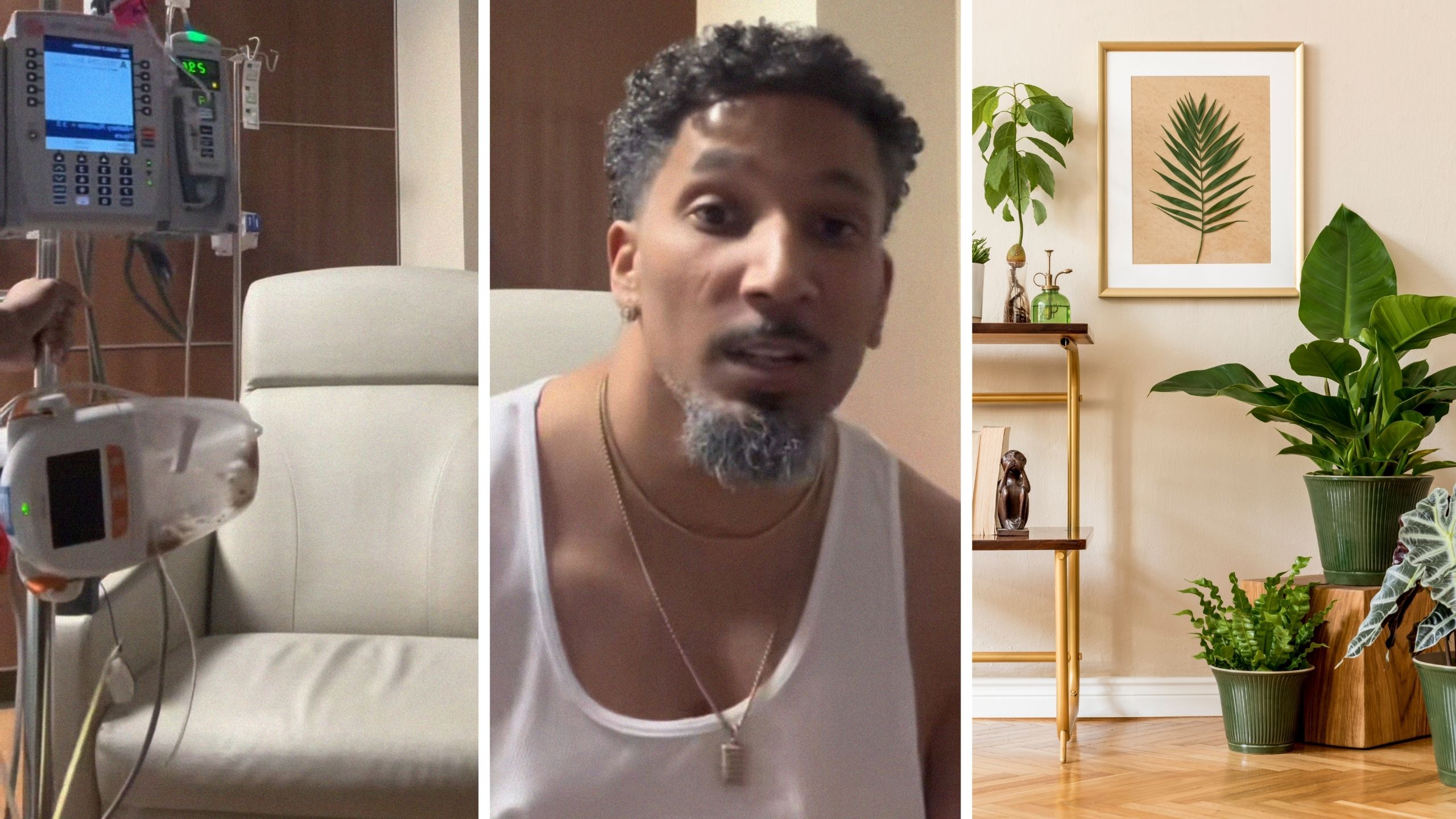
A man has gone viral after sharing that he’s currently waiting for a heart transplant. But the reason he needs one is terrifying viewers—especially those with plants.
Recently, there has been a social media trend based around parodying Netflix true crime documentaries. As part of this trend, people pretend that they’re sitting down for an interview regarding an explosive aspect of their life. For TikToker Clifton Wallace, the topic concerned how he came to have health issues.
In a hospital room with a drip in his arm, Wallace sits down in a chair as intriguing music plays in the background. The on-screen text reads: “Me getting ready for my Netflix documentary on how my 67 plants got me sick and now I have to live in the hospital until I get a heart transplant.”
The video garnered 6.7 million views.
BroBible reached out to Wallace via email.
Plant Owners Are Worried
Numerous other plant-lovers flocked to the comments, horrified by this discovery.
“Hey! Sorry, just a quick question: what the f— do you mean?” one asked.
“What you mean your plants did this!” a second said. “Answer quickly! I have a house full and cancer!”
A third said, “I can’t know this I have chronic OCD and 40 house plants. I will throw them away.”
Sharing a picture of their stacked wall of houseplants, a fourth said, “I’m so unbelievably cooked aren’t I?”
“Sir, Netflix is backed up w years worth of docs,” a fifth remarked. “We ain’t got time to wait. Anxious plant mama and papa’s need the details now.”
@.iamcliffthegift Welp i’m a make this hospital sh*t look good lol And I don’t know where to begin lol but praying that the story has happy ending. #netflix #viral #fyp #fypシ #transplant
Can Plants Really Make You Sick?
We’ve heard a lot about how plants can improve your health. But could it cause the opposite too? In the comments, a lot of people brought up something called Pseudomonas aeruginosa. It is a type of bacteria that thrives in soil, water, and plants, according to the Cleveland Clinic.
In a report, the U.K. government classed Pseudomonas aeruginosa as an “opportunistic” pathogen. This means that it tends to infect and impact people who already have a compromised immune system due to things like cystic fibrosis or cancer treatment.
According to the Centers for Disease Control and Prevention (CDC), this infection can be resistant to antibiotics. This, in turn, makes it more difficult to treat.
A 2o22 study found that “plant-associated” Pseudomonas aeruginosa could potentially harm humans’ health in the same way as clinical strains of it too. Indeed, according to U.K. non-profit Asthma and Lung UK, many hospitals ban flowers in wards because the bacteria can grow in the vase water.
Still, the CDC points out that Pseudomonas aeruginosa more commonly occurs in healthcare settings.
So, while the average person may not be impacted by Pseudomonas aeruginosa, it is important to act cautiously around vase water and soil.