



iStockphoto
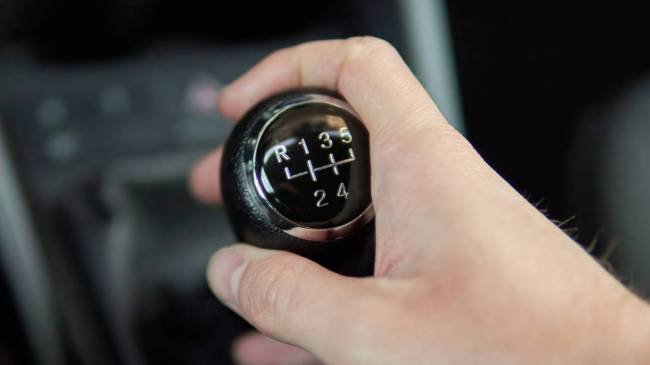
Man holding manual gearbox transmission gear shifter knob handle stick shift
Cars with a manual transmission are a dying breed, and you don’t need to be an automotive expert to know why that’s the case. However, a study suggests you could be doing your brain a favor by hopping behind the wheel of a vehicle with a stick shift.
Carl Benz (the German engineer of Mercedes-Benz fame) is widely credited with the creation of what is considered the first gasoline-powered car: the three-wheel “Patent-Motorwagen” that he drove for the first time in 1886 before he began selling it to members of the public a couple of years later.
That car featured a top speed of just 1o MPH as well as a single gear, but in the 1890s, the French company Panhard et Levassor created the first vehicles with a manual transmission featuring multiple options along with the clutch that was used to switch between them.
That setup was normalized to the point where manuals were referred to as a “standard” long after GM rolled out the first mass-produced cars with an automatic transmission with the Oldsmobiles it introduced in 1940.
However, that is no longer the case, and while manuals tend to be few and far between in this day and age, there is new evidence that suggests people who drive them are giving their brains a workout in the process.
A neurology expert in Japan says driving a stick shift helps boost cognitive function
I highly doubt most people reading this are intimately familiar with Ryuta Kawashima, a neuroscientist who works as a professor at Tohoku University in Japan. However, you may be if you’ve played the Brain Age video games that were made for various Nintendo consoles, which he helped design in a quest to improve the mental function of people who play them.
According to CarScoops, Kawashima and other researchers at the university’s Institute of Development recently shared some findings concerning a link between the operation of vehicles with a manual transmission and improved brain activity, specifically the impact on the “memory, attention, and decision-making” linked to the prefrontal cortex.
Driving a stick shift becomes second nature once you get a feel for it, and while the calculations and movements you make while switching gears may seem unconscious, Kawashima and his team assert they amount to a brain workout that provides benefits to overall cognitive function over time that you’re not going to get when driving an automatic.
However, it is worth noting finding a car that has a stick shift in the United States is much easier said than done, as less than 3% of new cars sold in America in recent years had a manual transmission. With that said, if you do have one, your brain may end up thanking you.