



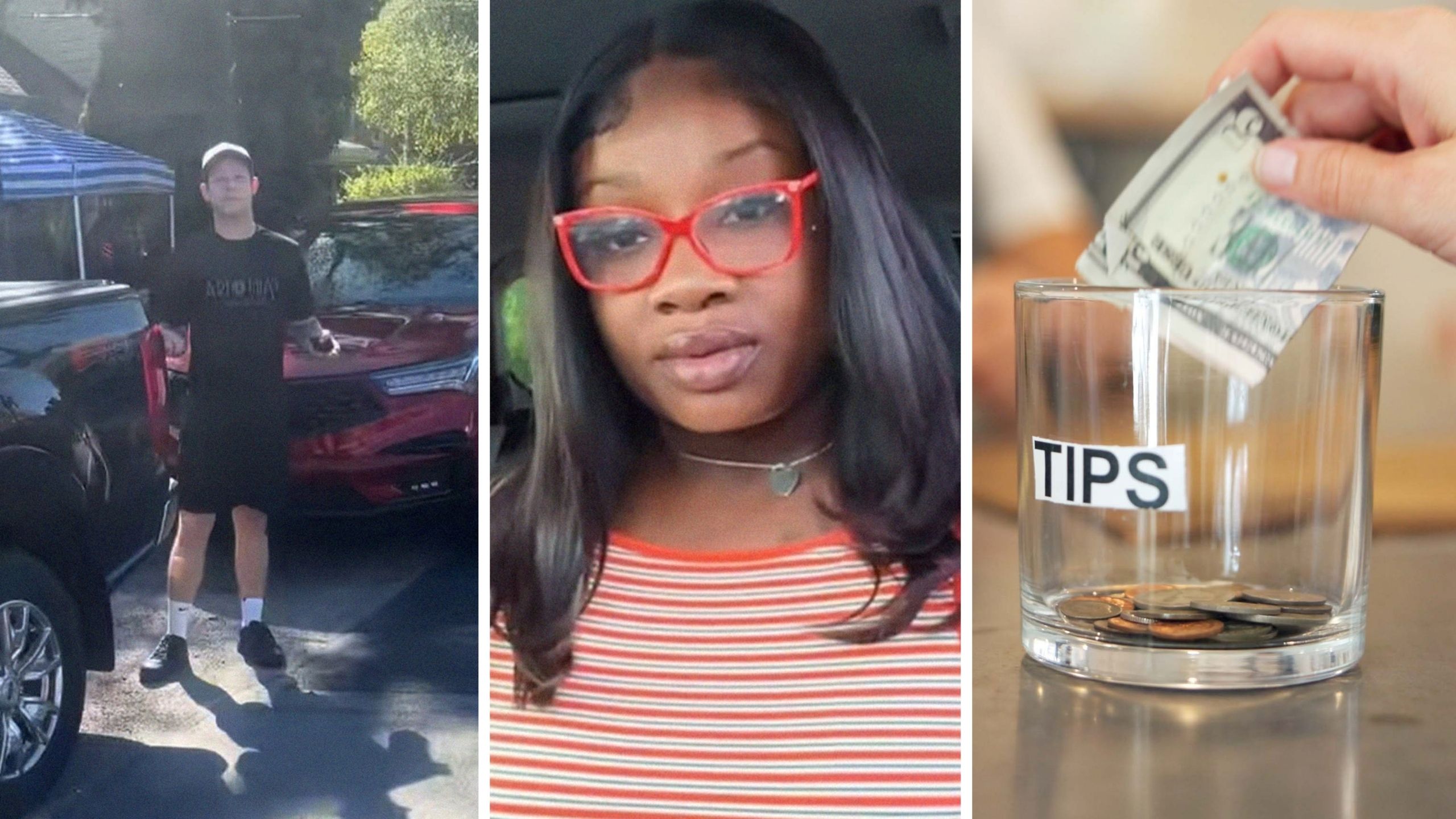
Via iStockphoto / @big_nuuu7 TikTok
After a group of friends had lunch at a restaurant, they were chased down by its manager and told never to come back.
A group of friends had lunch at an Ohio restaurant. Then the owner confronts them outside for not tipping.
The video was uploaded by @nuu4175 and racked up 2 million views. It divided the internet over the expectation of tipping and whether the business owner’s actions were justified.
According to the creator, the incident occurred at Ari and Mia’s Small Town Cafe in Miamitown, Ohio. In the viral clip, a man who identified himself as the owner, Phil, is seen walking up to the group. Ignoring the camera recording, he boldly confronts the group and tells them they are no longer welcome in the establishment.
Displaying a paid receipt, the creator questioned the owner’s justification for the ban. His reasoning was clear. They refused to tip the servers.
Not Everyone Was On Their Side
The argument struck a chord with some viewers who believe that customers should factor a tip into the cost of eating at a full-service restaurant.
“If you can’t tip don’t sit!!!!!!!!!,” one user commented.
However, others questioned whether not leaving a tip justified the public confrontation.
“Am I the only sane person here. Who chases a customer out of restaurant to [ask] for a tip?” user @elle enquired.
The disagreement highlights one of the biggest arguments surrounding American tipping culture. Is a tip a reward for exceptional service or an expected part of the cost of dining at a restaurant?
Is Tipping An American Issue?
International commenters said America’s tipping system seemed unusual. To them, the act is something reserved for exceptional service rather than an expected part of a restaurant bill.
Research found that 92% of Americans who eat at sit-down restaurants say they always or often leave a tip.
By comparison, the act is generally less entrenched across much of Europe, where service charges may already be included or a smaller tip is given as an extra reward.
Critics of tipping culture argue that customers should not be responsible for making up the difference between restaurant wages and what workers need to earn.
One commenter summed up that frustration by writing, “They’ll tell you to not eat out if you can’t afford to tip even though you PAID for your meal but won’t tell the owner to not open up a restaurant if they can’t afford to pay their employees, wild times.”
How Much Has Tipping Culture Changed?
The argument over the Ohio restaurant comes at a time when Americans are already questioning how much they are expected to tip and where it should apply.
A 2023 survey found that 72% of Americans believed it was expected in more places than it was five years earlier. Factors including the COVID-19 pandemic, labor shortages, inflation and the growth of digital payment systems are identified as contributors to the changing tipping landscape.
In 2025, 63% of Americans said they had at least one negative view about tipping. Forty-one percent said businesses should pay their employees better rather than rely so heavily on tips, while another 41% said the culture had gotten out of control.
Some U.S. Restaurants Are Eliminating Tips Altogether
Not every U.S. restaurant believes tipping has to be part of the dining experience. BBC reported on restaurants experimenting with tip-free models.
One example is La Cigale, a San Francisco restaurant that charges $140 per person and builds higher employee wages into the price. Wine waiter Caroline Kraetzer said she earns about $40 an hour and appreciates no longer being “reliant on the generosity of strangers” to pay her bills.
Other restaurant owners say eliminating tips can also address disparities between front-of-house and kitchen workers.
Rachel Miller, owner of Nightshade Noodle Bar in Massachusetts, said she moved to a tip-free model because kitchen employees were taking home far less than tipped servers for the same hours.
Apart from her employees’ pay disparity based on job title, she made another observation. Tipping can allow customers to influence workers’ earnings based on race, gender or sexuality.
Was The Confrontation Racially Motivated?
The controversy took another turn when the creator questioned whether race played a role in the interaction.
In a follow-up video, she called Phil racist and alleged that he had a history of being rude toward Black customers. Those claims have not been independently established, but they added another layer to the debate surrounding the confrontation.
A commenter who claimed to have recently visited the restaurant also alleged that Phil had called him a “monkey.”
The creator’s accusations sparked another wave of discussion. Some viewers focused less on the missing tip and more on the way the group was treated.
@nuu4175 Please do not eat here . This man chased us from across the street and say we are not welcomed back Because we didn’t tip but on our receipt it had money already took it out, this was our first time here & let me tell you the shit had me scared asf I was literally shaken and scared and ready to get the hell Out of there and the worst part I ate they food knowing we wasn’t even welcomed 🤮🤮🤮🥴 Please do not eat here I literally had a panic attack how shaken I was by this man i honestly loved my food and everything and we got treated like straight crap. Ari & Mia’s Small Town Cafe Ohio Miamitown ,Ohio
BroBible reached out to Ari & Mia’s Small Town Cafe via email and the creator via TikTok direct message for comment.