


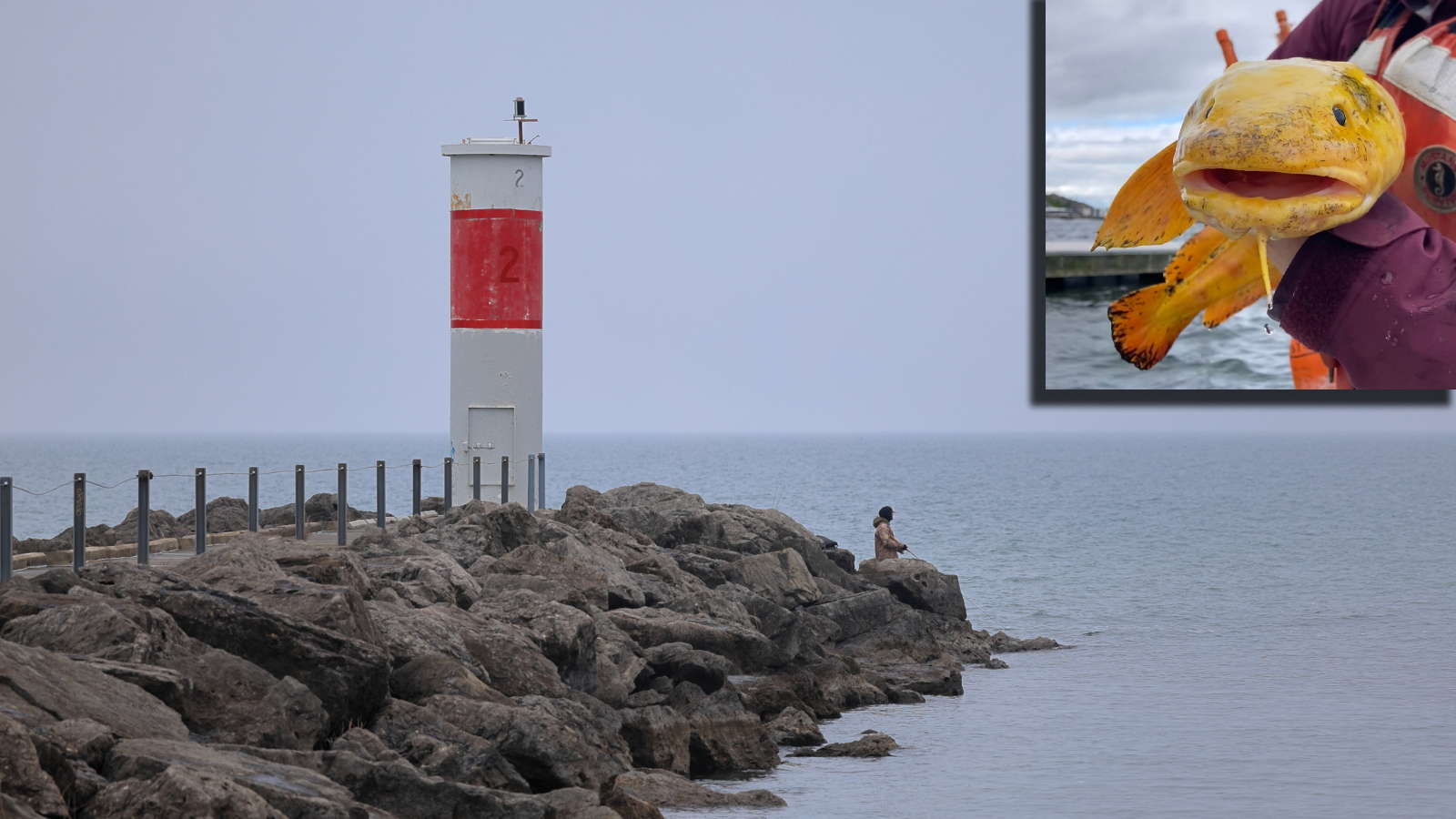
iStockphoto / John Baker / Brian Weidel/USGS/U.S. Fish and Wildlife Service
bright orange rare burbot fish being displayed next to light house on the Great Lakes
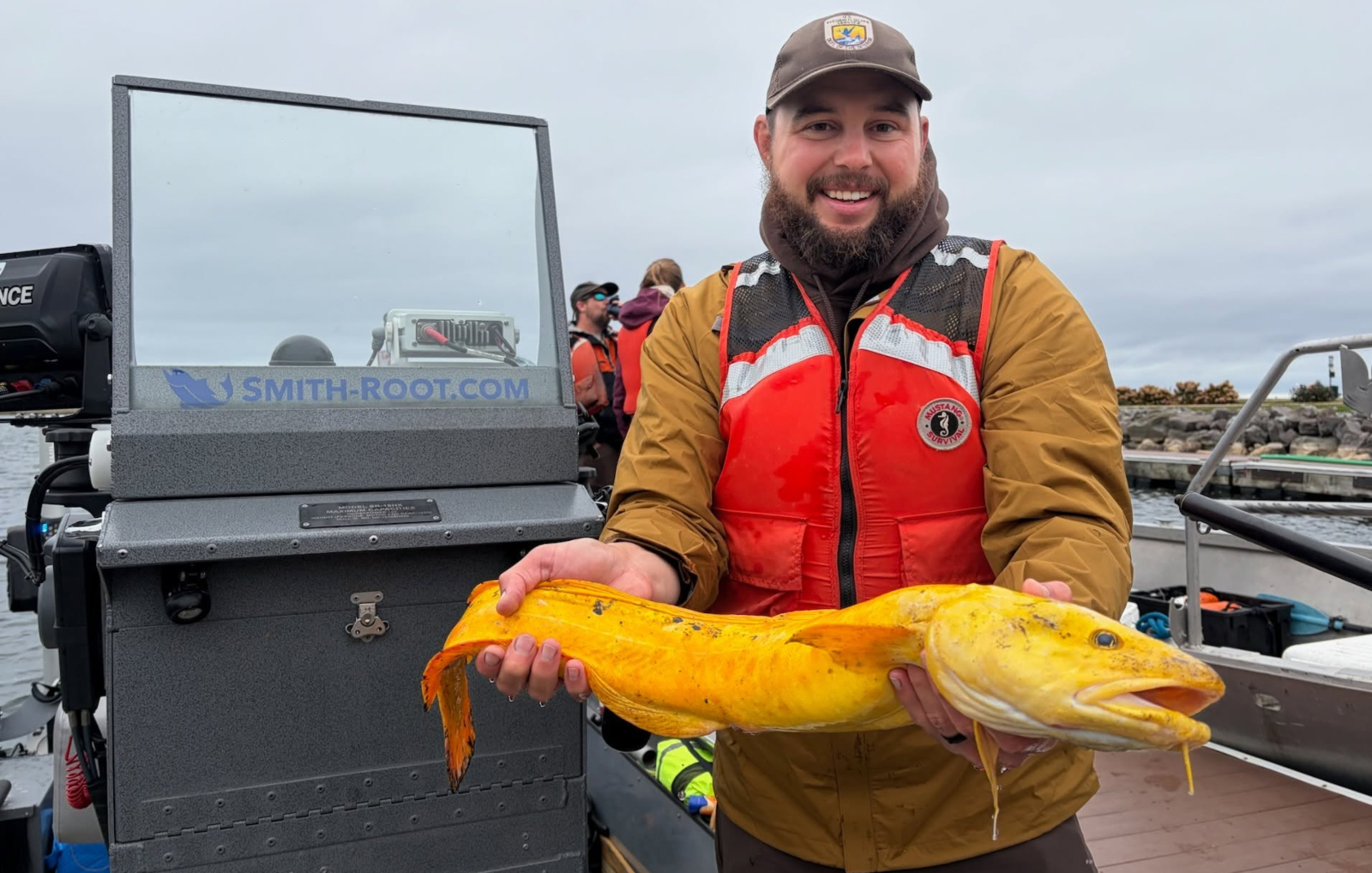
During a recent routine aquatic survey in the Great Lakes, field biologists from the U.S. Fish and Wildlife Service (USFWS) captured what they described as a “one-in-a-million” fish. It is a pumpkin-colored orange burbot fish which suffers from a rare genetic condition.
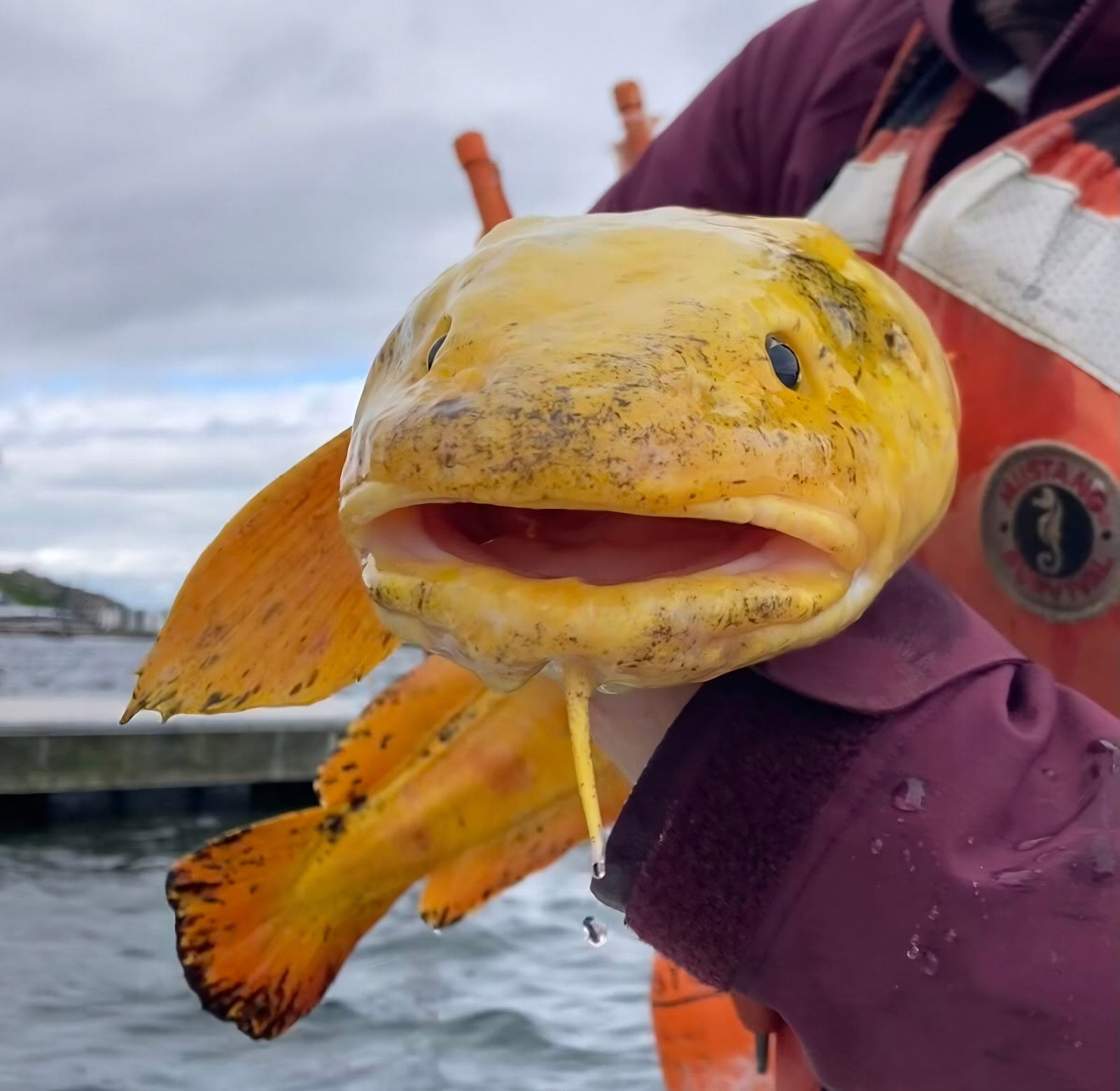
The burbot bright orange color is due to Xanthochromism which is even rare in fish than albinism or melanism, making this a particularly noteworthy catch considering the rare fish was of considerable size.
Rare Bright Orange Burbot Caught On Great Lakes By USFWS Biologists
Brian Weidel/USGS/U.S. Fish and Wildlife Service
one-in-a-million rare orange burbot fish caught on Lake Ontario (aka Lake America) by a USFWS biologist
Burbot are classified as a ‘vulnerable’ species throughout the state of New York but on the lake itself they are considered ‘secure.’ Even still, this might be the rarest specimen caught in decades.
In the wild, any genetic condition such as albinism or melanism which deprives a young fish of its natural camouflage and causes it to stick out like a sore thumb to predators can imperil the specimen. Being a small fish in a big pond is already tough enough with predators always trying to eat you but when that fish is a brightly colored orange due to suffering from xanthochromism the chances of survival are not great.
The Lower Great Lakes Fish & Wildlife Conservation Office shared pictures (above and below) and news of their remarkable catch on Facebook this week after documenting the species. They claimed this catch is a first for USFWS biologists, saying this orange burbot “represents the first documented detection of a burbot during a fisheries survey in Oswego Harbor, although a few angler catches have been reported.”
Brian Weidel/USGS/U.S. Fish and Wildlife Service
one-in-a-million rare orange burbot fish caught on Lake Ontario (aka Lake America) by a USFWS biologist
In their Facebook post, the USFWS continued to tout how rare this orange burbot catch is. They wrote “the finding is particularly notable because burbot populations in the lake are extremely low and the species typically inhabit deeper, cooler waters than those found within the harbor. It represents the first documented detection of a burbot during a fisheries survey in Oswego Harbor, although a few angler catches have been reported.”
How Rare Are Orange Fish?
In August of last year, a first-of-its-kind bright orange shark in Costa Rica made worldwide headlines. That shark was documented as also suffering from Xanthochromism, or Xanthism.
Xanthochromism is extremely rare in animals and is characterized by a lack of red pigmentation that is replaced with yellow pigmentation. It has been observed in many bird species (northern cardinal, great spotted woodpecker, etc) but that was the first time it had been observed in a shark. And while the USFWS says fishermen have reported seeing orange burbot with Xanthochromism, this marks the first time they have captured a specimen with the bright orange pigmentation.
‘One-in-a-million’ seems to be the phrase thrown around most often to describe how common Xanthochromism is in fish. Though the true numbers are not known. It is quite possible the genetic condition is much rarer than 1-in-a-million.
After this rare orange burbot was caught near Oswego Harbor in upstate New York along Lake America / Lake Ontario, field biologists faced a difficult decision on what to do next. According to their report, the fish was “emaciated and appeared to be in poor health.”
Due to the poor health of the fish, the field biologists made the decision to bring it to Cornell University College of Veterinary Medicine for analysis and to learn more about the “fish’s condition and the unexplained factors contributing to the continued suppression of its population”. The statement continued, saying “this exceptionally rare fish may provide valuable insight into the health of the species’ populations throughout the basin that can inform management actions.”
While pulling a rare fish such as this from the water is never an easy choice the decision could ultimately lead to better care for the species in this region.