



When you’re chugging away at your 9-to-5, it’s satisfying to tell yourself that, no matter how bad your job currently is, the people who came before you had it worse.
In some ways, this is true. History is filled with stories of people who worked for countless hours under poor conditions for minimal pay.
Of course, there are plenty of other ways that this isn’t true—especially given that many once-standard worker benefits feel like they’re getting rarer by the day.
Not only that, but some historic workers had additional benefits that are a bit surprising—including workers in fields like piracy.
Did Pirates Really Have Better Workers’ Rights Than We Have Today?
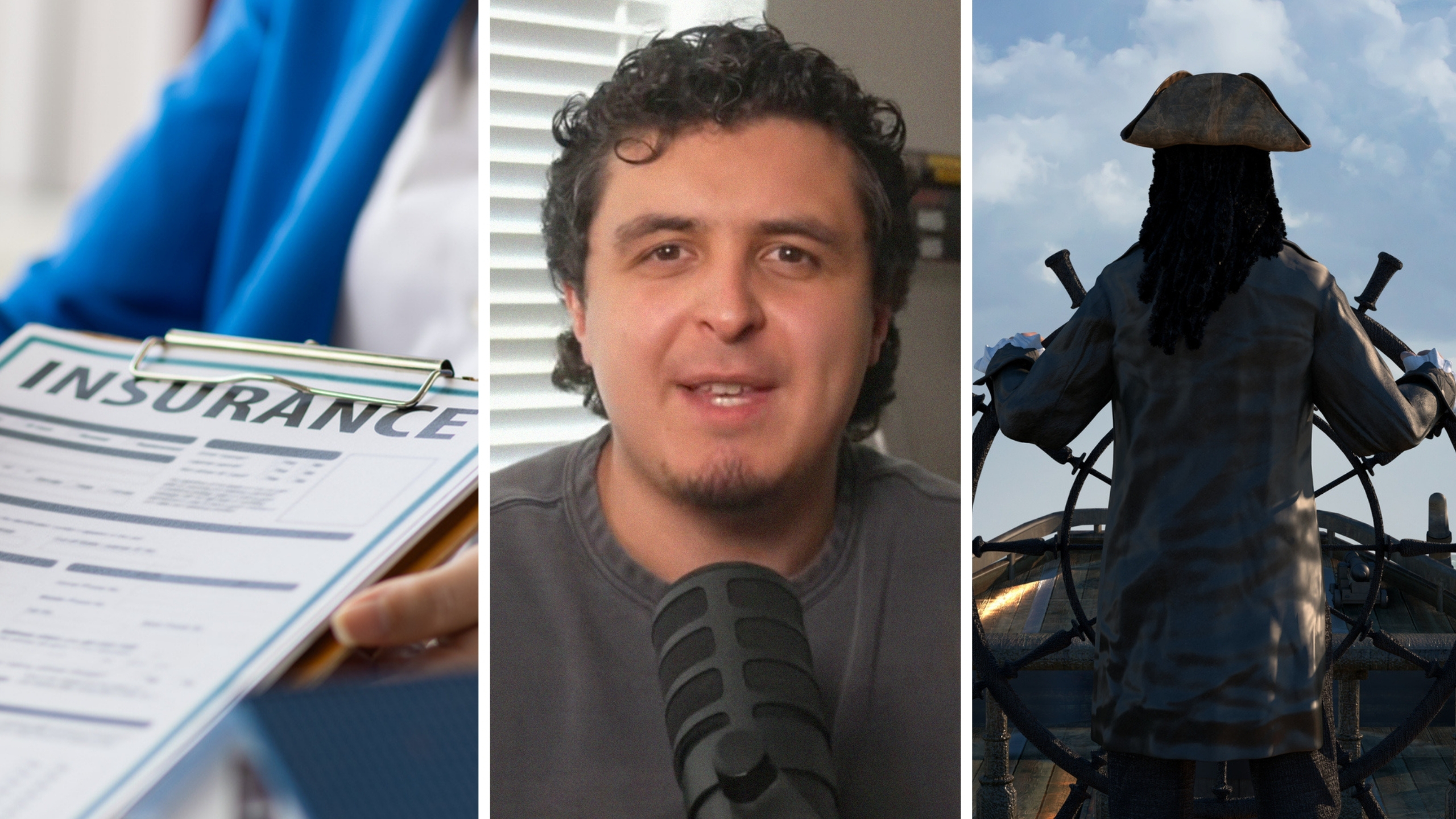
In a video with over 304,000 views, TikToker Skyler (@skylerbuns) explains that pirates used to have health insurance, among other benefits.
“Pirates were violent criminals, but I find it interesting that they had profit sharing, equal pay, company democracy, and free injury insurance, while our modern corporate jobs have a pizza party,” Skyler starts.
Citing Alexandre Exquemelin’s book “The Buccaneers of America,” Skyler explains that many pirates of yore signed contracts that compensated them for injuries. These would scale up depending on the injury, from 100 pieces of eight for a lost finger to 600 pieces of eight for a lost right arm.
“It was paid out from a shared pool of money separate from individual takes—a concept that was actually borrowed from the Navy, since many pirates came from naval and merchant ships and knew how the system worked,” Skyler states.
Skyler says this concept was popular among pirate ships, with many showing comparable rates for lost limbs.
Were Pirate Ships Democratic?
“Not only that, the captain wasn’t the head honcho that made all the decisions,” Skyler continues. “He only had absolute power during raids or battle. But outside of that, decisions of where to sail or attack went through a majority vote. The crew elected a quartermaster that could check the power of the captain if things got out of hand.”
This sense of relative equality extended to payments, Skyler states.
“The contract specifically stated that all crewmen had their fair share of any liquor or provisions, and payment was a tiered structure,” Skyler details. “All crewmen got one equal share, the master gunner and boatswain 1.5 times, and the quartermaster and captain just two shares. Only double the amount of the normal crewman.”
This is a stark contrast to today, Skyler says, in which CEO-to-worker pay is as high as 281-to-1, and employees are often left paying for their own health insurance with little say in how a company is run.
“But, you know, pirates suffer from scurvy and stuff, so it wasn’t all sunshine and rainbows. And, you know, I guess you risk losing a limb too, so there’s that,” Skyler concludes.
Is This True?
Much of this is factually accurate—though there are some caveats that are important to note.
For example, the figures cited from Exquemelin’s work are accurate. However, while Skyler calls this “health insurance” in the video’s caption, a better comparison to contemporary times is “injury compensation.” That said, there is evidence that pirates enjoyed a form of health insurance. However, the quality of care they received is uncertain.
Additionally, whether pirates were actually paid the amounts listed is a matter of historical debate. Author Marcus Rediker found only one example of a pirate being paid this “smart money.” Still, there were likely many more examples that simply went undocumented. This was likely not due to trickery. Rather, the pirates may not have had access to enough money to pay out the promised amount.
Other claims made by Skyler about pirate democracy and tiered compensation are also largely true. However, these could vary from crew to crew. Furthermore, these democracies didn’t always include everyone on board. For example, forced recruits could be denied votes, and enslaved people and coerced laborers were almost certainly excluded.
Viewers Are Surprised
In the comments section, users expressed their shock at this look into pirate life—especially compared with modern working conditions.
“So, pirates have better morals than billionaires?” a user wrote.
“Yaay, I have less work benefits than a pirate,” another added.
“Man, sign me up,” declared a third.
@skylerbuns Pirates Had Health Insurance #History #funfacts #historytiktokcontest
BroBible reached out to Skyler via email and Instagram direct message.