



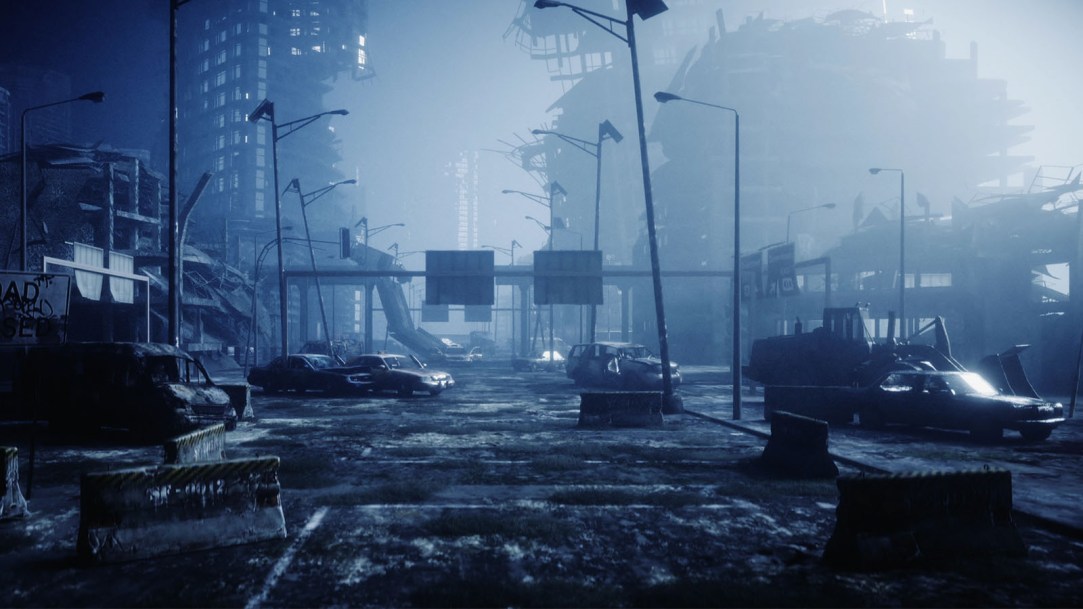
Good news! Unless you are one of the very few people who have access to a fancy underground doomsday bunker, researchers have figured out the safest place to hide out during the inevitable apocalypse.
According to recent research led by Dr. Florian Ulrich Jehn of the University of Hagen, Australia may be the best choice for seeking shelter in the apocalypse. The researchers based their conclusion on an evaluation of multiple studies on disaster scenarios, along with an analysis of several factors, including a nation’s wealth, remoteness, agricultural base, and capacity to produce necessary materials and supplies.
“Australia comes out best, but even Australia has likely many traded goods it would still need to rely on,” Dr. Jehn told the Daily Mail. “Australia produces a lot of food, it is far away from conflict zones, it is surrounded by a vast ocean that buffers the temperature, still has mines, industry and manufacturing, lots of room to re-use, and also good governance and relatively low inequality.”
Researchers break potential causes of the apocalypse into three types of scenarios
According to the study, published in the journal Global Challenges, potential causes of the apocalypse are broken into three main categories.
The first is Abrupt Sunlight Reduction Scenarios.
“ASRS are defined by an abrupt (meaning weeks to months) reduction in sunlight reaching the surface of the Earth,” the researchers explained. “ASRS can be caused by soot blocking out sunlight due to firestorms caused by a nuclear war, sulfate aerosols scattering sunlight after major volcanic eruptions and soot, dust and ash (and possibly sulfates as if the asteroid hits sulfur-rich minerals; Rodiouchkina et al.) blocking sunlight after asteroid/comet/meteor (bolide) impacts.”
The second is Global Catastrophic Infrastructure Loss.
“The most likely vector for a GCIL is disruption of the electrical grid for a prolonged period (a blackout),” the scientists wrote. “Besides the general disruption of all societal systems, this could also negatively impact food production due to a loss of storage, transportation and a decline in production due to loss of agricultural inputs like fertilizers. Such a disruption could hypothetically be caused by High Altitude Electromagnetic Pulses (HEMP), geomagnetic storms, globally coordinated cyber attacks and pandemics so deadly that people stop showing up for work on a very large scale.”
The third scenario is Global Catastrophic Biological Risk.
“GCBR scenarios are characterized by widespread infectious disease causing mass casualties and severe societal disruption on a continental to global scale,” the study reads. “Such catastrophic biological events could arise from naturally emerging pandemics with high transmissibility and lethality, potentially far exceeding the impact of the Covid-19 pandemic, accidental release of dangerous pathogens from laboratory settings, or deliberate deployment of engineered biological weapons.”
What makes one country a good choice may also be a potential hindrance
According to the researchers, countries differ in their resilience to each type of apocalypse risk because of a variety of circumstances. Similarly, what helps a country overcome one obstacle might make it more susceptible to another.
For instance, Australia can more easily separate itself from the outside world and fend off pandemics since it is an island. However, its isolation may also make it more susceptible to fuel shortages or disruptions in the global supply chain.
Nonetheless, Australia remains the most resilient country across the widest range of dangers in the overall evaluation. New Zealand, Japan, Switzerland, and Argentina also ranked high but remain slightly more susceptible to risks than Australia.
So, whether it is a fungus that turns humans into zombies, a nuclear bomb, an asteroid strike, an alien invasion, or, the most likely scenario, a robot uprising, we all now know where to go when the apocalypse hits.