


Getty Image
Dolly Parton died peacefully in Nashville on August 25, 2026, at 80 years old. The news will dominate headlines for days, and it should. But the reason it deserves that attention isn’t simply the catalog of hits, the movies, the awards, or the theme park with her name on the gate.
It’s that for more than a half-century, Dolly Parton did something almost no public figure manages to do. She became America’s greatest brand ambassador.
She never campaigned for the job. No president appointed her. No government agency hired her. There was no diplomatic strategy behind it. Dolly simply spent a lifetime being extraordinary: Talented, relentlessly hardworking, generous, fiercely protective of what she created, and unmistakably herself in front of the entire world.
No embassy or advertising campaign has done more to make America look appealing to the rest of the world than one woman who grew up in a one-room cabin in the Smoky Mountains of Tennessee.
But here’s the remarkable thing: She didn’t make America look good by pretending its contradictions didn’t exist. She made America look good by embodying the possibility that those contradictions could coexist in one person. After all, even before she died, if someone simply said, “Dolly,” chances are you knew exactly who they meant—even if you didn’t care for country music.
That’s a brand.
Dolly was born the fourth of twelve children. She never let anyone forget where she came from, and didn’t do it as some carefully manufactured nostalgia act. Her beginnings were the foundation of everything she became.
“It was my songwriting that got me out of the Smoky Mountains,” Dolly once said, and meant it literally. She wrote her way out of poverty. Then, characteristically, spent much of the rest of her life building roads for other people to follow.
The clearest example may be Dolly Parton’s Imagination Library, launched in 1995 in her native Sevier County and inspired in part by her father’s inability to read and write. By June 2026, the program had gifted more than 325 million books to children in the United States, Canada, the United Kingdom, Australia and Ireland. Millions more are being distributed every month.
The idea was almost disarmingly simple: Every child deserves the chance to fall in love with a book. That is Dolly’s philanthropy in miniature. She didn’t build a monument to herself. She built something useful.
When COVID-19 arrived, she donated $1 million to Vanderbilt University Medical Center for vaccine research. Then she publicly received the vaccine herself, using her enormous platform to encourage others to trust the science.
When wildfires devastated parts of the Great Smoky Mountains in 2016, she didn’t simply write a check to somebody else’s relief fund. She created the My People Fund, ultimately providing millions of dollars in assistance to families who had lost homes and livelihoods. She also organized a telethon to raise additional money.
Dolly remembered what it felt like to need help. So she helped. That distinction matters. This wasn’t philanthropy as a branding exercise. The brand came from the behavior.
Then there was the art.
It is almost easy to undersell Dolly’s accomplishments because she made extraordinary things look like they were supposed to be easy: 11 Grammy Awards; more than 50 Grammy nominations; a Kennedy Center Honor; a National Medal of Arts; induction into the Country Music Hall of Fame, the Rock and Roll Hall of Fame and the Songwriters Hall of Fame.
She wrote thousands of songs, including some of the most durable pieces of American popular music ever recorded. “Jolene.” “9 to 5.” “Coat of Many Colors.” “I Will Always Love You.”
And she understood something about her work that many artists didn’t. She understood ownership. Dolly fought to retain control of her songwriting and publishing at a time when the music business was hardly designed to encourage women—particularly women from rural backgrounds—to demand it. When other artists recorded her songs, the value came back to the woman who had created them.
That wasn’t just artistic independence. It was business. And Dolly was very, very good at business.
Dollywood wasn’t merely a theme park with a celebrity’s name attached to it. It became a major economic engine in the region where she grew up, helping transform the place that had once represented poverty in her own story into a destination associated with entertainment, hospitality and opportunity.
She built businesses.
She built jobs.
She built intellectual property.
She built an empire.
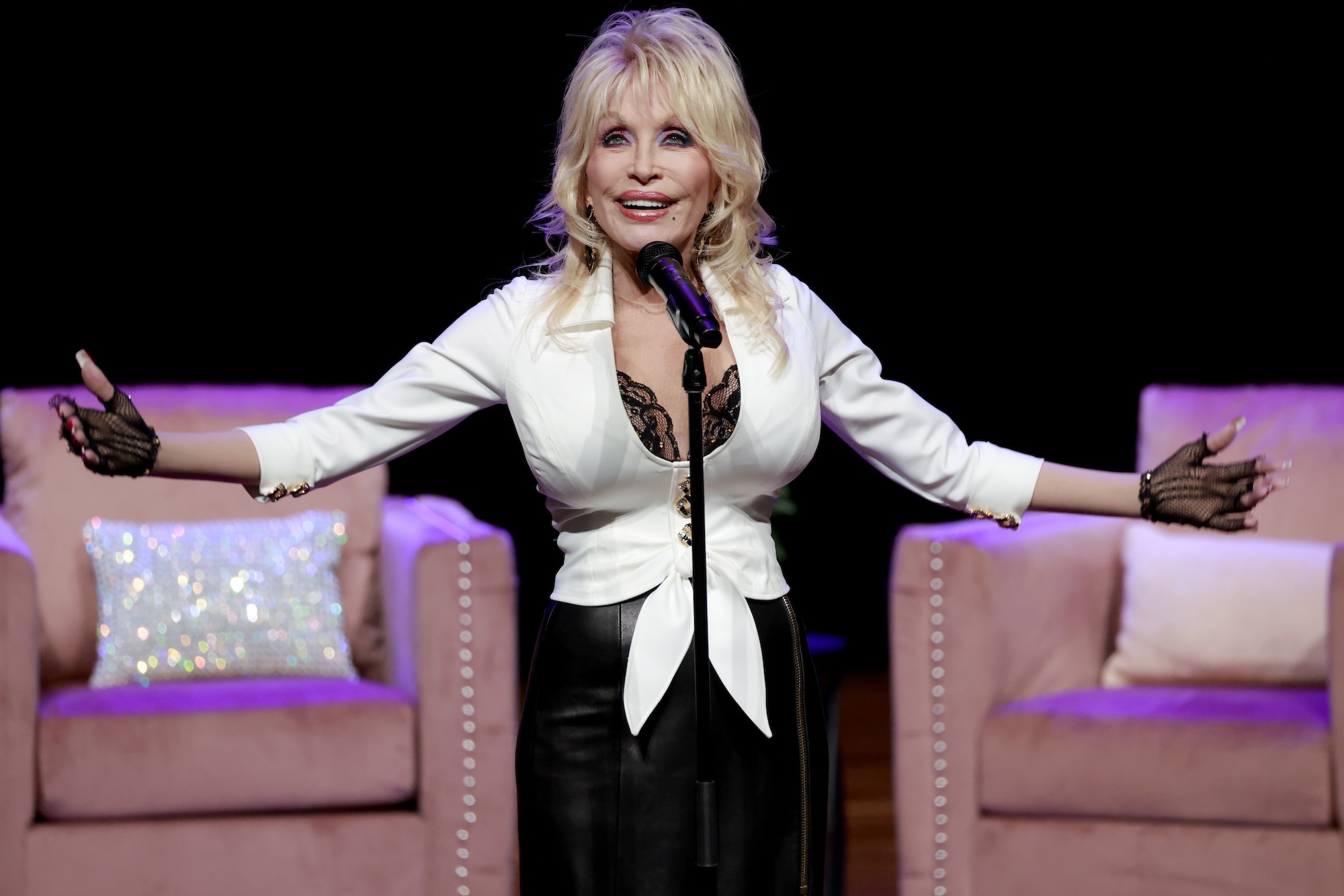
And somehow, Dolly never seemed embarrassed by any of it. She was unapologetically ambitious and unapologetically glamorous. She wore the wigs. The rhinestones. The heels. The makeup. The clothes that could have made her a punchline. Instead, she turned them into armor.
Dolly once described her look as “a country girl’s idea of glamour.” What could have invited mockery became iconic. What could have been dismissed as excessive became instantly recognizable.
She understood something every great brand eventually learns: If you’re going to be memorable, you have to be willing to be yourself loudly enough that people remember you. And Dolly was never generic. She was Dolly, the person and the brand. And that allowed her to occupy an extraordinary amount of cultural real estate.
Country fans loved her.
Pop fans loved her.
Children loved her.
Truck drivers loved her.
Preachers loved her.
Drag performers loved her.
Hollywood loved her.
People who agreed on almost nothing else could find something to love about Dolly Parton.
She crossed from the Grand Ole Opry to Hollywood without abandoning her accent. She could sing a three-minute country song and carry a two-hour movie. She could stand beside Jane Fonda and Lily Tomlin in “9 to 5” and then return to Tennessee and build a theme park in the foothills of the Smokies.
She could be deeply rooted in her Appalachian upbringing without being trapped by it.
And perhaps most remarkably, she could become enormously wealthy without making wealth the most interesting thing about her.
That is where the brand ambassador idea really matters. A brand ambassador isn’t simply someone who says nice things about a product. A great brand ambassador makes you feel something about the thing standing behind them.
Dolly made people feel something about America. Not a perfect America; not a political America; not the America of campaign slogans and official speeches.
It was the America of second chances; the America of ambition; the America of reinvention. It was the America where a poor girl from a one-room cabin could write songs, become famous, build businesses, make millions of dollars and then use some of that money to put books into the hands of children she would never meet.
Dolly Parton’s America was one where you could become something entirely different without pretending you came from somewhere else.
And perhaps most importantly, Dolly didn’t achieve this by being bland. She didn’t become beloved because she avoided having a personality. She became beloved because she had one in abundance. She was funny; she was ambitious; she was shrewd; she was sentimental; she was glamorous; she was self-deprecating; she was fiercely independent; she was deeply connected to her faith and her family and her Appalachian roots.
And Dolly was generous. She didn’t spend her life trying to convince Americans that they agreed with one another. She spent it showing that they didn’t have to. That may be her most important lesson.
In an age when almost every public figure is expected to declare which tribe they belong to, Dolly Parton somehow became one of the few people who could belong to everybody without belonging exclusively to anyone. It wasn’t because she lacked convictions. It was because she understood people. She understood that you could disagree with someone and still be kind to them.
Dolly got it: You could be successful without forgetting where you came from; you could be rich without making other people’s poverty a source of shame; you could be glamorous without taking yourself too seriously; you could be famous without believing you were more important than everyone else; and you could leave a place better than you found it.
That’s an unusually American set of ideas.
Dolly Parton didn’t represent America by being uncontroversial. She represented America by being fully, gloriously herself.
Her kindness showed up as a book in a mailbox. Her philanthropy showed up when families needed help.
Her ambition showed up in businesses that outlasted tours and album cycles. Her independence showed up in the songs she insisted on owning. Her art outlived the moment in which it was created. And her persona became so recognizable that “Dolly” was enough.
Put all of that together and you get something no government could have commissioned and no advertising agency could have manufactured: A national brand ambassador who never needed the title.
Dolly clawed her way out of the Smoky Mountains, and then spent the rest of her life building a road back for everyone else.
America will have other stars. It will have other singers, actors, entrepreneurs, philanthropists and cultural icons. But it’s hard to imagine it will ever have another ambassador quite like Dolly.
Why? Because Dolly Parton didn’t just make America famous. She made America feel a little more like something worth believing in.
.