


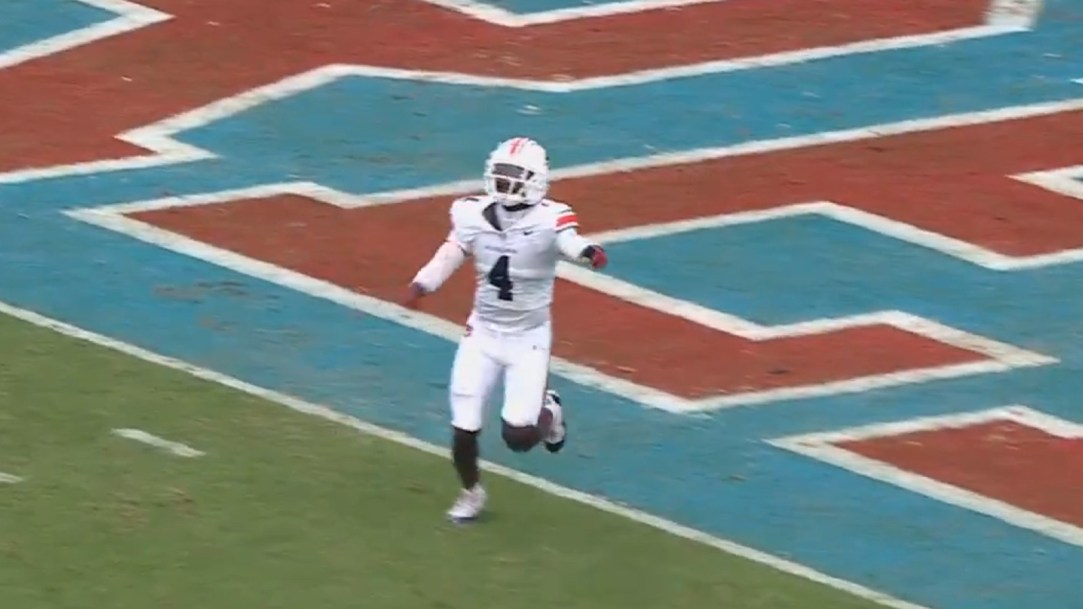
Auburn defensive back Rayshawn Pleasant did not signal for a fair catch during the college football game against Ole Miss on Saturday. And yet, the SEC officiating crew determined that he did.
It revealed a rule that most people did not know exists!
In college football, the player who catches the kickoff must be the one who calls for the fair catch for it to count as a touchback. Otherwise, the ball will not be placed at the 25-yard-line.
Auburn did not signal for a fair catch.
Ole Miss scored a touchdown late in the third quarter to go up by nine points. Auburn put Rayshawn Pleasant and Jeremiah Cobb back to receive the ensuing kickoff. Cobb caught the kick at the one-yard-line. He was tackled shortly thereafter.
However, the officials determined that Pleasant signaled for a fair catch. The Tigers got the ball on offense at the one-yard-line as a result of the fair catch. There was only one issue. Pleasant did not signal for a fair catch.
Upon further review, he pointed at Cobb to tell him not to field the kick to allow the ball to bounce into the end zone for a touchback. At no point did he signal over his head, as the players were specifically instructed to do when calling for a fair catch.
Auburn kick return messes up, ball is marked at the 1 yard line because a player signaled for a fair catch and a different guy caught it pic.twitter.com/JJ86tzQ7ie
— gmannVOLS (@gmannVOLS) October 31, 2026
There is another interesting wrinkle to this bizarre sequence of events. The rules are very specific.
Why was it not a touchback?
Typically, when a fair catch is called on a kickoff inside the 25-yard-line, the fair catch results in a touchback. The ball is then placed at the 25-yard-line.
That was not the case in Oxford on Saturday. The SEC officiating crew determined that Pleasant called for a fair catch but the ball was not placed at the 25-yard-line on the subsequent offensive possession. It was placed at the one-yard-line.
Per the rules as they are written, the player who receives the kickoff must also be the one to signal for the fair catch. If a different player signals for a fair catch and does not field the kick, the ball is placed at the spot where the kick was caught.
Not only did Pleasant not call for a fair catch, he was actively trying to take the touchback. In the end, because of a poor officiating decision and a unique rule that many college football fans did not know existed, Auburn got the ball on offense backed up against its goal line.