



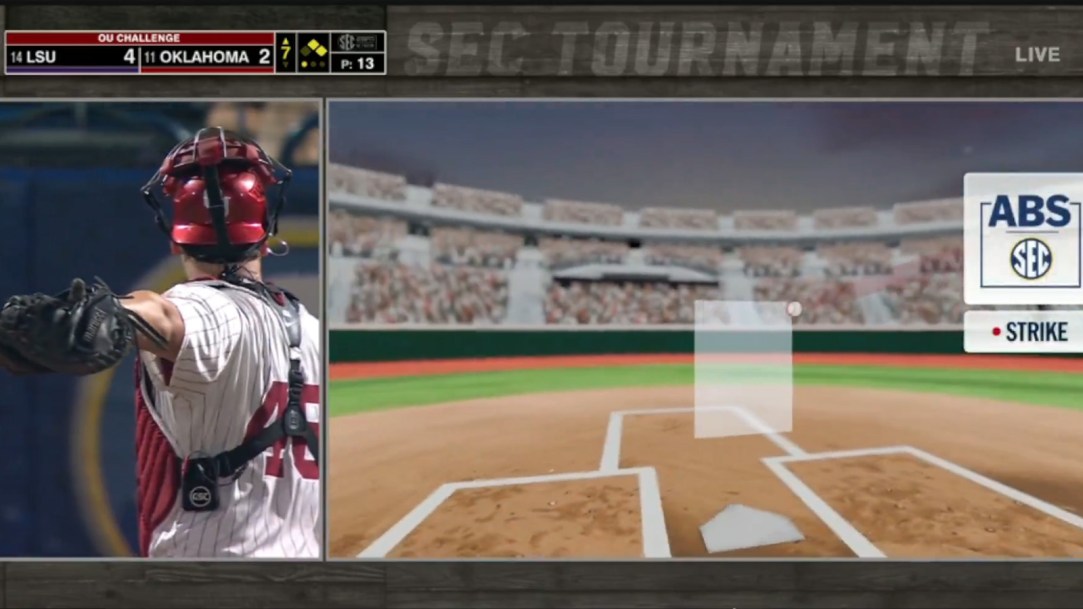
Oklahoma used the new ABS system to get one back on LSU during the SEC baseball tournament. In doing so, the Sooners triggered a new rules scenario that needed to be explained.
What happens if a runner steals a base?!
As the automated ball-strike system makes it debut in college baseball, there are sure to be a few unique situations that have not yet been been addressed. This was one of them.
Oklahoma challenged a pitch against LSU.
We pick things up in the top of the seventh inning of the first round of the SEC tournament. LSU held a 4-2 lead over Oklahoma. The Tigers had a runner on first with one out.
Sooners pitcher Jason Bodin threw down to the plate on a 3-2 count. It was called a ball.
Catcher Deiten Lachance did not immediately call for a challenge. He threw down to second base to try and beat the steal. The runner was not called safe or out. And then Lachance signaled for a challenge.
The pitch review went in favor of Oklahoma. Ball four was overturned and called strike three.
This is where the confusion lies. This is a new scenario for the automated ball-strike system on any level.
LSU was called out on strikes at the plate after the walk was overturned. But Lachance had already thrown down to second base before he called for a challenge.
Should the challenge stand even though it was late? If so, what happens to the runner on second?
The runner was also not called safe or out at second before the strikeout.
Is he allowed to stay there? Does he have to go back to first because the overturned walk did not grant him a free base?
It took the SEC umpiring crew approximately five minutes to figure out the answer to those questions. This automated ball-strike system is just as new to them as it is to everyone else. They did their best to navigate the situation but they might not have figured it out. Fortunately, it did not impact the result.
The ABS system is new to college baseball.
SEC baseball umpires ultimately came to the following decision:
- The batter is called out on strikes at the plate because of the review.
- The runner on second base is safe because the defense played the attempted steal.
Here is how the deliberation went down in real time:
Here is a 5 minutes of ABS disaster. I don't even know how to explain this.
— 11Point7 College Baseball (@11point7) May 20, 2026
Essentially LSU was mad that Oklahoma was granted a challenge after the 2/3 second window https://t.co/mIcYr5jPDq pic.twitter.com/IAHpd8DW4N
LSU went on to defeat Oklahoma by a final score of 6-2 so the umpiring decision did not impact the result. However, the decision appeared to be incorrect based on how the rules are written.
Per the rules of the new ABS system, the runner who stole second base likely should’ve been sent back to first base because the call was overturned. It is up to the umpire’s discretion. Kind of.
“After a call is overturned, umpires decide runner placement based on NCAA rules, typically awarding the last base safely reached at the time of the pitch.”
The Tigers should’ve had a runner on first with two outs instead of a runner on second with two outs but the Sooners threw down to second base so the SEC umpires allowed him to stay. That timing creates another rules discussion. Oklahoma challenged the pitch after the throw to second. That isn’t allowed.
The rules of the ABS system clearly state that a challenge must be initiated within 2-3 seconds after the pitch. Lachance did not initiate the challenge within that window. He shouldn’t have been allowed to challenge. LSU should’ve been awarded the walk to put two runners on base with only one out.