


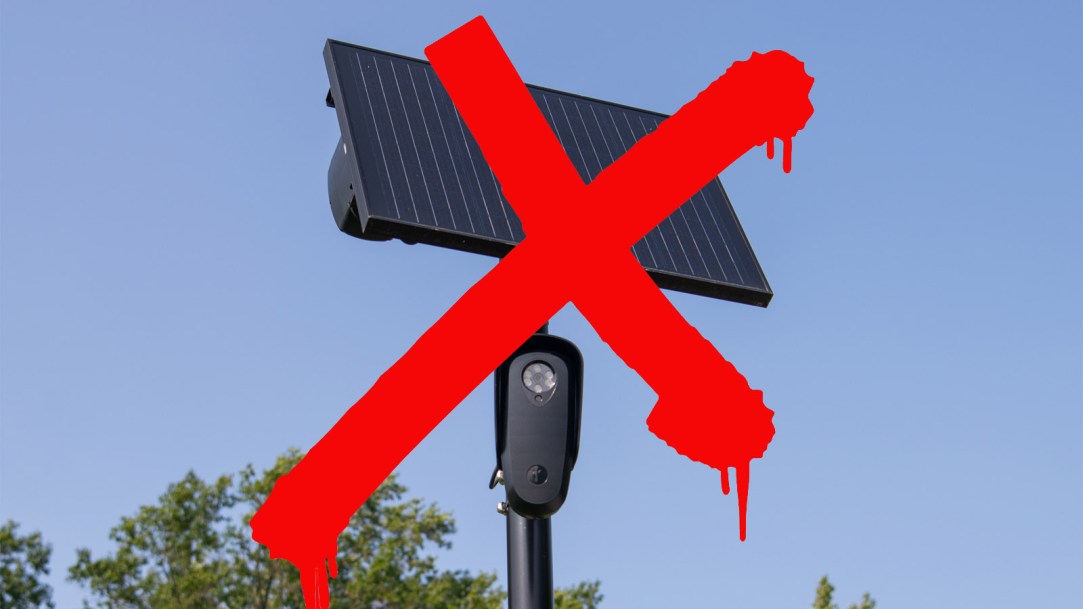
Flock Safety is apparently struggling to accept that some cities no longer want its surveillance cameras watching their residents. In fact, one Minnesota city claims the company actually reinstalled two cameras after being specifically told not to.
Meanwhile, in another Minnesota city, police grew so tired of waiting for Flock to remove its cameras that the police chief ordered his officers to unplug them.
Flock Safety Accused Of Reinstalling Cameras Without Permission
According to The Drive, Dayton, Minnesota, voted in August to cancel its contract with Flock. However, that apparently didn’t stop the company from continuing to use its equipment. On September 17, Dayton police discovered that Flock had generated a maintenance work order.
The next day, city officials notified the company that the program was suspended and that they had authorized no additional work. Flock allegedly ignored those instructions.

The city later revealed that Flock had returned one camera to service without permission. Officials later discovered that a second camera had also been reinstalled.
“City staff were recently made aware that a Flock Camera was reinstalled within the community. We would like to provide residents with additional information regarding the situation,” the city said in a statement.
“On September 17, 2026, the Police Department was made aware of a maintenance work order produced by Flock. The City notified Flock on September 18, 2026, that the program was on hold, and no work orders were to be completed. Unfortunately, the City’s direction was not followed, and the camera was placed back into service without authorization.
“Following the report, City staff reviewed locations throughout the community to determine whether any additional cameras had been reinstalled, and one additional location was identified. The Police Department has been notified, and both cameras will be removed promptly.
“We appreciate the resident who brought this matter to our attention and encourage residents with questions or concerns to contact staff directly or use the website contact form at www.daytonmn.gov.“
Dayton City Administrator Zach Doud later told KARE 11 that Flock acknowledged the canceled contract but said removing the equipment would take 60 days.
Another Minnesota Police Chief Took Matters Into His Own Hands
A similar case occurred in Plymouth, Minnesota, where city officials canceled their Flock contract on September 22, according to The Drive.
Police Chief Eric Fadden said the department suspended its accounts and notified Flock. However, after receiving no meaningful response from the company’s corporate or legal departments, Chief Fadden decided he’d had enough. He ordered officers to physically disconnect the cameras’ power cords to prevent them from recording license plates.
In Crystal, Minnesota, police went even further. There, Police Chief Pete Underthun personally removed the cameras and poles after the city voted to discontinue the service. “We are still working with the company to close out our contract and for them to pick the cameras up from our garage,” he told KARE 11.
Cameras Tied To Artificial Intelligence Continue Generating Privacy Concerns
This is far from the first time Flock’s cameras have caused controversy. As previously reported, Elgin Community College in Illinois covered its six Flock cameras with zip ties and black trash bags after the company reportedly refused to remove them. Mysterious workers in an unmarked car repeatedly uncovered the cameras until the contract expired.
“We were kind of in a back and forth for a bit where we’d cover, and then when they’d come to service, they’d remove,” school president Peggy Heinrich said. “Then we’d cover and then they’d remove.”
According to Jalopnik, other communities, including one in Arkansas, have also resorted to covering unwanted Flock cameras with garbage bags while waiting for their removal.
In another recent privacy controversy, two Chicago lawsuits accused autonomous food-delivery robots of collecting people’s facial and hand data without permission and sharing it with AI companies. Both robot companies denied the allegations.