



via Zach Jacobs
If you are a guy breathing oxygen in America, you probably know the drill. You enter college as a spry, athletic 18-year-old, fully expecting the “Freshman 15” because, well, that’s just the cost of doing business when you discover late-night Wawa and the euphoric grease of McDonald’s Snack Wraps.
For Zach Jacobs, it started exactly like that. He walked onto the Haverford College campus as a 165-pound lacrosse player. But the real dietary damage didn’t happen between classes. It happened when he moved to New York to work as an institutional derivatives trader on Wall Street.
“It was 12-hour days,” Jacobs remembers. “We were huge on entertaining clients. We’d have those crazy Wolf of Wall Street $10,000 nights—steakhouses, seafood towers, tons of liquor. And there was no time to work out. It was just a repeat cycle.”
The weight piled on, but in the ultimate guy-logic paradox, his confidence somehow masked the reality. “It was the first time anyone started calling me fat,” he says. “But it was always caveated with a compliment about how much fun I was or how well I was doing. As a guy, if you’re crushing it socially, society kind of gives you a pass on being unhealthy. Your ego just tells you, ‘Alright, I’m good. I don’t need to work out.'”
He hid the growing gut under the ubiquitous Midtown finance vest. Eventually, he left New York for the entertainment industry in Los Angeles, assuming the perpetual sunshine and juice-cleanse culture would magically fix his habits. Instead, he found the chicken mole burritos from a late-night food truck and started ordering them four at a time.
Jacobs had stumbled into what he hilariously and tragically dubs “Fat Sand.”
“It was a self-perpetuating cycle. I wasn’t happy, so I ate. When I was happy, I ate. I wouldn’t go out on the weekends because I didn’t like how I fit into clothes. What would I do in those moments? I’d eat,” he says. “I had all the tools to not let this happen. I played organized sports, I had trainers. I could have done Barry’s Bootcamp and drank smoothies every day. Instead, I got caught in the fat sand.”
At 5’9″ and 220 pounds, Jacobs was walking around with the exact physical dimensions of former NFL running back Marshawn Lynch.
The problem, however, was that he was absolutely not Marshawn Lynch. Furthermore, he had been born with a bicuspid aortic valve—a genetic heart defect.
The turning point came during an October 2023 checkup at Cedars-Sinai. His cardiologist didn’t just give him a pamphlet; he staged a medical intervention. The doctor literally called his own wife, put her on speakerphone, and tag-teamed Jacobs like a disappointed aunt and uncle. They told him he was putting undue pressure on his heart and handed him a prescription for Ozempic.
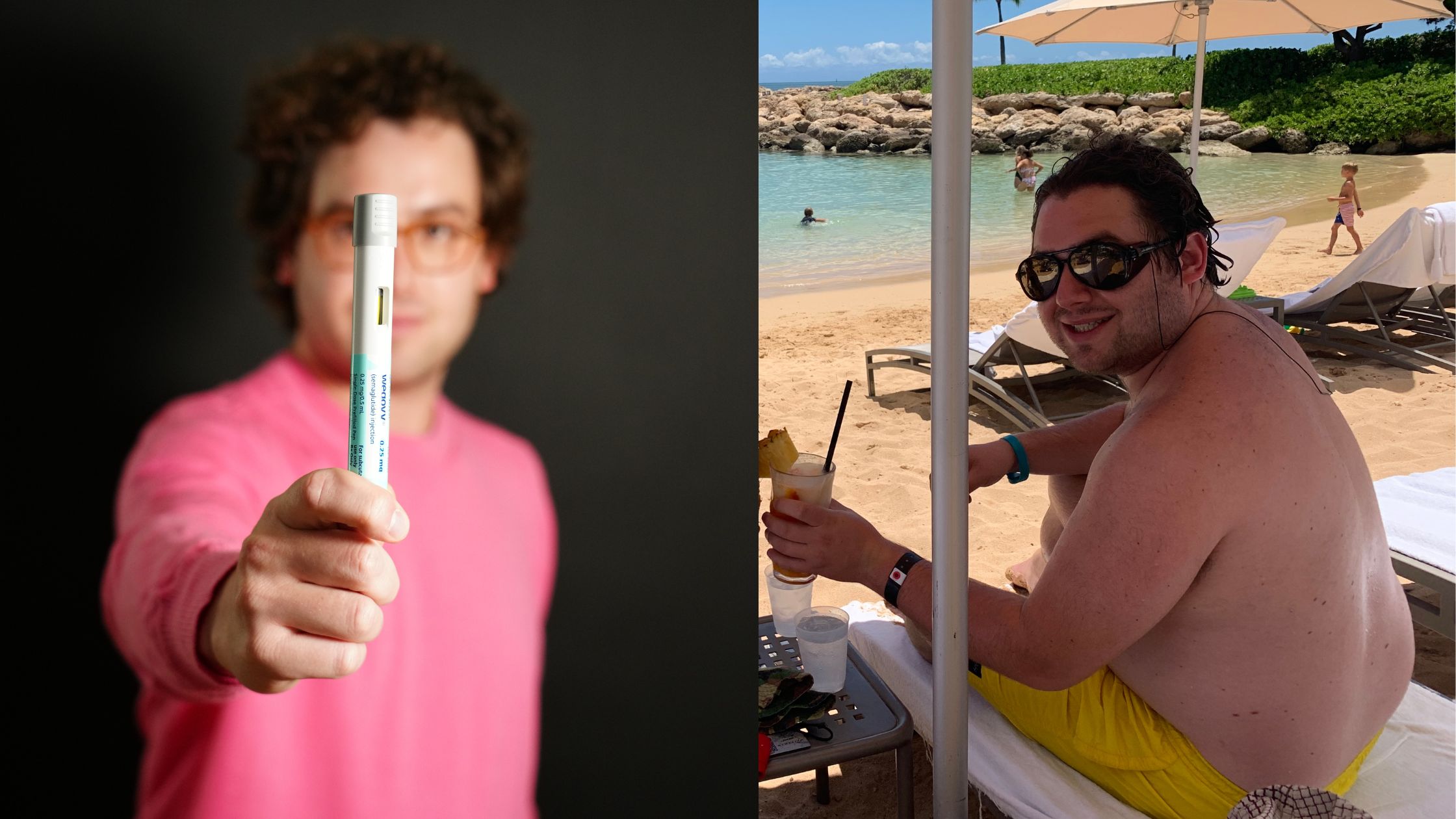
Scared straight, alone, and ashamed, Jacobs took the shot. And then, he realized something that millions of Americans taking GLP-1 medications (like Ozempic, Wegovy, and Mounjaro) realize every day: The drug is a miracle, but managing the lifestyle change is a logistical nightmare.
“I’m a consumer of health and fitness apps, and by consumer, I mean a giver-upper,” Jacobs laughs. “I abandon them because they all fucking suck. The onboarding takes 20 minutes, and then they hit you with some silly graph that’s like, ‘Hello user, based on these parameters you will achieve X.’ It’s absolute bullshit.”
So, Jacobs went analog. He tracked his injection sites in Google Calendar. He deleted UberEats. He put a Peloton literally inches from his bed so he’d trip over it if he didn’t ride it. He relearned how to eat, discovering that the magic of GLP-1s is that eating greasy, processed food physically hurts because the drug slows digestion, while clean foods go right through you.
In nine months, he lost 50 pounds, dropping to 164. He was excited to show off his accomplishment. He walked into an elevator, showed a neighbor a photo of himself from a year prior, and the neighbor just blinked and asked, “Did you get a haircut?”
Jacobs had fixed his body, but he realized the tech world was completely ignoring the unique, massive, and highly specific needs of the GLP-1 generation. Telehealth companies just want to sell you the drug forever. Traditional fitness apps are built for people who already know how to be fit.
Enter Jurni GLP.
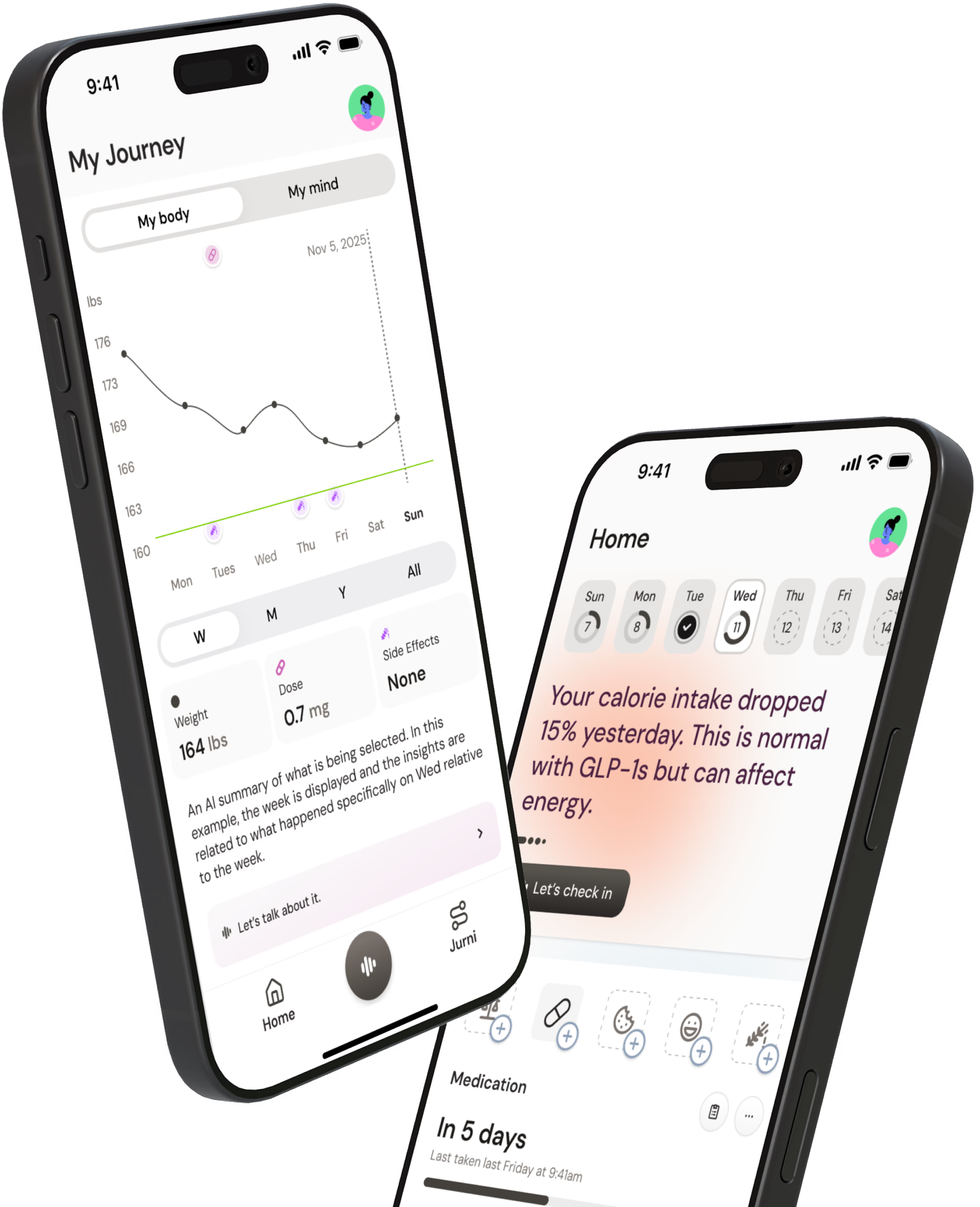
If the medication changes your appetite, Jurni GLP is the app designed to change your behavior. Jacobs built it to be the ultimate behavioral companion for people on weight-loss shots. Its core philosophy is dead simple: GLP-1s make change possible; Jurni makes it permanent. Knowing that manual data entry is the death of all fitness apps, Jurni GLP is entirely voice-first. You just open the app and talk to it like a buddy.
via Jurni GLP
“I’ll literally say, ‘I had a bacon, egg, and cheese for breakfast today,'” Jacobs explains. “The AI isn’t going to annoy me and ask, ‘How many eggs? What kind of bread?’ It just says, ‘Okay, great.’ It estimates it. That’s its job, not mine.”
Forget the glorified food diaries—Jurni GLP operates as a predictive health engine. It actively cross-references your injection schedule, hydration levels, food noise, and Apple Health data to anticipate the wild biological swings of the drug. Jacobs uses a recent trip to the airport as the perfect pitch for why this tech is necessary. After a weekend shot, he ate a tiny 200-calorie protein bar and rushed to LAX. By the time he hit security, he was dizzy, nauseous, and seeing stars.
He pulled out his phone and spoke into Jurni GLP, explaining his symptoms. “It instantly correlated the data: You took your shot yesterday, you only had 200 calories five hours ago, your blood sugar is tanking. Go get some sugar,” Jacobs says. He crushed a soda and a slice of pizza, and his body immediately regulated.
Because GLP-1s physically alter your body chemistry, people need real-time, actionable advice, not generic fitness platitudes. And they need a totally new lifestyle.
That’s why the next phase of Jurni GLP includes a highly curated marketplace. When you lose 50 pounds, nothing fits. But you don’t want to spend $100 on Lululemon shorts that will be too big in three weeks. Jurni GLP will surface affordable transition clothes, electrolyte powders when it notices you aren’t logging water, and protein supplements.
Eventually, Jurni GLP will expand into community features. Jacobs envisions an ecosystem that connects users for a 20-minute phone call while they both take a daily walk. He’s even half-joking (but mostly serious) about hosting exclusive nightlife events in LA where the only way to get in is to show your injector pen at the door.
There’s a fascinating psychological element to massive weight loss that Jacobs is deeply tapped into. It’s the body dysmorphia of shrinking out of your old life. Going from a size 36 waist to a 31. Walking into a store and instinctively grabbing an Extra-Large shirt, only to have the salesperson gently push you toward the Mediums.
“Mentally, your brain hasn’t caught up. You’re left behind in your former self,” Jacobs says. He points out that for years, he was the guy who would volunteer to take the group photo just so he didn’t have to be in it. Today? He’s actively booking photoshoots.
Jacobs eventually stopped taking Ozempic cold turkey. He hasn’t gained a pound back. And that is the ultimate thesis of Jurni GLP. It’s an app designed to be so effective at building new, compounding, daily habits that you eventually don’t need the drug at all. You just need the habits.
It perfectly encapsulates the wild, unpredictable, totally transformative era of the GLP-1. Zach Jacobs went through the fire, escaped the fat sand, and built the map for everyone else trying to find their way out.
Jurni GLP’s tagline is Don’t Just Lose, Find.
Because a GLP-1 journey isn’t just about losing weight, but finding a pathway to healthy, consistent habits.