



iStockphoto / Stephen Lew-Imagn Images/Kim Klement Neitzel-Imagn Images
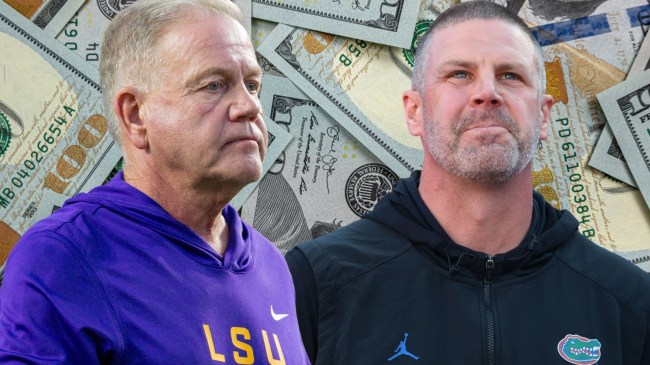
Fired LSU coach Brian Kelly and fired Florida coach Billy Napier over hundred dollar bills
College football spent the 2025 season discovering there is apparently no upper limit on the amount of money a school will spend to make a coach stop coming to work. Fifteen FBS head coaches were fired without cause during the cycle, creating an initial buyout price tag of roughly $270 million and turning “we’re going in a different direction” into one of the most expensive sentences in American sports.
The college football coaching carousel has always been ridiculous, but last season produced a different level of financial violence. Schools committed record-setting sums to remove coaches they had recently paid enormous sums to hire, then immediately started spending again on search firms, replacement staffs and new contracts.
College Football Turned Firing Coaches Into A Nine-Figure Industry
The $270 million figure represents the buyout obligations attached to the 15 firings at the moment coaches were shown the door. The actual amount schools ultimately pay will be lower because contracts include offsets, settlements, and other mechanisms that reduce what a former coach collects after finding another job.
James Franklin is the perfect example.
Penn State originally faced a buyout approaching $49 million when it fired him in October. Franklin then became Virginia Tech’s head coach, and the sides negotiated the amount down to $9 million. He essentially saved Penn State about $40 million by finding another place willing to employ him.
That is an incredible sentence to describe someone getting fired.
Even after adjustments, the 2025 cycle was historic. Earlier estimates put the contracted total for the 15 dismissals at $228 million, already nearly $100 million beyond the previous record.
The biggest checks were absurd.
LSU fired Brian Kelly with roughly $54 million remaining on his deal. Kentucky moved on from Mark Stoops with a buyout around $37 million. Michigan State owed Jonathan Smith about $33 million, Florida owed Billy Napier $21.2 million and Auburn’s Hugh Freeze carried a buyout above $15 million.
Those are not coaching changes. Those are small infrastructure projects.
Losing Games Has Never Been More Profitable
The funniest part of the buyout economy is that schools are not paying for a product.
They are paying for the product to disappear.
A university can spend $50 million to fire a coach, another eight figures hiring his replacement, then ask donors to help fund NIL and revenue sharing because competing in modern college football has somehow become expensive.
The incentives are easy to understand. Playoff access is worth enormous money and attention, fanbases have almost no patience, and athletic departments know one bad season can crush ticket sales, donations, and recruiting momentum.
Keeping the wrong coach can be costly.
Apparently firing him can cost the GDP of a small island.
There is also very little reason to believe the trend is disappearing. The 2026 season arrives with another group of high-profile coaches under pressure and contracts still packed with large guarantees. Every September loss will once again send fans to Google to search “[coach name] buyout” before the postgame press conference ends.
That may be college football’s strangest modern tradition.
Players can transfer. Conferences can realign. Entire compensation systems can change overnight.
The guaranteed coach contract remains undefeated.
Last season, schools attached roughly $270 million in initial obligations to 15 firings.
College football has officially reached the point where getting rid of people is its own spending category.