


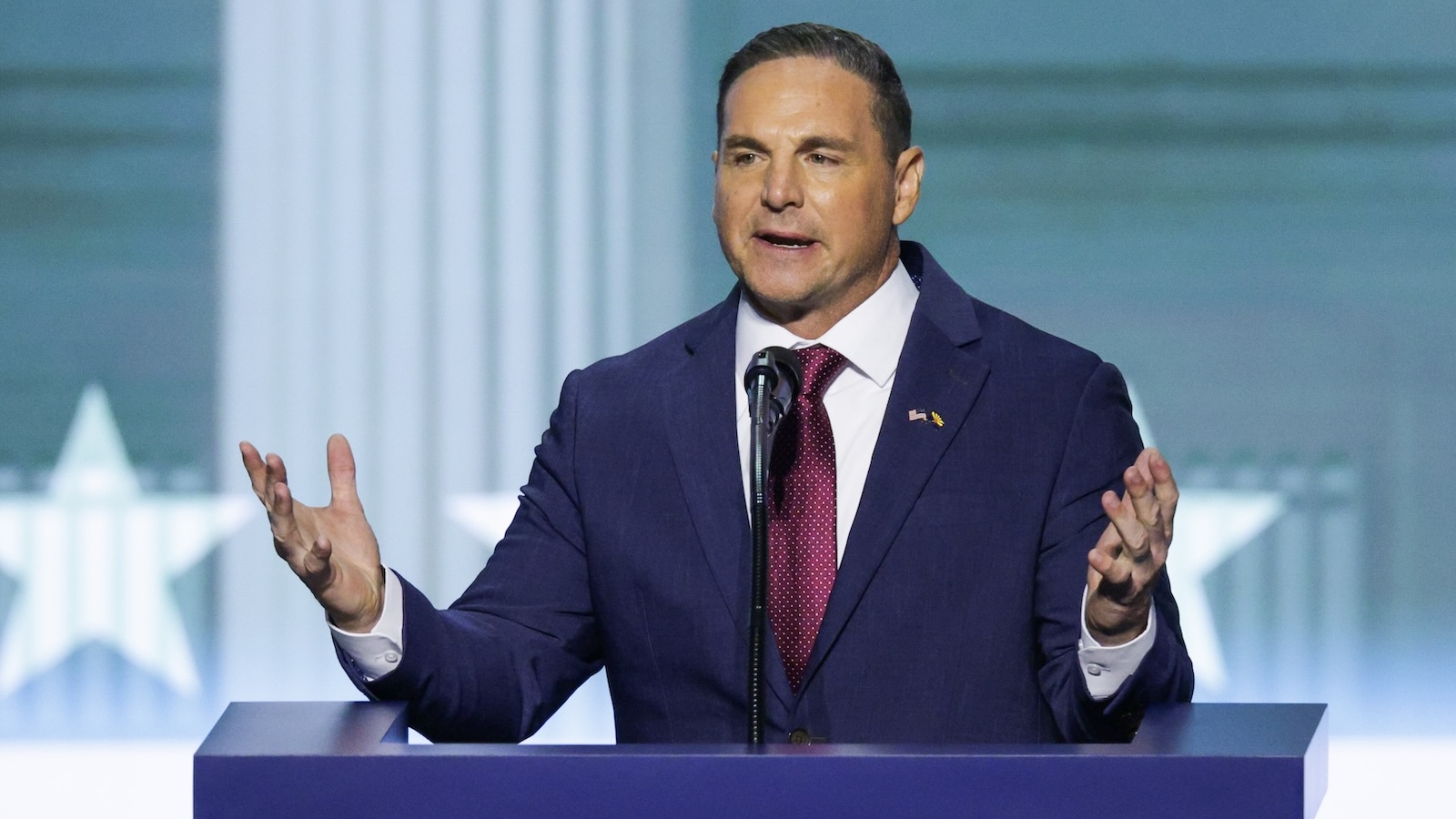
Alex Wong/Getty Images
Jay Feely lost his Congressional race to a former Jets team doctor
It turns out the curse of the New York Jets may extend beyond the football field to politics, too. Former NFL kicker Jay Feely, who received President Donald Trump’s endorsement in his bid for Congress, is trailing in Arizona’s 1st Congressional District against Democratic candidate Amish Shah, who just so happens to have been Feely’s team doctor during his time with Gang Green.
The connection between Feely and Shah dates back to the 2008 and 2009 NFL seasons, when Jay Feely kicked for the New York Jets, and Shah worked as a sideline physician for the organization.
Feely, an NFL kicker from 2001 to 2014, spent the 2008 and 2009 seasons in New York.
Former Jets kicker Jay Feely trails Democratic candidate Amish Shah, a former team doctor, in Arizona congressional election
According to early election results, Amish Shah received approximately 55% of the vote compared to Feely’s 43%, although the race had not officially been called as of Wednesday, November 4 at 8:30 a.m. EST.
Former NFL kicker Jay Feely is down by more than 11 points with 73% of the vote reporting.
The New York Times currently projects Democrat Amish Shah, who was the Jets’ team doctor at the same time Feely kicked for the team, to win by roughly 8.5 points. https://t.co/MYr2Khdv00
— Eli Kronenberg (@EliKronenberg) November 4, 2026
Shah, an emergency room physician and former Arizona state representative, worked with the Jets from 2008 to 2013, serving as an airway management physician who was responsible for helping players breathe in the event of a medical emergency.
Feely, meanwhile, spent 14 seasons in the NFL playing for the Atlanta Falcons, New York Giants, Miami Dolphins, Jets, Chicago Bears, and Arizona Cardinals before retiring in 2014.
Former NFL kicker Jay Feely received campaign donations from various figures across the sports world, including many NFL coaches and owners
The 49-year-old former kicker entered politics as a Republican and received Trump’s endorsement in his campaign to represent Arizona’s 1st Congressional District, which includes Scottsdale and parts of Phoenix.
According to Federal Election Commission records, Feely had numerous donors in the sports world, with his congressional campaign receiving financial support from Roger Goodell ($7,000), New England Patriots owner Robert Kraft ($7,000), Cleveland Browns owners Jimmy and Dee Haslam ($7,000 each), Denver Broncos owner Rob Walton ($7,000), Miami Dolphins owner Stephen Ross ($5,000), Arizona Cardinals owner Michael Bidwill ($5,200), Atlanta Falcons owner Arthur Blank ($3,500), New Orleans Saints owner Gayle Benson ($3,500), and Dallas Cowboys executive Stephen Jones ($3,500).
Other notable contributors included NBA Hall of Famer Charles Barkley ($7,000), CBS broadcaster Jim Nantz ($3,500), and professional golfers Tony Finau ($2,000) and Fred Couples ($1,000). Feely also received donations from current and former NFL coaches, including Tom Coughlin ($3,500), John Harbaugh ($2,500), Wade Phillips ($2,000), Bruce Arians ($500), and Kevin O’Connell ($500).
The race became one of the most closely watched congressional contests in the country, with outside groups spending more than $25 million attempting to influence the outcome.
Shah previously ran for the same congressional seat in 2024, narrowly losing to Republican incumbent David Schweikert. According to unofficial results published Wednesday morning, Shah held a double-digit lead over Feely, although votes were still being counted and no winner had been officially declared.
Democrats have won control of both the House of Representatives and Senate in the 2026 midterm elections, flipping both chambers from Republican control. As of Wednesday morning, November 4, Democrats had secured at least 231 seats in the House compared to 141 for Republicans, with dozens of races still uncalled.
In the Senate, Democrats and the two independents who caucus with them had secured 54 seats compared to 44 for Republicans, with two races still undecided. Republicans entered the election holding a 53-47 advantage in the Senate and a narrow majority in the House.