


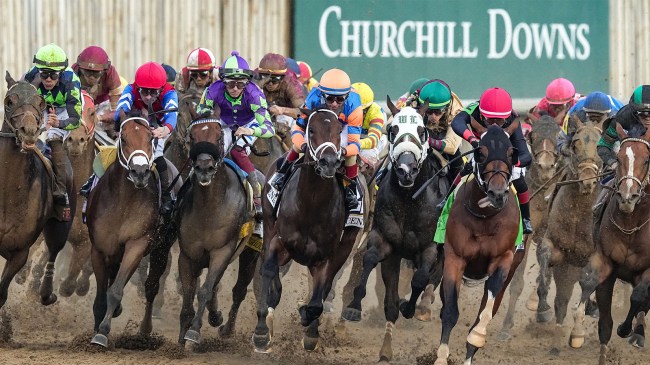
Grace Hollars/IndyStar / USA TODAY NETWORK
Each May, patrons gather at Churchill Downs in Lexington to experience horseracing’s most highly publicized event – The Kentucky Derby.
The history of the race dates back to 1875. It’s been run every year since, making it one of the oldest major sporting events held annually in the United States.
The inaugural winner of the “Run for the Roses” was Aristides, ridden by Oliver Lewis and trained by Ansel Williamson. You will not see that name used again at the Kentucky Derby.
Aristides is off limits due to registry rules. It falls into one of 15 classes of ineligible names.
Which names are prohibited in horse racing?
The Jockey Club lays out the 15 types of names that are off-limits. They relate to both horse racing’s storied history as well as other more common-sense restrictions.
It’s worth noting that about 30% of all submitted horse names are rejected outright for breaking one or more of the below rules.
When watching along from either the grandstands or the couch, viewers will not hear these names uttered in Lexington. They are not eligible for use.
Names consisting of more than 18 letters
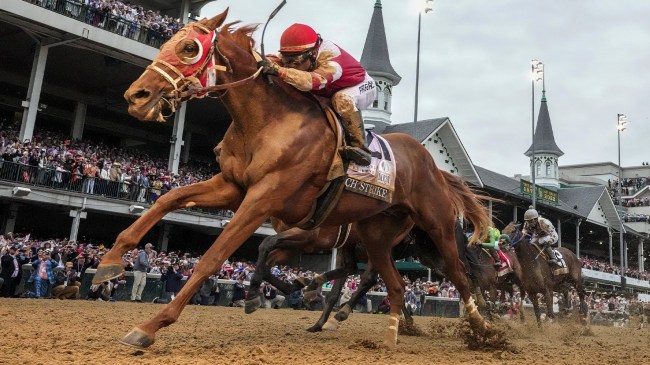
Michael Clevenger and Christopher Granger/Courier Journal / USA TODAY NETWORK
All horse names must be 18 letters or less. That includes spaces and punctuation. Previous names like Prince Silverwings and Request For Parole toed the line of maximum characters but ultimately fell inside the restriction.
Some of the longest names of more recent winners include Fusaichi Pegasus (2000) and California Chrome (2014), which came in at 16 and 17 characters, respectively.
Names consisting entirely of initials
Mike Weaver/Special to Courier Journal
Names cannot simply be a list of initials, say C.O.D. or F.O.B. Instead, a name must have some word fully spelled out.
There have been three-letter names used in the past, for example previous champions Orb (2013) and Zev (1923), but those were either actual words or shortened variations of larger names.
Zev was named after Colonel James William Zeverly while Orb was dubbed after the term for “a planet or other heavenly body and as the name of a symbol of monarchy that represents the monarch’s dominion.”
Horse like Danny K. have slipped initials into names but have gained approval due to the usage of a full name.
Names ending in horse-related terms
USA TODAY Network
That makes terms like Filly, Colt, Stud, Mare, and Stallion off-limits. Other animals, however, are eligible.
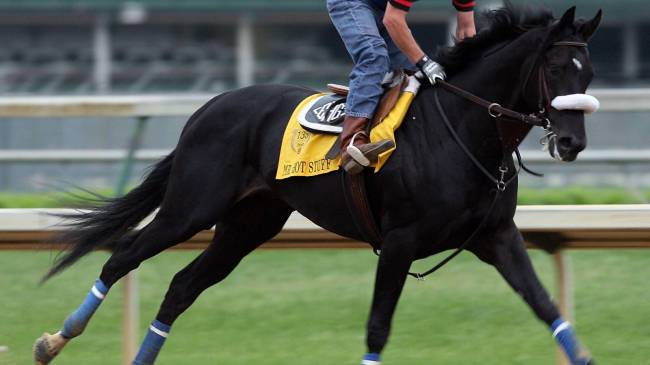
Mine That Bird won the Kentucky Derby in 2009. Meanwhile, Gallant Fox won the event in 1930.
Fusaichi Pegasus might be the closest thing to an offender of the rule, though the term “Pegasus” applies to a mystical horse with wings referenced in Greek Mythology.
Names consisting entirely of numbers
A. Messerschmidt/Getty Images
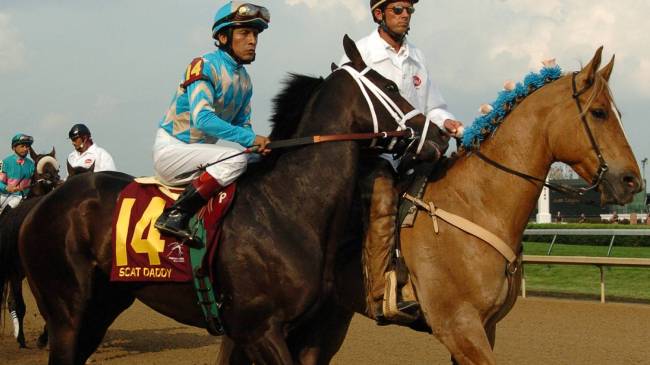
Numbers are not necessarily off-limits, but there are rules applying to their usage in horse naming. Roman numerals have been seen many times throughout the history of the Kentucky Derby, most notably with winners Canonero II (1971) and Typhoon II (1987).
Spelled out numbers are also eligible, for example, 1931 champion Twenty Grand. The current guidelines state that “Numbers above 30 (thirty) may be used if they are spelled out.”
Names consisting solely of numbers, though, are not allowed.
Names ending with a numerical designation
Jordan Prather-USA TODAY Sports
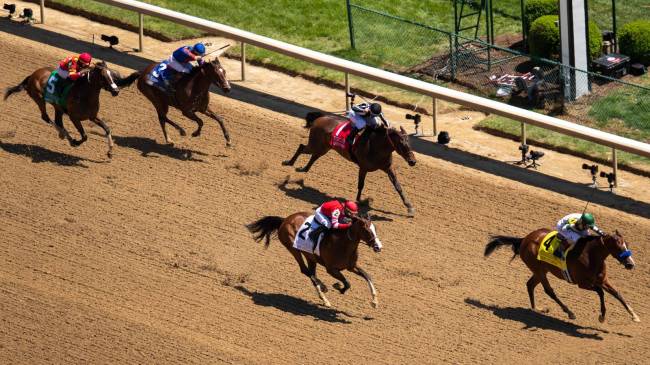
Another rule applying to numbers, names ending in designations like “2nd” or “3rd” are prohibited. Again, Roman numerals have been used as a worthy substitute.
Names like Fred Jr. and Hoop Jr., the 1945 champion, have also successfully worked around the restriction.
The term twice, as in Bet Twice, has also been allowed.
Names of living persons
Jamie Squire/Getty Images
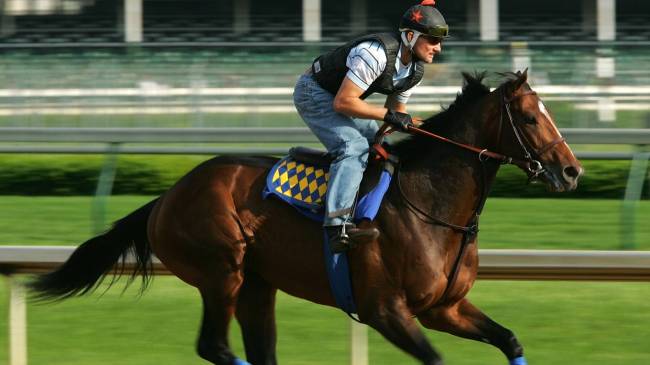
Horses will not be named after living persons, at least without approval. The rulebook states that written permission is necessary, and that it must be granted by the Jockey Club “upon a satisfactory written explanation submitted to the registrar.”
For that reason, we often see nicknames used in the place of legal names. Previously mentioned Zev, for example, paid homage to a friend of the owner without violating the guideline.
Names of persons no longer living
Andy Lyons/Getty Images
Again, this comes with a caveat. Those names can be approved by the Jockey Club upon submission of explanation.
1920 winner Paul Jones was named after Admiral John Paul Jones, though it was also a popular whiskey brand at the time.
Similarly, George Smith, the winner of the 1916 Kentucky Derby, was named after a millionaire gambler and horse racing enthusiast of the same name that died in 1905.
While people are generally off limits, names of fictional figures in pop culture can be fair game. Buck McCann was both the name of the 4th place finisher in 1893 and a horse on the popular TV series “Gunsmoke.” Macbeth II might also fall into that category.
Names of racetracks or graded stakes races
© Brian Bohannon/Special to Courier Journal / USA TODAY NETWORK
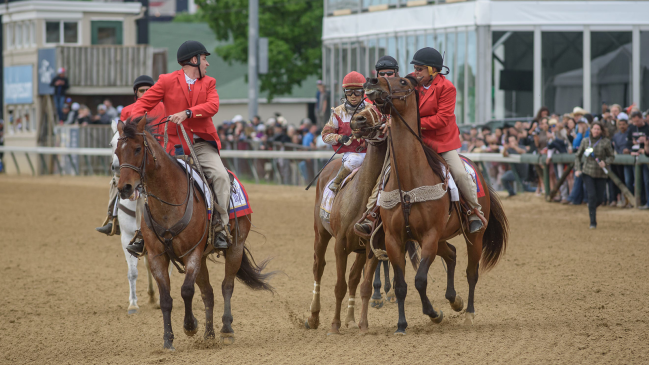
This one seems rather obvious. You will not hear of a horse named Churchill Downs racing in the Kentucky Derby at Churchill Downs.
Cities and states have been seen in the past. Omaha (1935), Seattle Slew (1977), and California Chrome all implemented US locales in their naming.
None referenced a racetrack.
Names barred at the judgment and discretion of the registrar
SAM UPSHAW JR. / USA TODAY NETWORK
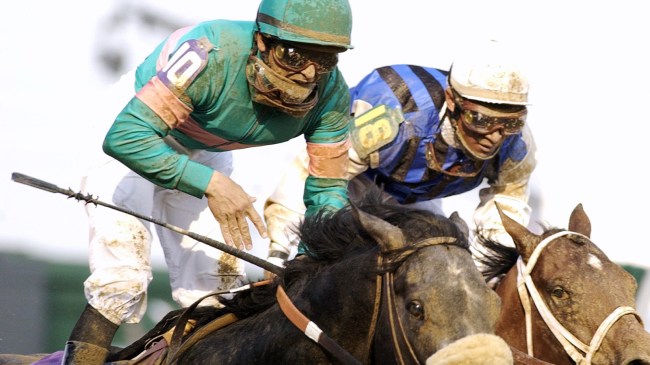
These are a few other common-sense rules. Names cannot be offensive in the eyes of the Jockey Club.
Guidelines detail restrictions related to profanity and obscenities. Names cannot disparage or offend individuals or specific groups of people. They can’t invoke controversy. They can’t be demeaning to the horse.
Vulgar terms are also no-no’s, though names like Strip Tease, Built For Pleasure, and Western Playboy somehow slipped through the cracks!
Names that are currently active either in racing or breeding
John Rott/Courier Journal
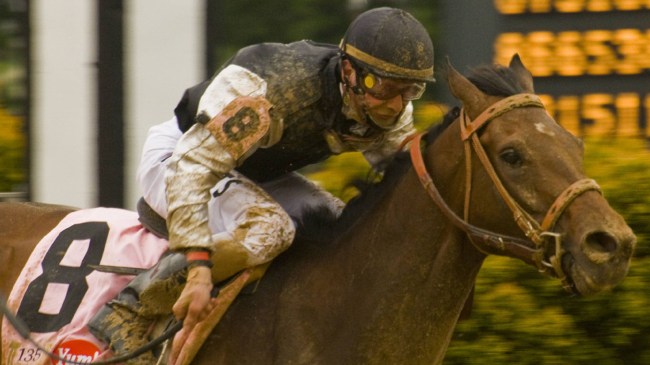
This one is a no-brainer. You don’t want two of the same horse’s name competing in the same field. The Jockey Club clarifies its stance on names of older horses, too.
“Names of horses over 10 years old may be eligible for use if they are not excluded under Rule 6(F) and have not been used during the preceding five years either for breeding (Stallions, Broodmares, or Broodmare Sires) or racing.”
Names of winners in the past 50 years of grade one stakes races

© Jeff Faughender/Courier Journal / USA TODAY NETWORK via Imagn Images
These next few naming rules fall into the same category, though with slight differences in the main criteria. All relate to historical success of certain horses.
Winners of particular races are given exclusivity. Think of it like a jersey retirement. For winners of grade one stakes races, those names are protected 50 years.
Permanent names
Courier Journal archive photo
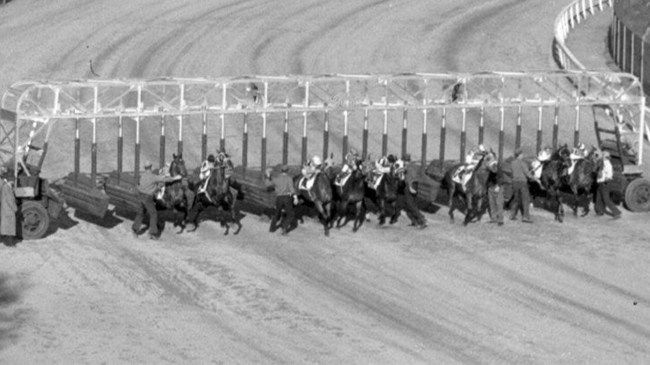
This is similar to the previously mentioned rule on race winners. These names, however, are totally off-limits. There is no timeline for potential reuse. They are shelved permanently.
The list of criteria includes the following:
(1) Horses in racing’s Hall of Fame, (2) Horses that have been voted Horse of the Year, (3) Horses that have won an Eclipse Award, (4) Horses that have won a Sovereign Award, (5) Annual leading Sire and Broodmare Sire by progeny earnings, (6) Cumulative money winners of $2 million or more, (7) Horses that have won the Kentucky Derby, Preakness, Belmont Stakes, The Jockey Club Gold Cup, the Breeders’ Cup Classic, or the Breeders’ Cup Turf, and (8) Horses included in the International List of Protected Names.
For that reason, you will not hear Secretariat, or any other Kentucky Derby champion’s name called again.
Names similar in spelling or pronunciation to the classes of names listed in Rule 6(F) 6 – 12 above

© Albert Cesare / USA TODAY NETWORK via Imagn Images
This one is kind of a throwaway rule meant to discourage names that sound similar to those deemed ineligible but that are spelled slightly different. It’s a defense against potential exploitation of technicalities in the rulebook.
You can never be too careful!
Names of horses previously recorded in The American Stud Book by the same sire or out of the same dam as the foal for which the attempt is made
Grace Hollars/IndyStar / USA TODAY NETWORK
This rule is a bit lengthy but relates to reusing names across generations and family lineages.
Names of horses appearing within the first five generations of the pedigree of the foal for which the attempt is made
Michael Clevenger and Christopher Granger/Courier Journal / USA TODAY NETWORK
This is the 15th and final restriction in the rulebook. Again, it goes back to family lineage.