



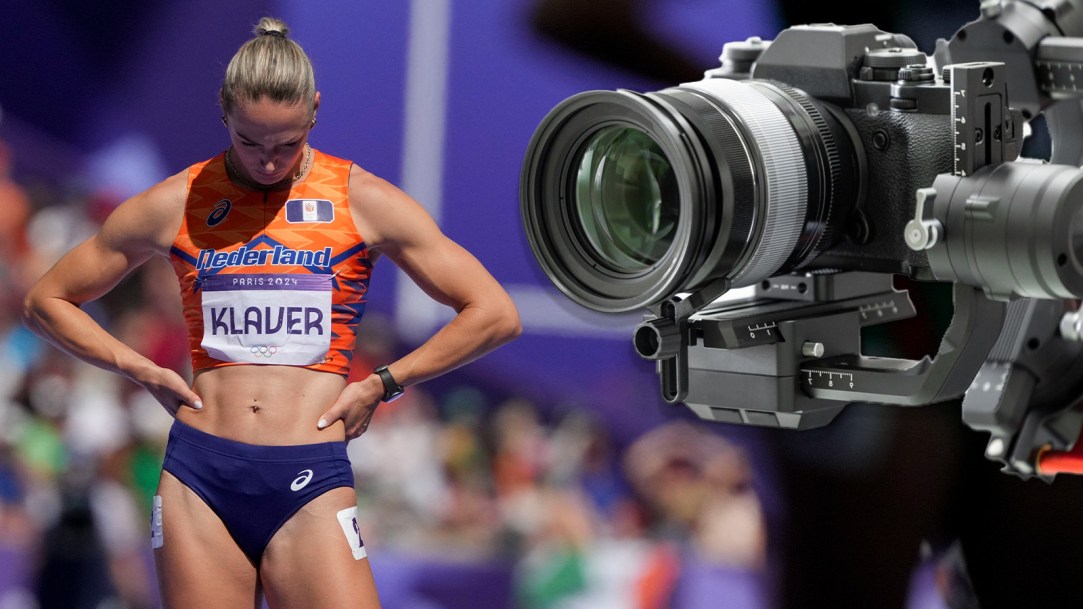
European Athletics partnered with the European Broadcasting Union to crack down on the sexualization of female track and field athletes through selective camera angles and editing choices during television broadcasts. The new guidelines warn against unnecessarily long shots of an athlete’s body, revealing views and slow-motion replays that do not provide value to the story.
However, the new set of rules does not include repercussions if they are not followed.
This has become a recurring issue for women in track and field. They often find themselves more focused on the cameras than the task at hand. They know that the footage could be used inappropriately on the internet.
Many female track and field athletes are uncomfortable with the camera.
Holly Bradshaw competed for Great Britain at the Olympics. She does not want athletes to worry about how they are going to be portrayed on the television broadcast while they are competing.
“Athletes want to enjoy themselves doing the sport they love without feeling uncomfortable or anxious about the footage being shown live. Many athletes, myself included have been in competitive scenarios where they are more focused on the cameras instead of their own performance.”
The 34-year-old retired pole vaulter has watched the footage get twisted into something that makes the athletes uncomfortable.
“I first-hand have received social media abuse and witnessed inappropriate videos online of myself and colleagues when slow motion content of us competing is captured.”
Olympic long jumper Ivana Spanovic agrees. She also noted the potential safety concerns that stem from the camera placement during competition.
“Certain camera angles, combined with gender stereotypes, not only cause discomfort for athletes and unnecessary distractions during competition but how it is broadcasted can also have serious long-term effects on athlete’s mental health, sometimes even the position of the camera is not in the right place and can cause risk of injuries during warm-up etc.”
The 36-year-old Serbian wants the broadcast companies to use their coverage to advance the sport instead of putting them back.
“As members of the global athletics community, we share a responsibility to present our sport in a way that engages, informs, and uplifts. By focusing on the skill and strength of the sport, we can create a more respectful and inspiring viewing experience. Commentators also play a crucial role in enriching broadcasts by highlighting athletes’ performances, strengthening audience connections, educating and motivating the next generation.”
That is where the new set of regulations comes into the equation. They are focused on respect for that athletes and for the sport.
Guidelines for respectful media coverage in women’s athletics.
The 23-page ‘Raising The Bar’ document was published by EBU Sport in partnership with European Athletics. It uses cartoon depictions of real-life situations to highlight “positive” and “negative” camera angles. It focuses on high jump, pole vault, long jump and running.
Broadcasters are told to avoid tight shots from the back of athletes. They are asked not to film from low cameras that are from underneath a competitor. The production team is asked not to show certain tight-angle slow-motion replays. Instead, they are encouraged to use a wider angle and to instead focus on technique and technical ability.
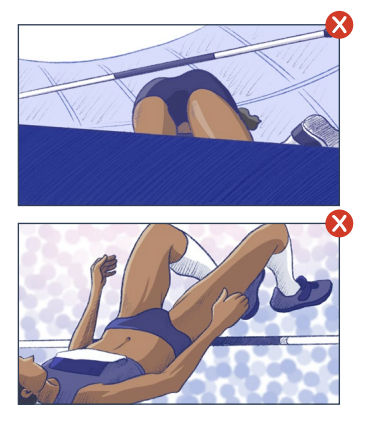
The high jump is the first event listed in the document:
“A low camera angle underneath the athlete has a high chance of generating compromising images. Maintaining a close view and providing slow-motion replays of the athlete clearing the bar diminishes technical insight and may produce compromising images.”
Here is the provided visual:
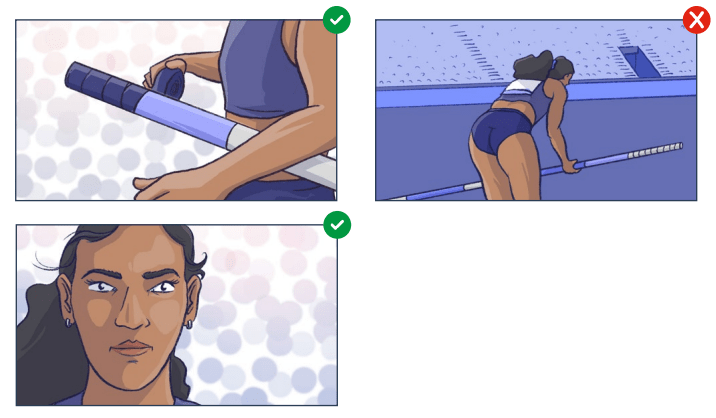
Similar rules apply for the pole vault:
“At times, it’s difficult to anticipate when an athlete will bend over in front of a camera, and sometimes it’s impossible to avoid; in this instance the athlete is lifting the pole, and a closer shot of her face beforehand or the camera operator moving to the side of her might have helped avoid this image.”
Here is the provided visual:
Camera operators for running events are asked to stay in front of the athletes and use a wide frame. If that is not possible, it is asked to show the athletes above the pelvis.
These are just a few examples but they all share the same general principle. Female athletes don’t want to be filmed from behind or from up close. They don’t want to worry about what people on the internet are going to do. European Athletics and the European Broadcasting Union are hoping to change how the sport is covered.