


iStockphoto
Hinduism is the most popular religion in India, and the country is home to hundreds of thousands of temples where followers can worship. That includes one sacred site tucked in the Himalayas that has decided to ward off curious tourists by making people consume a concoction made with cow dung and urine before they’re allowed to enter.
I’m aware that my decision to label Hinduism as a “religion” in the opening paragraph of this article has the potential to spawn a theological debate concerning a belief system that some people would argue is best defined as a “spiritual practice.” Its adherents can fall on a pretty wide spectrum, including the more than one billion people in India who identify with a philosophy that stretches back close to 2,500 years.
India’s culture has been inextricably shaped by Hinduism, as the country’s caste system, art, and cuisine have been influenced by some of its core tenets. Some aspects have also found worldwide appeal, and plenty of people who self-identify as “spiritual” end up making the trek to the cradle of that particular belief system to get their Eat, Pray, Love on.
Those pilgrimages frequently include trips to one of India’s many temples, and one of them has decided to try to discourage curious visitors with a very unique barrier to entry.
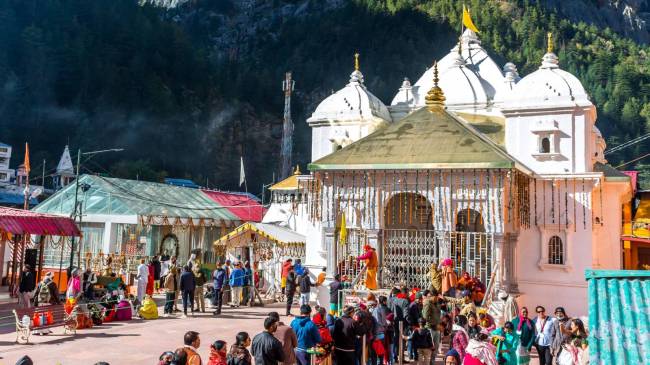
The Gangotri Temple in India is barring visitors who don’t consume a drink made with cow urine to keep out “non-believers”
Many religions have rituals that outsiders would consider outright bizarre at first glance, and Hinduism is no exception.
There is no beef to be found in traditional Indian cuisine due to the sacred nature of cattle, but the same can’t be said for bovine byproducts. Cows are harnessed for milk that can be turned into ghee and curds, which are three of the five products in panchagavya, a mixture that is also made with the animal’s urine and dung.
The concoction, which is traditionally fermented and mixed with coconut water and sugar, may not seem that appealing on first glance. However, its proponents position it as a form of traditional medicine that may or may not offer therapeutic benefits for ailments including diabetes and cancer, which may or may not be canceled out by the risks of consuming poop and pee from a cow.
According to The Independent, panchagavya has now become a mandatory part of the experience for anyone who wants to visit the Gangotri Temple in the state of Uttarakhand, as the people who oversee it have made its consumption a compulsory aspect of gaining entry in order to “keep out non-Sanatani and non-believers.”
The temple in question is one of the four at the center of the annual Char Dham Yatra pilgrimage, which attracts millions of people who visit four holy sites in the Himalayas each year. Gangotri is traditionally the second stop on a journey that begins in Yamunotri and ends with a trek to Kedarnath and Badrinath, which also attract many of the tourists that the temple that rolled out the panchagavya policy is trying to ward off.
A representative for the temple spoke with the outlet while explaining the reasoning behind the decision, saying:
“True believers will have no problem in consuming it. Only those entering in disguise with no faith in the religion will have a problem. They won’t be allowed.
This will restore faith and spirituality in people, and those getting a chance to consume it should consider themselves fortunate.”
It’s unclear if the policy is a permanent one or simply applies to the pilgrimage period, but India does boast plenty of other temples to choose from if you’re not down with panchagavya.