



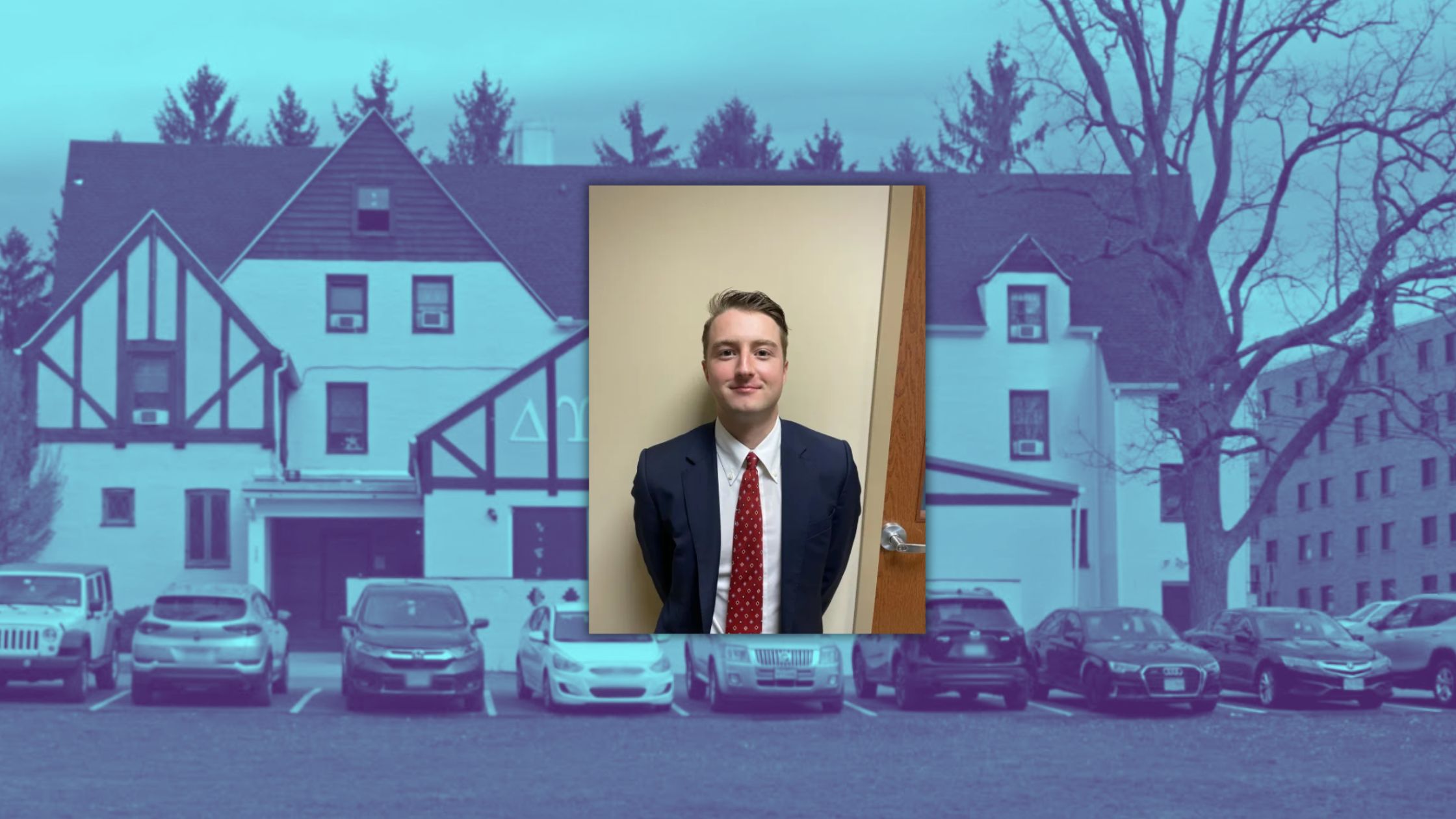
via Google Maps / Thomas Robinson via Pennsylvania Attorney General's Office
Penn State Delta Upsilon and Thomas Robinson via Pennsylvania Attorney General's Office
A grand jury presentment obtained by BroBible from the Centre County courthouse describes shredded non-disclosure agreements, a footlocker of lab gear, weed runs to a New York reservation, and a bagging session by a Delta Upsilon pledge the day before a Beaver Stadium Whiteout.
Every great crime movie has a recruitment scene. According to a court filing that surfaced this week, the alleged Penn State fraternity cocaine ring’s involved pledges holding out their hands to prove they were steady enough for a job they hadn’t been told about yet: bagging cocaine cut with creatine. Then they signed NDAs that were ripped up and tossed in the trash.
Over the past month, this saga has given us an alleged Sigma Chi kingpin the internet nicknamed “Pablo Pledgecobar,” a prominent Pittsburgh lawyer accused of helping his son retrieve a safe from the woods, and the alleged ringleader’s younger brother getting arrested on a boat for possession of cocaine in a Pennsylvania state park near Penn State.
If you’re just catching up, I wrote a BroBible explainer on the criminal complaint that reveals a timeline of events. It walks through the full cast of characters in this saga, so it’s a good place to start. I also put together a comprehensive breakdown of how much money allegedly moved through the cocaine trafficking ring based on court testimony and previously filed documents.
One alarming detail has hung over the case since Pennsylvania Attorney General Dave Sunday announced the charges in August: his office said pledges cut and packaged the cocaine. Now the grand jury’s account of how the pledges allegedly put their work to use in this operation sits in the public court record.
The details are a lot to unpack.
As a Penn State alum who has been following all this closely, I requested the full set of case files from the Centre County, Pennsylvania courthouse, and they landed in my inbox this morning.
The files include the grand jury’s detailed account of how the Delta Upsilon side of the alleged ring actually ran. It includes how pledges were recruited to what the fraternity’s leaders told brothers the day after the police showed up. So far, prosecutors have charged 14 people.
Before the pledges knew the job, they had to hold out their hands.
According to the presentment, that was how former Delta Upsilon brother Thomas Robinson screened Penn State pledges in the fall of 2024. The grand jury even gave it a name: the “steady hand test.” Pledges whose hands held still were allowed to keep helping Robinson. The job turned out to be shredding bricks of cocaine, cutting them with creatine, and weighing the powder into half-gram bags in the fraternity’s furnace room. Fittingly, this whole ordeal is alleged to be a true boiler-room operation.
The document is Presentment No. 33 of Pennsylvania’s 52nd Statewide Investigating Grand Jury, accepted by Supervising Judge Richard A. Lewis on Sept. 12, 2025, and filed in Centre County as an attachment to the criminal complaints against two of the pledges it describes. A companion document, Presentment No. 32, is attached to Robinson’s own case file and covers much of the same ground. Both are public court records, and several Pennsylvania outlets reported on the pledge details Thursday, including the Pittsburgh Tribune-Review, PennLive, and Onward State.
A presentment is a grand jury’s findings and recommendation of charges. None of it has been tested at trial, and everyone charged is presumed innocent.
Robinson, 23, is the man prosecutors call the second-in-command of an alleged cocaine ring that ran through the Delta Upsilon and Sigma Chi houses on the stretch of State College the grand jury refers to as “Fraternity Row.” He faces 31 counts, including corrupt organizations, and is scheduled for formal arraignment on Sept. 30.
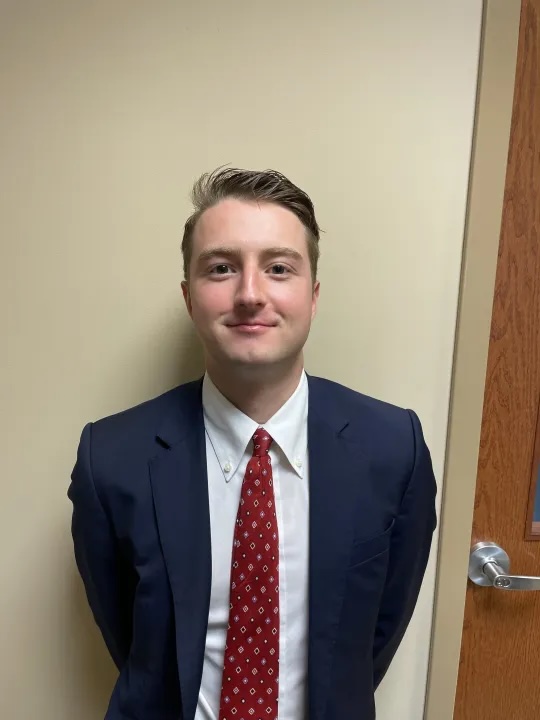
via Pennsylvania Attorney General's Office
Thomas Robinson via Pennsylvania Attorney General's Office
The “steady hand test” for pledges to be cocaine packagers
Pledge Charlie Weisman (spelled “Wiseman” throughout the presentment) testified that Robinson contacted him during the fall 2024 pledge process and told him to get two other pledges “who were trustworthy.” Weisman brought fellow pledge Seth Beardsley and a third pledge to Robinson’s room.
What happened next is laid out in the presentment with the flat precision of a lab protocol. “Robinson directed all three pledges… to hold out their hands,” it reads. “If their hands were steady, they were allowed to continue to assist Robinson, although they did not know the task they were being asked to do.” The three pledges were Beardsley, Wiseman, and the third, identified only by initials in the presentment.
Weisman and Beardsley passed the “steady hand test.” One pledge did not and, in the grand jury’s words, “was rejected from assisting Robinson.” So Weisman and Beardsley went and recruited another pledge, brought him to Robinson’s room, and he took the test too. He passed.
After the “steady hand test” for pledges came the paperwork. Robinson directed the three pledges to “go online and print three copies of a non-disclosure form.” He had them sign the NDA forms, then tore them up and threw them away. The presentment does not say why. (Robinson, a finance student, had been admitted to law school before his arrest; CBS News Pittsburgh has reported the admission was withdrawn.)
Only after the NDAs were shredded did the pledges see the work. Robinson took them to the furnace room, which the presentment also calls the boiler room, and had two of them set up a folding table. Weisman was sent to the trunk of Robinson’s car for a footlocker that held goggles, masks, gloves, Pyrex dishes, a digital scale and half-gram zip-lock baggies. Robinson placed “a brick-like amount of cocaine” on the table. One pledge shredded it while Robinson added creatine, and the other two filled and weighed the bags.
Weisman calculated they produced 100 to 200 half-gram bags before, as the presentment puts it, “the preparation on that day was brought to a halt by Robinson.” By Weisman’s account, there were two more sessions. The second took place in Robinson’s room with just Weisman and Beardsley. The third was Weisman alone on Nov. 8, 2024, a date the presentment pins down as “the Friday before the Saturday Whiteout game.”
For the record, the Penn State Nittany Lions football team went on to beat Washington 35-6 that Saturday.
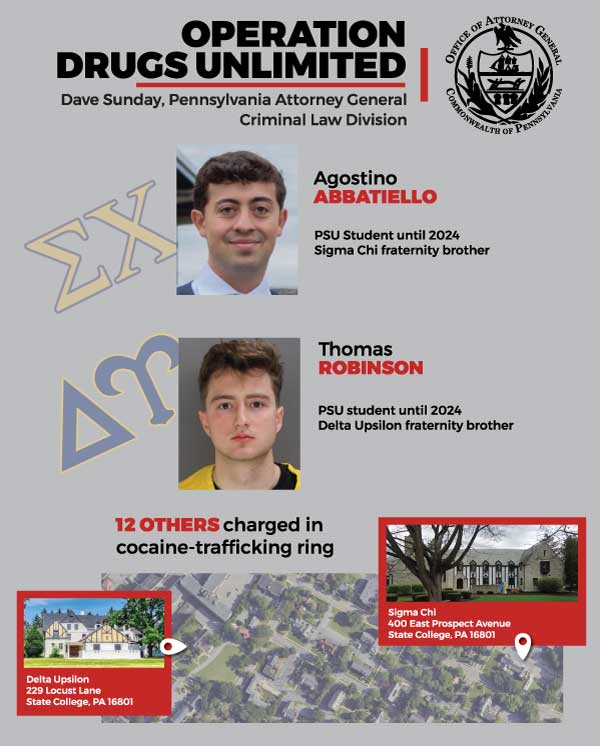
via Pennsylvania Attorney General's Office
Alleged Penn State Fraternity Cocaine Ring Mugshots via Pennsylvania Attorney General's Office
The pledges were at the brothers’ “beck and call”
The grand jury spent pages explaining how a pledge ends up in lab goggles in a frat house basement, and the answer starts with pledging itself. At DU, the process lasted about eight weeks. Pledges were expected to be at the house “24/7, except when they are in class or have an important event/task outside the fraternity,” and at the brothers’ “beck and call.” Brothers called pledge masters supervised each class, volunteered for the job, and decided the punishment when a task wasn’t done right.
Robinson held a different title for both the spring and fall 2024 pledge classes: new member educator, a role the presentment describes as the mediator between pledges and pledge masters. The grand jury concluded he used that position to recruit pledges into his drug operation. Beardsley testified that Robinson worked with the pledge masters instead of mediating between them, and the pledges who testified said Robinson was “calling the shots.”
He also outranked them. Robinson sat on DU’s executive board as President of Academics, and the grand jury found he had achieved “Senior Status,” which gave him greater influence over pledges and let him ask more of them.
Holding it together, according to testimony from brothers and pledges, was an unwritten code. Pledges were free to leave, but if they stayed, they stayed loyal, and part of that loyalty was “the unspoken rule that no one talks about what goes on at the fraternity and no one reports what happens at the fraternity to law enforcement or PSU regardless of the situation(s) that may occur.” That mentality, the grand jury wrote, “spilled over” to the drugs, which were “generally kept within the four walls of the fraternity.”
A big favor
Daniel Price arrived at Penn State as a freshman in fall 2023 and pledged DU the next spring because his roommate was a member. During pledging, he told the grand jury, he learned Adderall, marijuana and cocaine were in use at the house, and that many pledges took Adderall to focus, especially around exams. Everyone knew Robinson was the source, Price said.
On March 15, 2024, while Price was still a pledge, Robinson texted him and asked him to deliver cocaine to someone at the Alpha Gamma Rho house, adding yet another fraternity address to the case files. Price did it for $40. By his count, he made about ten deliveries for Robinson, including one to a friend of Robinson’s who paid Robinson over Venmo while Price stood there.
Four days later, Robinson told Price he “needed a big favor” and to “grab another person/pledge.” Price brought his friend and fellow pledge Kyle Ridpath to Robinson’s room, where Robinson started a three-way group text and sent the two pledges to Walmart and other stores with a shopping list: a white folding table, two glass trays, two protective COVID masks, two pairs of lab goggles, and 15 packs of dime bags.
When they got back and set everything up, Robinson produced “a large zip-lock bag containing a semi-solid brick of what Price and Ridpath concluded was cocaine,” then showed them how to break it up and package it.
The creatine went in as cut, which the grand jury helpfully defines as “a substance used to increase the volume of drugs that a drug dealer has available to increase his profit.” The pledges weighed each half-gram bag to Robinson’s specifications. Price estimated they made 200 to 300 of them, which Robinson gathered into a bigger bag and zipped into a backpack.
A photo shown to the grand jury as Exhibit A captures Price and Ridpath crushing cocaine into a fine powder on March 20, 2024. Processing a kilo took them roughly ten hours spread over two days.
The room wasn’t exactly locked down. Price testified that Robinson’s best friend in the house, and three pledge masters were “coming in and out of Robinson’s room while they were preparing the cocaine and that no one seemed surprised.” Ridpath later told police that anyone who lived at or spent time in the house knew about the drugs.
Another DU pledge admitted delivering bags of cocaine to people outside the fraternity on three occasions at Robinson’s direction.
Weed runs to Salamanca
Robinson walked the grand jury through his own rise, and he described inheriting a business more than starting one. When he joined DU, he testified, several brothers were already selling cocaine, marijuana and other drugs, and “the normal procedure was that when a DU brother graduated or went overseas, they relinquished their roles in selling controlled substances and another brother would take their place.” Adderall came from whichever brothers had prescriptions.
He became a brother on Nov. 17, 2022. His first purchases were a half gram of cocaine for $45 and three and a half grams of marijuana for $30, paid over Venmo to two older brothers. In fall 2023 he took over the house marijuana trade, and a brother identified as M.H., who had become the main cocaine supplier, asked Robinson to help and then take over, introducing him to his source, identified as “A.A.”
The marijuana came with a road trip. A friend from the Phi Kappa Theta fraternity, identified by initials in the docs, knew of an Indian reservation in Salamanca, New York, where Robinson could buy better weed for less. Robinson first rode along in spring 2023. Ounces for himself became pounds for himself and everyone else. He told the grand jury a pound cost him $300 and still cleared $1,500 to $1,800 in profit even after he smoked his share.
The presentment explains the appeal in a footnote. “The reservation was a convenient and risk-free area for them to obtain marijuana,” it reads, because the tribe is a sovereign nation with its own laws, where marijuana “is legal there and not subject to any state or federal laws or taxes.” The risk, as the grand jury saw it, was the drive home.
Robinson eventually solved that too. A friend introduced him to Telegram, where he could order marijuana from California and have it mailed straight to the fraternity house, which the grand jury noted was “less time-consuming and safer” because he and the Phi Kappa Theta friend “were no longer taking the risk of the police stopping them” on the way back from New York. He used it eight to ten times during the spring 2024 semester, starting at one pound and working up to two, clearing $1,500 to $2,000 a pound.
It was on one of those New York trips, in fall 2023, that Robinson told the Phi Kappa Theta friend he was taking over a cocaine operation and asked if he wanted to be a partner. The Phi Kappa Theta friend declined and, per the presentment, “told Robinson he was in way over his head.” Robinson said he would ask his best friend instead.
A DU brother, who was in Robinson’s freshman class and pledged DU alongside him, told the grand jury that “everyone in the fraternity knew Robinson supplied Adderall, marijuana and cocaine.” He said he bought half-gram bags from Robinson for $40 to $45 and eventually helped prepare the cocaine himself. It was Robinson, his best friend at the time testified, who “brought up the idea” of having the pledges do the prep work. This same friend also said brothers warned Robinson the operation was getting too big and putting everyone at risk of arrest. “Robinson ignored the cautions,” the presentment says, “and continued to deal drugs and expand his customer base by selling to non-fraternity members.”
The bottom of the stairwell
The case against Robinson started in September 2024 with a State College police detective, two confidential informants, and a doorway.
On Sept. 25, 2024, the first informant asked a friend in DU about buying cocaine. The friend went into the house, bought 2.5 grams from Robinson for $140, and handed it over around the corner on East Foster Avenue. Robinson wanted to be paid on Venmo, the presentment notes, but “law enforcement did not have a Venmo account for controlled purchases,” so the cops paid cash. The friend then passed along Robinson’s Snapchat so the informant could deal with him directly. According to the charging documents, the handle was “Tommy Robinson.”
Two days later, the informant messaged Robinson and learned the smallest amount Robinson would sell him was a half ounce. It cost $650. Robinson, the informant told police, would only meet at the bottom of the stairwell just inside the front door. An ounce followed on Oct. 16 for $1,200, and another half ounce on Nov. 14, when the informant tried and failed to get invited up to Robinson’s room.
After four buys, the detective flipped the informant’s friend. On Dec. 12, 2024, that second informant bought a half gram for $20 inside Robinson’s room, Room 18. Police searched the room the next day and, according to the presentment, took $1,906 in cash, 229 Adderall pills, 8.2 grams of cocaine, 224 grams of marijuana, and a Kimber .45 handgun from a safe, magazine loaded, no round chambered. A footnote adds that Robinson had a permit to carry.
‘Get a lawyer’
The fraternity’s response appears in Presentment No. 32. According to testimony from multiple DU brothers, the chapter’s 2024 president and its incoming 2025 president called a meeting the day after Robinson’s arrest and announced it through a GroupMe message to every brother.
They told the brothers what had happened. They also “told the fraternity members that anyone who had been involved with Robinson and what he was doing should get a lawyer and not talk to the police,” and “directed the members of the fraternity to let them know if they get contacted by law enforcement, such as through receipt of a subpoena.”
Where things stand
According to their court dockets, Weisman and Beardsley each face two misdemeanor counts: possession of a controlled substance and possession of drug paraphernalia. Both were released on their own recognizance and waived their preliminary hearings this month; Beardsley’s formal arraignment is set for Oct. 7 and Weisman’s for Oct. 14.
Robinson’s formal arraignment is scheduled for 1 p.m. on Sept. 30 in Centre County Court.
Note from Brandon: As a Penn State grad from a long line of Penn State grads, I’m following this one closely and will keep updating here at BroBible as the case moves through court. If you have something worth sharing, email me at brandon@brobible.com. Confidentiality assured.