



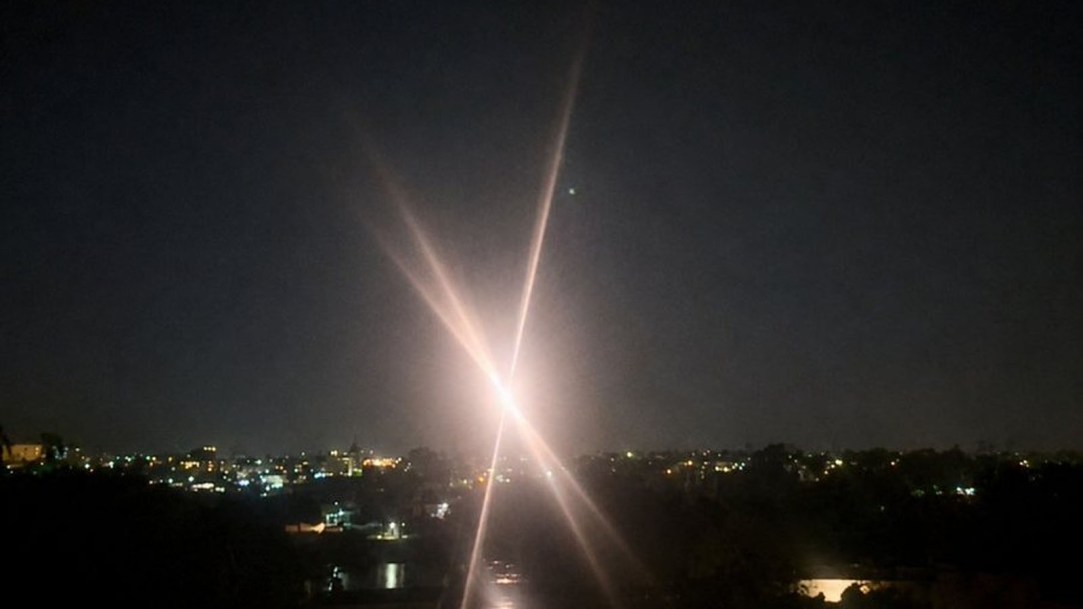
For the first time ever, the U.S. military shot down cartel-linked drones along the Texas-Mexico border using a high-energy laser. Officials did not publicly state the exact location of the incident, other than that it was near Texas’ Rio Grande Valley.
Three hostile, unmanned aircraft systems that were considered a threat and thought to be connected to Mexican cartels were stopped last week by American military personnel assigned to Joint Task Force Southern Border using the Army Multipurpose High Energy Laser (AMP-HEL) system.
“Cartel networks are increasingly employing unmanned aircraft systems to facilitate illicit human-smuggling and actively spy on our personnel and law enforcement partners,” Army Major General Curtis Taylor, the commander of Joint Task Force–Southern Border, said in a statement.
Cartels have utilized drones to dump bombs in lethal strikes in areas of Mexico farther from the U.S. border. Authorities from the United States and Mexico are collaborating to stop the proliferation of drones in the border area.
A War Department official called it the future of warfare
It was the first time the military has used the laser system to take out drones connected to cartels along the southern U.S. border. According to a War Department officer, directed-energy weapons like lasers can eliminate drones and incoming cruise missiles, and they are far less expensive than kinetic weapons like missiles.
One of the department’s six essential technological areas is developing scalable directed-energy weapon systems like those used at the border. Other fields include applied AI, biomanufacturing, contested logistics technologies, quantum and battlefield information dominance, and scaled hypersonics.
“The successful defeat of these adversarial drones is a direct testament to the readiness, vigilance and technological edge of the [joint task force],” said Taylor. “By integrating layered countermeasures alongside advanced directed-energy capabilities like this laser system, we have made it clear that we will not tolerate hostile surveillance.”