



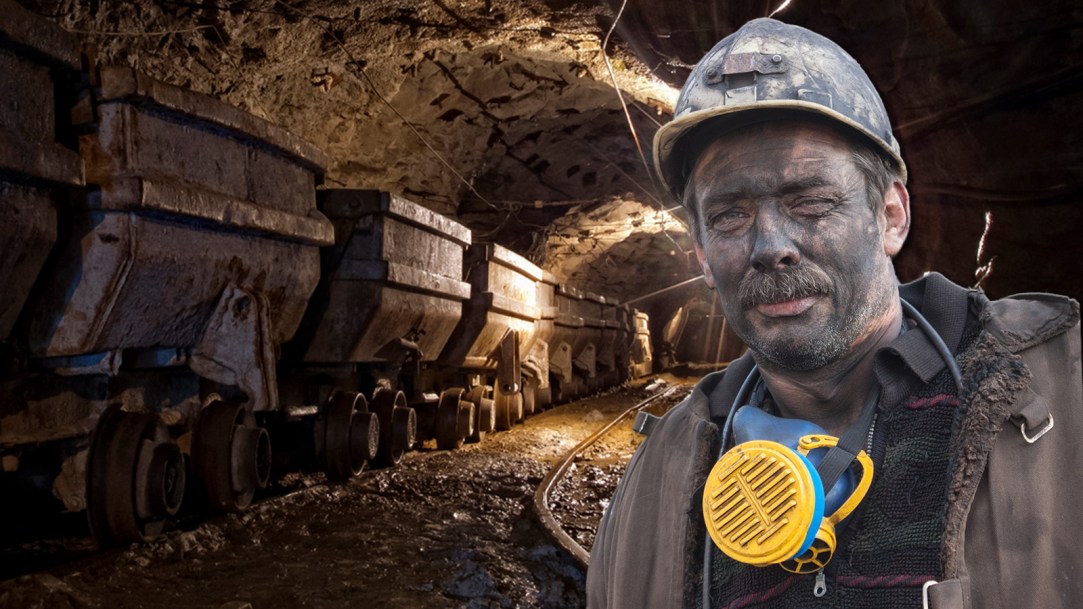
West Virginia has a longstanding relationship with coal, rooted in the state’s geography and rapid industrial development in the late 19th century. Although the “black gold” continues to dry up and jobs are harder to come by, it remains a crucial piece of the economy and of the people.
Miners continue to put their lives at risk each and every day.
In a world where coal remains such an important industry, we really don’t know a lot about what goes on inside. A West Virginia miner recently shared a POV video of a day in his life that provides a much greater understanding of the terrifying reality.
Coal has deep roots in West Virginia.
Large coal deposits in the Appalachian Basin made mining the dominant industry in the Mountain State. Coal companies controlled much of the land, housing and infrastructure in mining towns by the early 20th century. Workers were often paid in scrip instead of cash so the miners were tied to the operators. Seemingly infinite coal production also drove population growth as laborers moved to the area for work.
Black gold remains important to the state today, both economically and culturally. However, the industry has seen a significant decline over the last 100 years. Mechanization was the first domino to fall. A rise in natural gas and environmental regulations also reduced the demand for coal in Appalachia.
The state employed more than 100,000 coal miners in the 1950s. That number is closer to ~15,000 today— if not even less. Highly mechanized underground operations produce more coal with far fewer works. Most of the remaining production comes from the Boone, Raleigh, Mingo, Kanawha, Logan, Wyoming and McDowell counties.
With that being said, West Virginia continues to rank among the top coal-producing states in the country. Rich Rodriguez and the Mountaineers reclaimed the industry from the Wyoming Cowboys with their blackout uniforms in October. The head coach actually comes from a coal mining family. It’s everywhere.
A miner’s POV video takes you inside the mines.
The amount of jobs in the coal industry continues to decrease but they still exist. Miners still go underground to work 40-hour weeks below the core of the earth. It is just as dangerous as it always was.
And yet, we rarely get to see what life looks like down there. That is partially on purpose. Coal companies don’t want people to see what goes on. Employees are too busy to worry about pictures and videos.
There is one 20-year-old coal miner who recently posted a series videos from underground. They provide an inside look at the mine, the machinery, and the working conditions. If you are claustrophobic, these videos are not for you. They will make you squirm.
Miners can’t see but a few feet in front of them at any point in time. All of the light comes from their headlamps.
The tunnels are not even tall enough to sit up or stand. Miners have to keep their heads inside the vehicle, which requires them to lay horizontal.
If this is how it looks in the year 2026, imagine what life was like in the early 20th century. Coal miners are putting their lives at risk every time they go to work in the morning.