



Via wpixel.com Adobe Stock/leeyiutung Adobe Stock/@ryanremrich TikTok
Ryan Remrich (@ryanremrich) was scheduled for a flight from Boston to Denver. Being nice cost him his flight.
On Thanksgiving weekend, a flyer experienced in real time exactly what “no good deed goes unpunished” means. His one act of kindness cost him a missed flight and a six-hour delay.
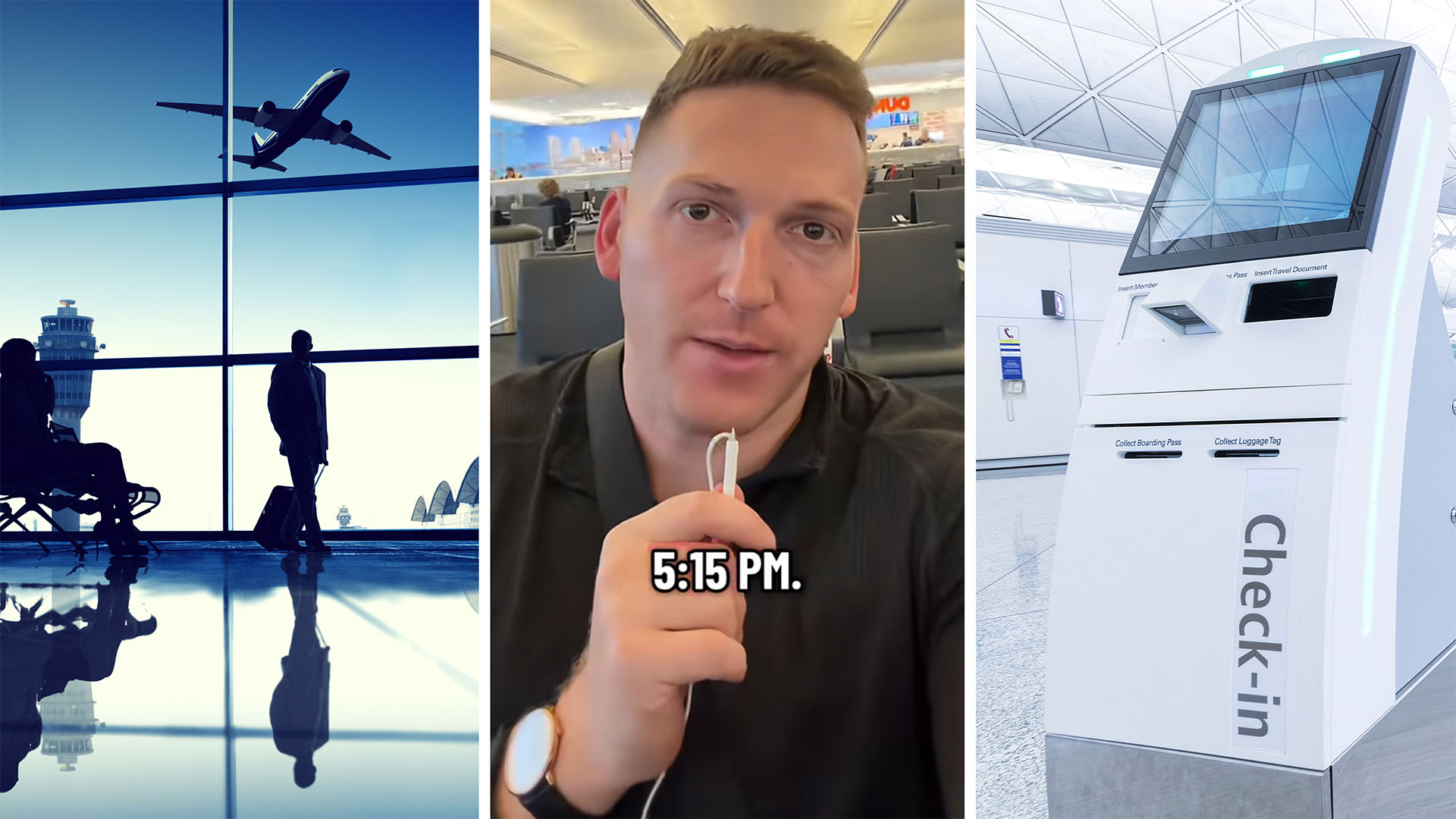
Ryan Remrich (@ryanremrich) was scheduled for a flight from Boston to Denver. He says he got to the airport early. At the self check-in kiosk he attempted to check his skis, but it would not process. Upon going to the service line, he says he allowed two people to get in front of him. They jammed the line for 20 minutes.
By the time he got to the attendant, it was past the bag cutoff time for his flight. Subsequently, the attendant bumped him to another flight. His 10:35am arrival turned into a 5:15pm arrival.
“It’s official—I am never being nice again,” he says in a video.
“I don’t have these problems when I’m 2.5 hrs early for my flights. Sir, what is the definition of your early?” asked a commenter.
“So you gave yourself a buffer of 25 minutes to check in on quite literally the busiest travel weekend of the year with oversized luggage? Dude this is on you,” asserted another.
What Time Should You Get To The Airport?
One person’s early is easily another person’s anxiety-inducing level of late. “Early” is relative, which is why there are guidelines of when to arrive at the airport for a flight.
Each airline has their own guideline for airport arrivals. For domestic airline travel, the big three airlines (American, Delta and United) recommend passengers arrive two hours prior to flight takeoff. Adhering to this guideline gives the traveler enough time to check bags, clear security, overcome hindrances and still arrive at the gate for prompt boarding. For international travel, three hours prior to a flight takeoff is recommended.
While those are the airline’s guidelines, Nate Silver, the multi-hyphenate statistician, took the time to fully analyze the best time to get to the airport. He has taken 800 flights over the past 15 years (an average of 53 flights per year). Of his 800 flights, he has only missed three to four. The flights he missed, he says, had nothing to do with the airport. It was a miscalculation of his travel commute to the airport. He argues that with the increased efficiency of security, bag drop and boarding for a small to medium-sized airport, domestic flight, an hour is the most amount of time someone needs to arrive before their flight.
The Cost Of Waiting
According to Gary Leff, in 2025, being overly prompt at the airport wasted $83 billion in productivity. In an article for Over The Wing publication, Leff states that passengers being urged to show up to the airport two to three hours early is a major failure of air travel and that it’s a feature, not a bug.
“Why do we simply accept showing up 3 hours before a flight, and taking an hour to get out of the airport, turning a two hour trip into 6 hours without even considering the time it takes to get to and from the airport?” asked Leff. “We’ve turned airports into shopping malls, because airline passengers aren’t an airport customer, they’re the product to be sold to.”
In short, to Leff, longer dwell times mean more revenue—for the stores, airport, and the airlines—even if indirectly.
While the argument can be made that two hours is excessive, there are times and situations that necessitate getting to the airport early. When traveling during the holidays, during peak season, to larger hub airports, and with bulk luggage, passengers should consider following guidelines.
The airlines suggest the broad two-hour guideline to have a one-size-fits-all approach. After all, it is a guideline and not a mandate. Travelers can tailor their arrival time to the airport to fit their specific needs.
The next time Remrich has a flight itinerary, maybe he will follow the suggested arrival guidelines. Perhaps he took a part of his additional six hours to at least think about it.
BroBible reached out to Remrich for comment.