



iStockphoto / USA TODAY Network via Reuters Connect
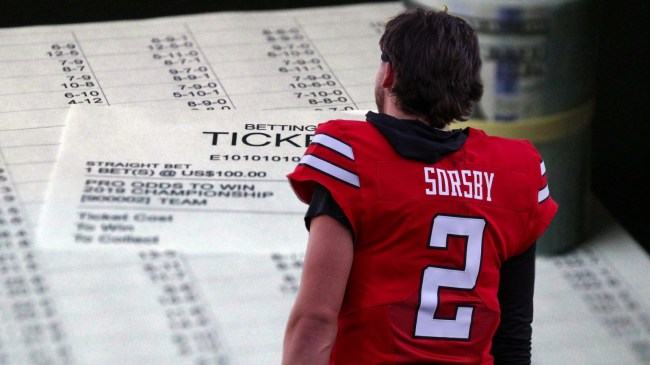
Texas Tech football player Brendan Sorsby has been granted a temporary injunction in his NCAA gambling case. He is set to be eligible for the 2026 season.
That ruling has been met with criticism. It creates a slippery slope in regard to college football and sports betting.
The injunction sets precedent that it is okay to wager on your own team. Sorsby appears on pace to play for the Red Raiders without (much) punishment.
Brendan Sorsby will rejoin Texas Tech football.
QB Brendan Sorsby has been granted his injunction against the NCAA. pic.twitter.com/jmAWR8msRa
— Ross Dellenger (@RossDellenger) June 8, 2026
Sorsby has been fighting for his final season of eligibility over the last few months. The former Indiana and Cincinnati quarterback was under fire for gambling on his own team.
As a Hoosier, he bet on Indiana football games as a reserve player. While he did not directly impact those contests, it was a clear violation of NCAA rule.
He was also found to have wagered upwards of $90,000 across the last four years through sportsbook accounts registered to friends and family members.
The activity was uncovered in April, though his previous schools may have been aware of his gambling habit. It put his future at risk.
Sorsby transferred to Texas Tech in January. He was reportedly awarded an NIL deal north of $5 million.
The passer checked into a rehab facility earlier this offseason. He completed his stay in 35 days. Over the last two months, the Red Raiders have attempted to successfully navigate the situation. With Sorsby’s eligibility unclear, they’ve sped up the recovery process of injured backup Will Hammond all the while continuing to lobby for the transfer’s reinstatement.
The NCAA denied return requests this month, but a Texas court has overruled. Sorsby is now able to rejoin the football program.
The injunction was granted.
His lawsuit stated that Brendan Sorsby was “clinically diagnosed” with a gambling disorder, which is a “mental health condition.” They laid out reasoning for reinstatement citing the NCAA’s weaponization of that condition to “shore up a facade of competitive integrity.”
The NCAA has refused to process his reinstatement request in a timely fashion as required by its own procedures, which typically call for review within 48 hours. Now, after belatedly agreeing to review his request based on stipulated facts, it has made more demands that are further stalling the process. And it still offers no timeline for a decision — all while the clock ticks toward a June 22, 2026 National Football League (“NFL”) Supplemental Draft deadline that will determine whether Mr. Sorsby can play high-level football anywhere this year.
The NCAA has weaponized his condition to shore up a facade of competitive integrity, while simultaneously profiting from the very gambling ecosystem it polices.
Sorsby needed answers quickly. If unable to participate with Texas Tech, he’d still have the option to join the NFL’s supplemental draft this summer.
His lawyers said the NCAA was intentionally dragging its feet in the process to harm future outlook. The organization made it clear that it did not support a return to college football.
The Texas court ruled that Sorsby would “suffer a probable, imminent, and irreparable injury if this court does not issue this temporary injunction because he will be unable to participate as a member of Texas Tech University’s 2026 football team.”
He is eligible and will soon return to practice.
NEWS: A judge in district court in Lubbock County, Texas, has granted the injunction requested by Texas Tech QB Brendan Sorsby. He’s set to be eligible for the 2026 season. pic.twitter.com/31IjwqyxaM
— Pete Thamel (@PeteThamel) June 8, 2026
The NCAA cannot prohibit Sorsby from competition, though an appeal is likely incoming. The decision creates a slippery slope, and one that the organization is steadfast on preventing.
Can players gamble on their own teams?
This court ruling sets precedent that the answer is yes, and you can do so with little punishment. Sorsby will land a two-game suspension according to the injunction, which will force him to miss the opener vs. Abilene Christian and a non-conference matchup with Oregon State.
It’s a slap on the wrist considering the illegality of the initial allegations. Sorsby was not 21 years old when placing bets at Indiana. He violated state law. That is also the case for his first season at Cincinnati.
The lawsuit referenced the NCAA’s ability to profit on sports gambling, which makes its rejection of Sorsby’s reinstatement hypocritical. On one hand, that is true. Betting has been embraced despite the potential for this exact scenario.
On the other hand, there should be accountability. Actions have consequences. Sorsby knew the rule and potential repercussions and broke it. He created the possibility of career injury when placing the bets.
The NCAA does not advertise sports gambling through sponsorship deals. It does make a money off of sharing data with sportsbooks. Lawyers argued that the NCAA should not profit on gambling while punishing players for participating.
Where the situation gets sticky is in Brendan Sorsby’s decision to wager on his own team. Even if not in the game, he is privy to intel that others are not. And for players that are competing on the field, these decisions can directly influence the outcomes of competition.
It is an integrity issue.
The court ruling suggests that gambling on your own team is okay. You will not be punished with the loss of eligibility. That is a major headache for both the NCAA and sports bettors.