



iStockphoto / USA TODAY Network via Reuters Connect
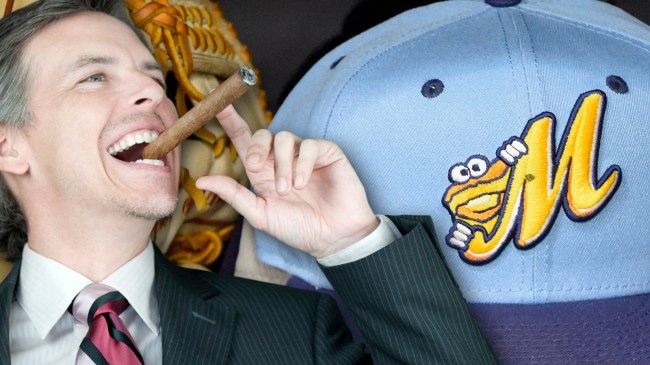
Man with cigar next to a Montgomery Biscuits hat
Minor League Baseball spent decades being defined by local owners, weird promotions, and organizations that felt completely different depending on which ballpark you walked into. One company now owns 49 of the 120 affiliated teams, and its CEO says it is interested in “any or all” of the remaining inventory.
Diamond Baseball Holdings, which is backed by investment giant Silver Lake, has accumulated roughly 41% of affiliated Minor League Baseball since being created in late 2021. CEO Peter Freund told Front Office Sports this week that the limited supply of franchises makes every remaining club interesting as DBH continues one of the strangest roll-ups in American sports.
One Company Owns Almost Half Of Minor League Baseball
Forty-nine teams in fewer than five years is an absurd acquisition pace.
DBH started with nine announced purchases in December 2021 and basically never stopped shopping. Its portfolio now includes teams from Albuquerque to Brooklyn, Triple-A clubs like the Charlotte Knights and one of MiLB’s most successful operations in the Dayton Dragons.
No other ownership group even has 10 affiliated teams.
The opportunity appeared after MLB reorganized the minor leagues in 2021 and loosened rules that had previously made large-scale multi-team ownership much harder. The current limit allows one organization to own up to 50 affiliated clubs, with no more than 14 at any one classification.
That creates a pretty funny complication for Freund’s “any or all” comment.
DBH is already sitting at 49.
In other words, it is interested in essentially every remaining team while currently having room to purchase exactly one more unless MLB eventually raises the limit.
The company had already reached its maximum of 14 Triple-A and 14 Double-A franchises by late 2025. Sports Business Journal reported DBH had invested about $2 billion in the strategy by that point.
Apparently collecting baseball teams is the expensive version of trying to complete a Topps set.
DBH Wants More Than Baseball Games
The broader strategy is not simply to purchase a bunch of minor-league teams and hope people buy hot dogs.
Freund says DBH uses its enormous scale to centralize sponsorships, merchandise, ticketing ideas, and other business operations that were traditionally handled independently by local ownership groups.
Then there is the real estate.
DBH increasingly wants to develop the areas surrounding its ballparks and turn facilities that might host 70 baseball games into properties generating money 365 days a year. Freund pointed toward Atlanta’s Battery development as the type of model that demonstrates how valuable the dirt around a sports venue can become.
That is a significantly different vision from the old mom-and-pop minor-league model.
Silver Lake acquired DBH from Endeavor in 2022 and describes the company’s mission as investing in clubs while improving fan experiences and facilities. Its portfolio has since become so large that a random night of minor-league baseball has a pretty decent chance of involving a DBH-owned team somewhere.
There are only 120 affiliated franchises in America. Diamond Baseball Holdings owns 49, and the biggest thing preventing it from buying significantly more is that MLB’s rulebook currently says it has to stop at 50.