



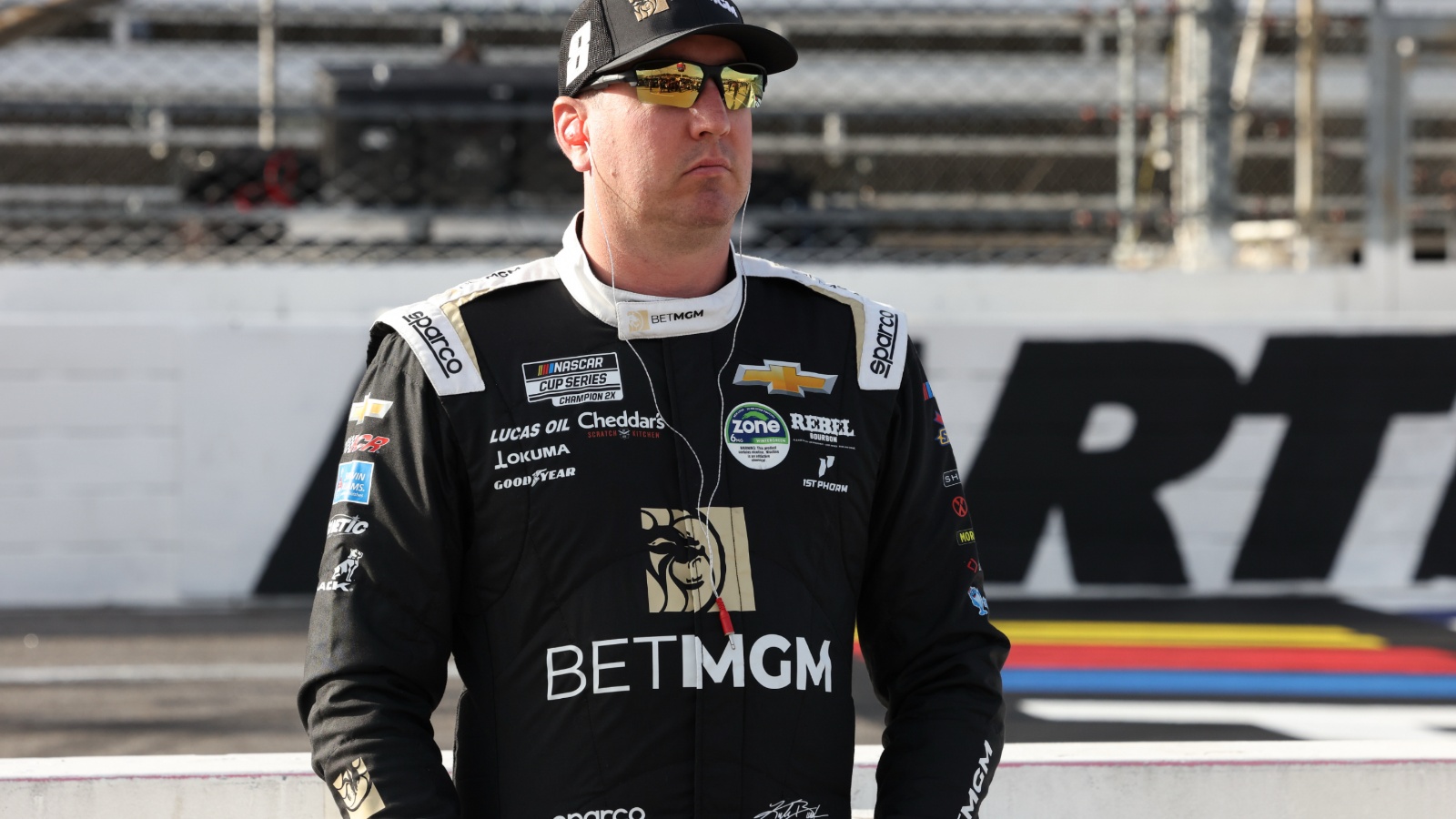
© Greg Atkins-Imagn Images
Kyle Busch’s family has revealed how he died.
Earlier this week, Busch had a medical emergency where he was coughing up blood at a training facility while battling a severe sinus infection for two weeks.
Via TMZ
Kyle Busch’s medical emergency has been partially revealed by 911 audio obtained by TMZ Sports … with a caller saying the NASCAR superstar was struggling to breathe, overheating, and coughing up blood before medics rushed to help.
During the emergency call placed around 5:30 PM Wednesday, the caller urgently requests an ambulance to a training facility in Concord, North Carolina … telling dispatch, “I’ve got an individual that’s shortness of breath, very hot, thinks he’s going to pass out, and he’s producing a little bit of blood, coughing up some blood.”
On Saturday, two days after his death, Busch’s released a statement revealing that the racecar driver had died of a “severe pneunomia that progressed into a sepsis.”
Via ESPN
“The medical evaluation provided to the Busch Family concluded that severe pneumonia progressed into sepsis, resulting in rapid and overwhelming associated complications,” the Busch family statement read. “The Family asks for continued understanding and privacy during this difficult time.”
Sepsis is considered a life-threatening medical emergency that occurs when the body has an extreme, overactive response to an infection, causing the immune system to damage its own tissues and organs, according to the Centers for Disease Control and Prevention.
Sports doctor Jesse Morse believes Busch’s death could have been prevented with proper care from medical officials after Busch complained of a sinus infection during a race two weeks ago.
Via Jesse MorseMD/X
This was a totally preventable situation. Hindsight is 2020, but ideally when he was calling for help and a “shot” from his doctor two weeks ago. The proper protocol would’ve been to have him admitted to the hospital and get IV antibiotics with proper monitoring.
Based on what we have heard, this was not the case, and his medical team allowed him to maintain his strenuous activities despite this ongoing infection that eventually evolved into pneumonia.