



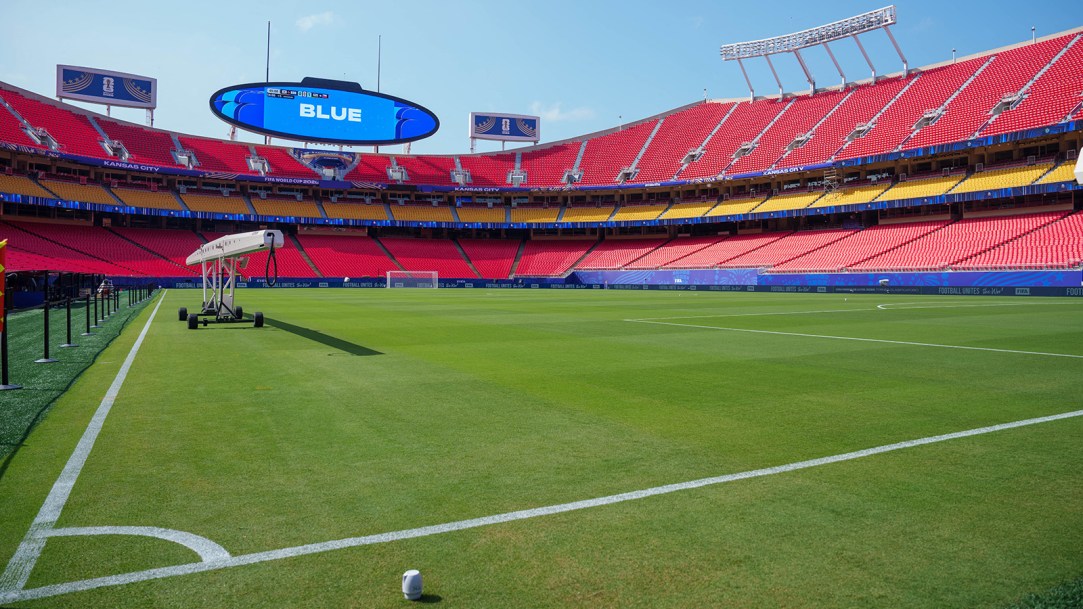
The grass at Arrowhead Stadium is ready for the World Cup. Concerns about the condition of the field are dispelled.
International soccer fans were worried about injuries, slippages, and overall playability.
Fortunately, a plan is in place to ensure that every soccer pitch is up to standard. No reason to panic!
Some World Cup stadiums had to switch to grass.
Fifa’s Quality Program has very strict standards for ball rolling, bouncing and shock absorption. They take into account that natural playing surfaces are dependent on their surrounding conditions such as climate or soil composition and are particularly designed to assist managers and administrators in their decision-making during the tendering, installation and maintenance of football pitches within their given realities. Every stadium must be consistent.
The turf management program at Michigan State worked alongside the University of Tennessee’s center for athletic field safety to develop a system for all 16 World Cup venues in the United States, Canada and Mexico. It was a collaborative effort.
They split the fields into two categories:
- Warm-weather outdoor venues will use Bermudagrass
- Cooler, indoor venues will use a mix of Kentucky bluegrass and perennial ryegrass
Some of the venues had to swap out its playing surface for the World Cup. Take MetLife Stadium, for example. The existing artificial turf infrastructure remains in place but it is now buried under two-ish feet of sand plus a full irrigation and vacuum-ventilation system. The Bermuda grass is then laid on top. NFL stadiums in Atlanta, Boston, Dallas, Houston, Los Angeles and Seattle also needed to be converted. As did the field in Vancouver.
Arrowhead Stadium in Kansas City is pristine.
Two of the host sites in the United States did not need to be converted from artificial turf to natural grass. Hard Rock Stadium got ripped to pieces by fans on the internet during the rollout process, but it had already hosted the Club World Cup and there have not been any major injuries attributed to the playing surface in Miami.
The same thing can be said for Kansas City. Arrowhead Stadium started to put in its new sod in mid-May. The natural grass has had about 30 days to settle. The grounds crew is working around the clock to make sure it is in perfect condition when games get underway this week. It looks incredible.
Closer look at the Pitch inside Arrowhead. pic.twitter.com/pR6LVh0Zjy
— Harold R. Kuntz (@HaroldRKuntz3) June 8, 2026
All of the seams have been sowed together. The grass has been watered.
Any concerns that the pitch won’t be playable are unfounded. The teams at Tennessee and Michigan State have it on lock.