


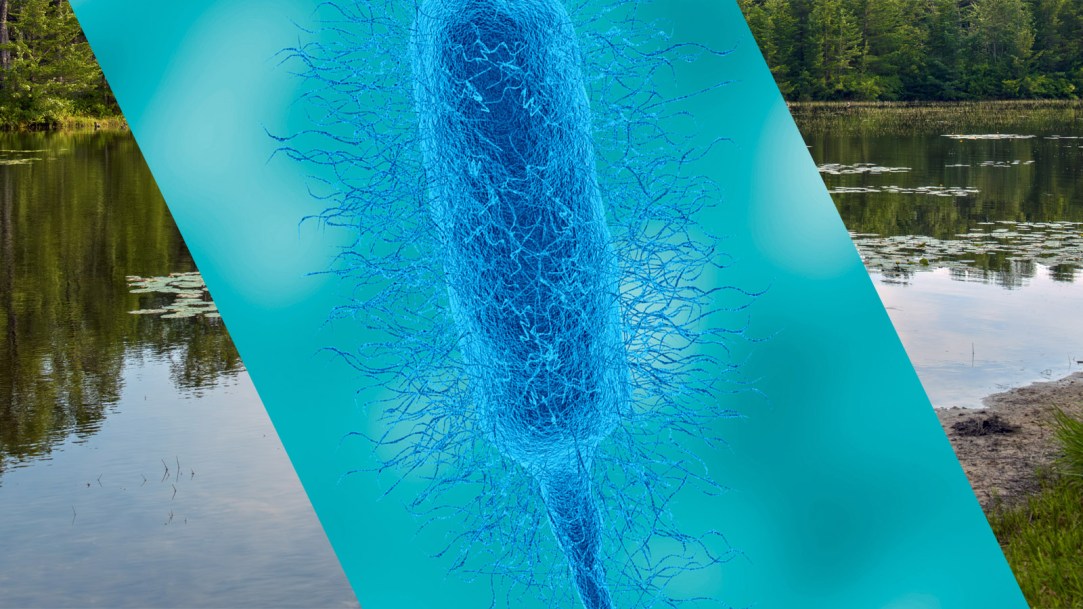
Deadly flesh-eating bacteria have crept up the Atlantic Coast and now appear in the waters around Long Island, New York.
Researchers from Stony Brook University recently discovered Vibrio vulnificus, also known as flesh-eating bacteria, in Long Island waters. Additionally, they have found dangerous algal blooms that endanger marine life in freshwater and marine environments.
“On Long Island, dogs have gotten sick and died, just from drinking lake water,” Stony Brook University professor and coastal ecologist Christopher Gobler said, according to NewsNation.
People who contract the flesh-eating bacteria have a 20% chance of dying within 48 hours from the “very, very serious infection,” according to Gobler. He also added that water quality in “dozens and dozens” of spots across various waterways on Long Island does not meet state and federal regulations.
Researchers detected flesh-eating bacteria in Sagaponack Pond, Mecox Bay, and Georgica Pond on the South Fork.
“There is no time to waste,” Gobler said. “We have some incredibly pressing problems, but at the same time, some incredible opportunities to address those problems.”
What is causing the increase in flesh-eating bacteria?
He blamed the bacteria’s proliferation on nitrogen runoff, algal blooms and climate change. Gobler stated that nitrogen runoff from Suffolk County’s about 360,000 cesspools and septic systems are draining straight into the region’s waterways, generating deadly algae blooms. That nitrogen then continues to nourish the blooms as it warms, depleting oxygen levels in the water.
Gobler added that the threats grow each summer as waters continue to warm. Anyone who’s immunocompromised, elderly or has open wounds should remain out of the water, he advised.
In August 2025, researchers discovered that from 1988 to 2018, cases of flesh-eating bacteria along the East Coast rose by 800 percent, and in 2025, the problem continued to grow. Authorities reported numerous cases in Texas, Louisiana, Florida, North Carolina, Alabama, Mississippi, Massachusetts, and Virginia.
“Every water sample we collect along the coast now contains some kind of Vibrio. That wasn’t true two decades ago,” said Rachel Noble, a microbiologist at the University of North Carolina-Chapel Hill’s Institute of Marine Sciences.