



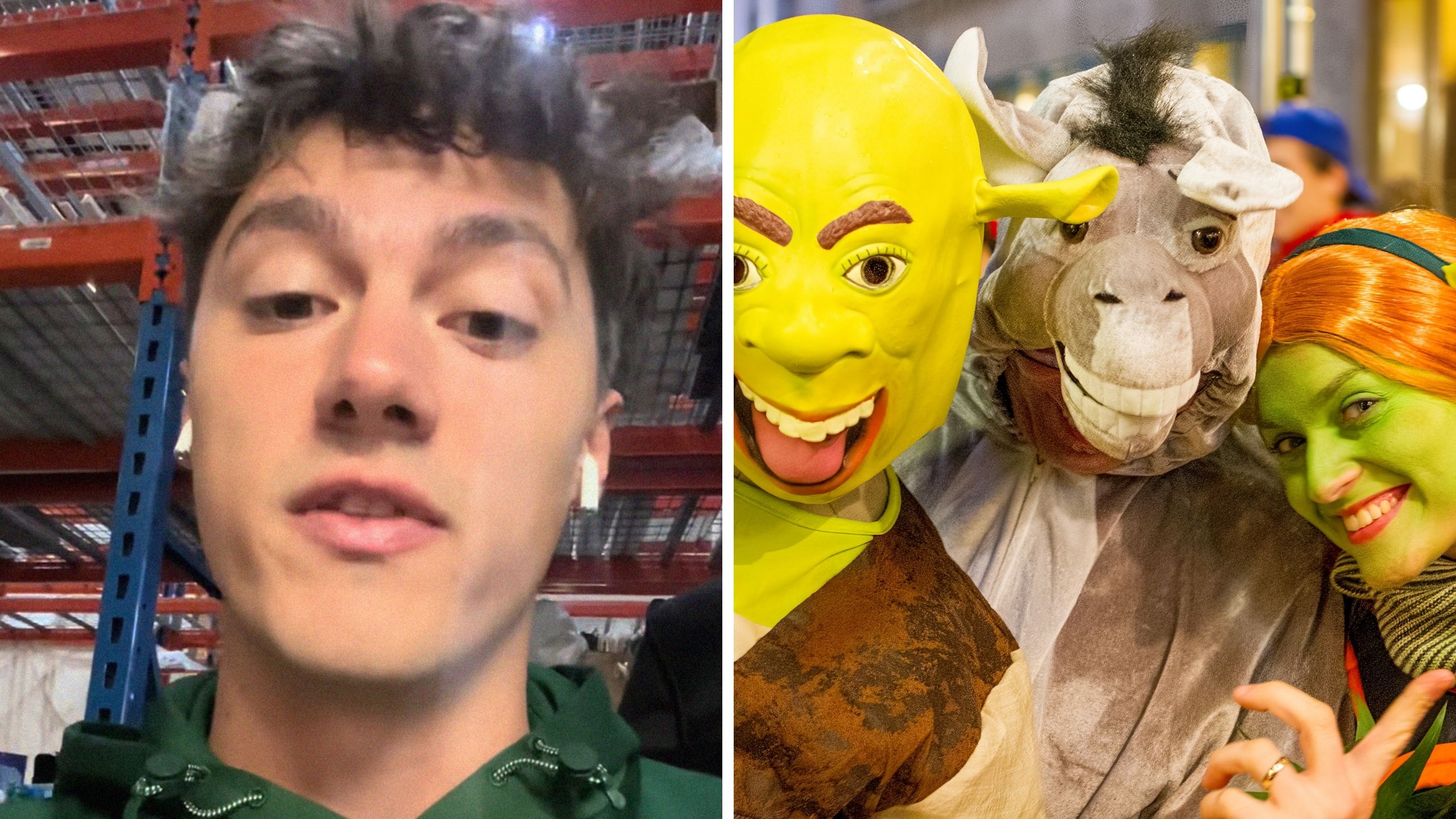
A Philadelphia man has issued an urgent warning to anyone planning to wear green face paint for Halloween.
While dressing up as characters like Shrek or Beast Boy might seem harmless, there’s one lighting situation that could turn your costume into blackface.
Is This Blackface?
Content creator Sean Touey (@seantouey) shared a cautionary tale for Halloween partygoers planning to wear green face paint. His viral video has more than 2.1 million views.
“Just a PSA: If you’re going to a Halloween party this weekend and you’re planning on dressing as a character who’s green, like Beast Boy or Shrek, and you have to paint your face green, make sure this party that you’re going to doesn’t have red lighting because you might get in trouble,” he says.
Under red lighting, green face paint can appear dark brown or black, making it look like someone is wearing blackface—a deeply racist practice with a painful history in America.
“Do it if you want a problematic Halloween,” Touey wrote in the caption.
Why Red Lighting Changes Everything
The science behind this is straightforward, but the effect is dramatic. According to Physics Stack Exchange, when an object that normally reflects green light is illuminated with red light, the green wavelengths have nothing to reflect, resulting in the object appearing very dark or even black.
The way we perceive color depends entirely on which wavelengths of light are reflected back to our eyes. Science Learning Hub explains that objects appear a certain color because they absorb some wavelengths and reflect others. A red shirt looks red because it absorbs wavelengths from the violet and blue end of the spectrum and only reflects red light back. If you shine only blue light on that red shirt, it would appear black because there’s no red light to reflect.
Halloween parties often feature colored lighting for ambiance. Red lights are particularly popular for horror-themed parties, haunted houses, and spooky atmospheres.
History of Blackface
Blackface has its origins in minstrel shows that began in the 1830s. White performers painted their faces with burnt cork or shoe polish to mock enslaved people, the National Museum of African American History and Culture explained.
These performances depicted Black people with racist stereotypes. It characterized them as lazy, ignorant, cowardly, or hypersexual. They were intended to be funny to white audiences while being deeply demeaning and hurtful to the Black community.
The influence of minstrelsy and racial stereotyping on American society cannot be overstated. These performances helped codify harmful stereotypes that persisted for generations through various forms of media.
Blackface performers used these shows to assert white superiority by dehumanizing Black people through mockery and caricature.
Even unintentional instances that might look like blackface are taken seriously today. The historical trauma and ongoing racism associated with blackface make it particularly sensitive.
With Halloween costume controversies becoming more common on social media, it’s important to think through how your costume might appear in different contexts.
Commenters React
“I thought my friend was dressed as black Santa and I got so scared. He was the Grinch,” a person shared.
“I got photoshopped out of pictures…,” another wrote.
“Yes I’ve done this a couple years back I got canceled I promised I was green,” a third shared.
“And that’s on color theory,” a commenter added.
“I feel like shreck will get away with it bc of the ears, but beast boys and elphabas without hats might be in trouble,” a person said.
@seantouey Do it if you want a problematic Halloween #halloween #halloweencostume #justintrudeau🇨🇦
BroBible reached out to Touey for comment via TikTok direct message and comment.