



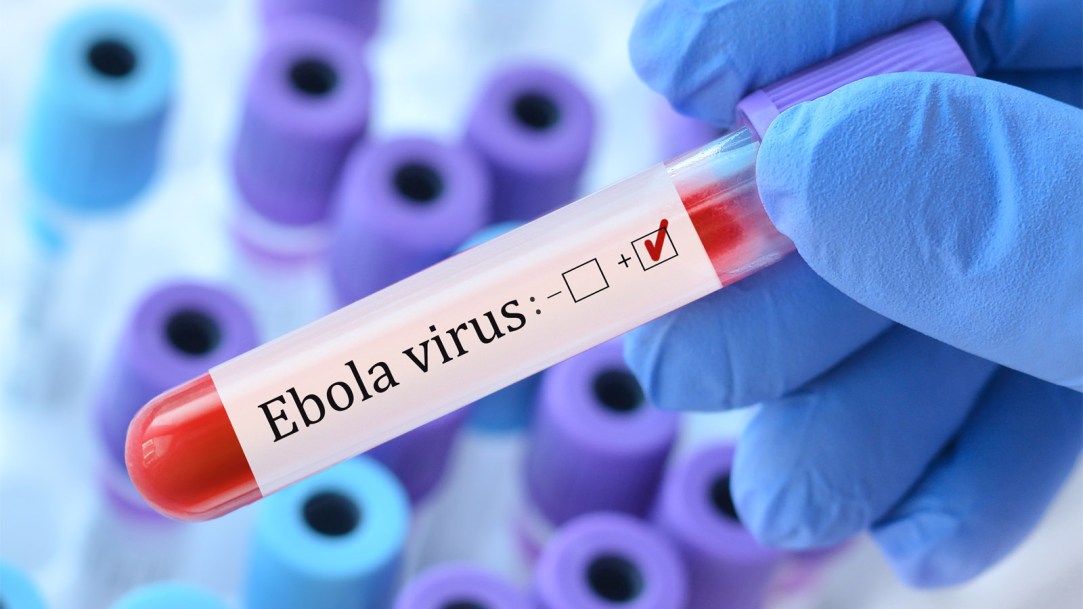
An Ebola outbreak that the World Health Organization (WHO) has declared a “public health emergency of international concern” has put a senior health official in “panic mode.”
According to the Africa Centres for Disease Control and Prevention (Africa CDC), health officials have reported 336 suspected cases of Ebola, primarily in the Democratic Republic of the Congo but also two in Uganda. The WHO said in its most recent report that there have been at least 100 suspected deaths related to the outbreak.
“Currently, I’m on panic mode because people are dying. I don’t have medicines. I don’t have [a] vaccine to support countries,” Africa CDC director-general, Dr Jean Kaseya, told Sky News.
According to the United States Centers for Disease Control and Prevention (CDC), the Ebola outbreak has directly affected a “small number of Americans.” There is no vaccine or treatment for the particular virus causing this outbreak, known as Bundibugyo.
Dr. Satish Pillai, the manager of the CDC’s response to the outbreak, told reporters on Sunday that they are working with other health officials “to ensure the outbreak is managed and prevent further spread of Ebola.
Health officials expect to withdraw several Americans from the affected region
The CDC expects to remove at least six Americans exposed to the Ebola virus in the Democratic Republic of the Congo. According to sources, three of the Americans had high-risk exposure or contact, and one of them had symptoms. Officials on Monday reported that they were transporting an American physician who tested positive for Ebola to Germany for treatment.
“At this time, the risk to the American public remains low,” the CDC said in a statement on Sunday. “CDC continues to closely monitor the situation and has systems in place to detect and respond rapidly to potential public health threats.”
The CDC announced on Monday that it will implement additional screening procedures and limit entry for individuals without U.S. passports who have visited affected areas.
What is Ebola, and what are its symptoms?
Ebola frequently begins with a sharply rising fever, severe weakness, headaches, sore throat, and muscle soreness. Vomiting, diarrhea, rash, liver and kidney issues, and bleeding come next.
Between two and twenty-one days pass between infection and the onset of symptoms. Because the disease attacks the skin and internal organs in addition to destroying connective tissue, it can be extremely painful and often fatal.
Ebola has an average death rate of 50%; however, in previous outbreaks, death rates have ranged anywhere from 25% to 90%.