




via Hunter Haynes with permission
Hunter Hayes is only 34 years old, but he’s already lived what he describes as “two careers.” The five-time Grammy-nominated artist, who signed his first major publishing deal at 17, has amassed over 3 billion global streams, written for icons like Rascal Flatts and Aloe Blacc, toured with Taylor Swift, and shared stages with legends from Stevie Wonder to Carrie Underwood. Yet despite this remarkable résumé, Hayes insists he’s just getting started.
His latest album, Evergreen, represents both a culmination and a new beginning—the final chapter in a trilogy of records that began with 2019’s Wild Blue and continued through Red Sky. Speaking with us on the kickoff of Season 7 of The Load Out Music Podcast, Hayes opened up about his creative journey, his evolving definition of success, and why making music for strangers remains his greatest purpose.
The three-album arc wasn’t born from a rigid concept, but rather emerged organically as a “creative guideline” that gave Hayes the structure he needed during a period of significant change.
“Wild Blue was kind of this optimist look at change,” Hayes explained. “I knew that there was change on the horizon, so I gave myself this framework… I knew that there was space for me to look at everything that was happening with optimism, with a positive lens.”
The gap between albums Storyline (2014) and Wild Blue (2019) wasn’t accidental. Hayes had grown frustrated with a “vote by committee” approach to making records, losing sight of his role as the artist who meets fans firsthand and understands what resonates. So he retreated to his basement and made “the album of my dreams”—one that incorporated everything from traditional country to John Bellion-influenced pop to the sonic ambitions of U2 and Foo Fighters.
Red Sky followed as “the adventure”—angsty and restless, like someone wanting to “get in the car and go somewhere.” And Evergreen? “It always felt grounded,” Hayes says. “It always felt mature… like this beautiful sort of conclusion.”
But even “conclusion” feels too final for an artist who now views his work as seasons rather than endings. “I love the album deluxe world,” he admits. “It means that an album doesn’t have to die. It’s like keeping it alive, growing in a garden.”
Redefining Success and Pressure
One of the most striking aspects of Hayes’s current mindset is his renegotiated relationship with pressure and success—concepts that can consume artists, particularly those who achieved fame young.
“The only pressure I feel is self-imposed time constraints,” he said. “When I was able to renegotiate my relationship with the word pressure, the thing that changed for me the most is the love for growing and the OKness with evolution.”
He points to his paper airplane tattoo—his only one—as a symbol of his philosophy: “I’m in everything that I make, and it is for everyone else. It is my duty in life to make the thing, throw it out like a paper airplane and let it catch the wind and let it find the people it’s supposed to find.”
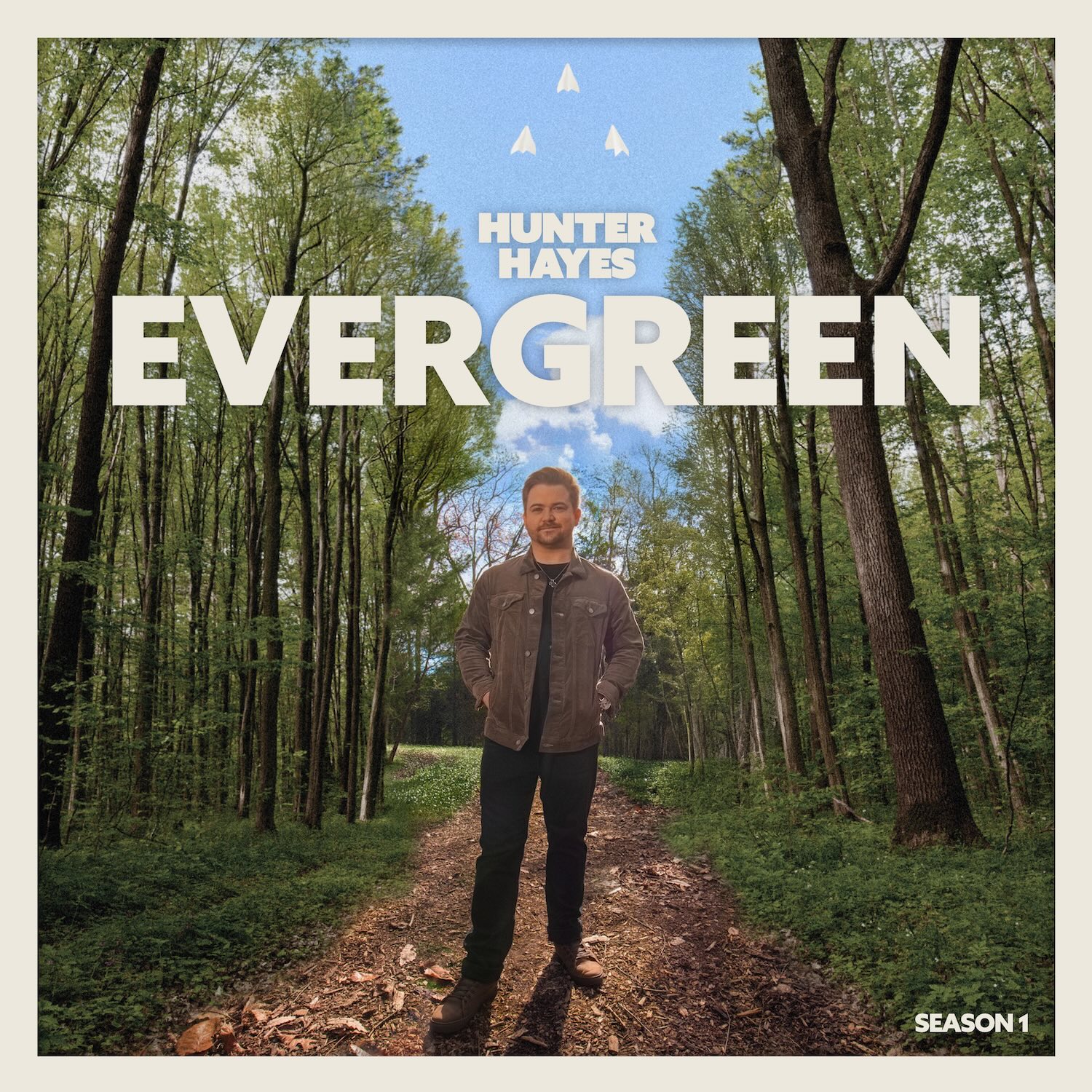
via EVERGREEN
Hayes has learned to define success on his own terms, album by album. His song “Dear God,” from Wild Blue, exemplifies this perfectly. By conventional standards, it broke all the rules—a vulnerable exploration of faith and questioning that was never going to be a radio single. Label executives didn’t know what to do with it.
“I didn’t think that anyone at the label would let me record it or let me put it out,” Hayes recalled. Yet the song became one of his most-discussed works in meet-and-greets, proof that authentic art finds its audience.
“My biggest successes in my career, in my opinion… were songs that broke all the rules,” he says. “It’s the moments in my life that have not made sense that have been my favorite moments.”
Throughout the conversation, Hayes returned repeatedly to a phrase that encapsulates his artistic mission: “I make stuff for strangers. I make music, I make art, I make free therapy for strangers.”
This isn’t throwaway humility—it’s a deeply held belief that drives every decision in his creative process. The songs on Evergreen were written as “letters from your future self,” as manifestations and prayers about experiences he hadn’t yet lived. In some cases, he’s since experienced what he wrote about.
The album explores themes of renewal, self-discovery, and what Hayes described as “an emotional reset” following deep introspection about his mental health and well-being. But he’s careful not to make it feel like he’s lecturing about wellness.
“The thing I want is for my music to feel like free therapy,” he explained. “The thing I don’t want is for it to just feel like I’m trying to talk about mental wellness. But it is in everything. So rather than writing songs about it, I’m allowing for it to be part of the lyric because it’s part of life.”
The track-by-track journey reflects this balance: Evergreen captures the patient romantic waiting for love; “Until She Comes Along” acknowledges the misery of dating while maintaining hope; “Fragile” explores the beauty of vulnerability with the right person; “Too Late” affirms that “it’s never too late to meet the person that you’re supposed to—or just for anything, for all of your dreams in life.”
And “Around the Sun,” the song Hayes is proudest of, serves as a reminder that even on the darkest days, perspective matters. “When you look at the earth in totality, clouds are a very thin layer in the grand scheme of the solar system,” he notes. “That context helps me on a cloudy day.”
When asked what he would tell young artists struggling to find an audience for original music in an era dominated by legacy acts and cover bands, Hayes offered hard-won wisdom:
“Don’t compete. Just commit. You have so much that no one else has, and the more time you spend honing those crafts, the less focus you have on what other people are doing, the more energy you have to spend focusing on what you’re doing.”
He acknowledges this advice can be difficult to hear during seasons of chasing results and numbers—he’s been there too. But separating the result from the timeline and from expectations has been transformative.
Hayes shared a recent example from his own life: After years of struggling with social media and chasing trends, he made a simple rule change—”it just has to be fun.” The results were immediate. People he admires started texting him at 7 a.m. about his content. Old connections re-emerged. “They’re feeling the fun and they’re enjoying watching it just because we’re all having fun.”
Now fully independent, Hayes is embarking on the Evergreen Tour—his first album tour in three years. The setlist will weave together the trilogy, drawing connections between the debut album and Evergreen, showing that “the same kid who made Evergreen is the same kid who made the debut album.”
It’s a fitting approach for an artist who has spent nearly three decades in music yet speaks about his career with the wonder of someone still discovering what’s possible. When asked if 3 billion streams leaves him dumbfounded, Hayes simply responded: “That’s exactly what I got into this for.”
Every time he sits in his “control tower”—the tiny studio built to match how his brain works—he’s focused on one thing: making sure what he creates is quality, that it checks all the boxes on his personal list, and that it might help someone feel less alone.
“I don’t make music to make money,” Hayes said, paraphrasing a sentiment from artists he admires. “I make money to make music. It’s all about just continuing to do this. All the success is to get back to this room so I can do it again.”
Enjoy a great kickoff to our 7th season of The Load Out Music Podcast with Hunter Hayes.