



Via iStockphoto / @jontaffer TikTok
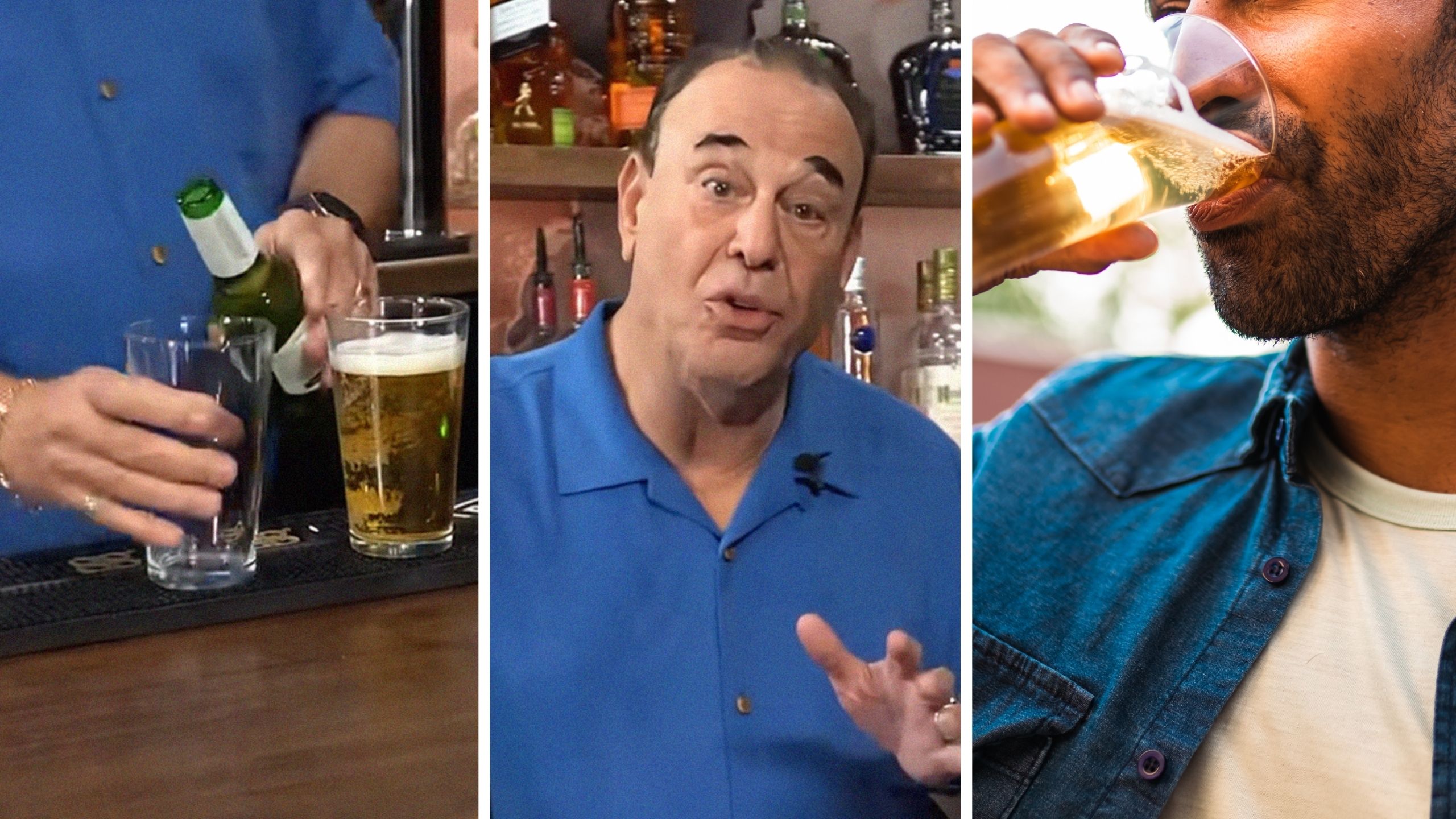
Jon Taffer shared the "correct" way to pour a beer, arguing that too little foam can leave you feeling bloated.
If you’ve ever tried to pour a beer with as little foam as possible, Jon Taffer says you’re doing it wrong. According to the “Bar Rescue” host, that careful, slow pour keeps more carbon dioxide trapped in the beer and could actually leave you feeling more bloated after drinking it.
In a video posted to social media, Taffer demonstrates what he says is the proper way to pour a beer: quickly enough to produce a substantial head of foam. His reasoning sounds convincing, but does letting a beer foam actually make it easier on your stomach? Here’s what the science says.
Jon Taffer Demonstrates The ‘Wrong’ Way To Pour Beer
Taffer begins the video standing behind a bar. As he grabs a bottle from behind the counter, he waxes on about the science of beer. “For International Beer Day, I want to show you guys what happens when you pour a beer incorrectly. You see, rookies who pour a beer, pour it really slowly,” he says, demonstrating what he calls a bogus pour.
“Cause they’re scared it’s gonna foam up. So they pour it really slow in the glass, and they serve the beer that way.” Once he’s done pouring, he sets the improperly evacuated contents of the bottle down on the counter. It has what looks like a 15% ratio of foam up top, and the rest of the glass is filled with golden beer.
However, Taffer says that pouring a beer this way won’t work for a server in a packed house. “But a bartender who’s in a hurry. Who really knows the proper way to pour a beer, will pour that beer much faster.”
Taffer cracks open another bottle and grabs the second glass. He doesn’t tilt the cup from the get-go; instead, he pours the beer directly into the bottom of the glass. This instantly causes the beverage to foam until it reaches the top, leaving around half of the cup packed with foam.
Taffer says the foam-filled glass is actually the right way to pour a beer for a customer. And not just because it saves more time.
Does More Beer Foam Actually Prevent Bloating?
The Bar Rescue personality goes on to state that the second glass is also easier on someone’s stomach. That’s because, he claims, the bubbles in slowly poured beer remain in the cup. “Which is better? You see, when you pour a glass incorrectly, this is what happens in the stomach. This beer was poured so easily the gas is still in the beer. In your stomach, this is what happens,” Taffer then holds a folded napkin over the first cup.
Next, he drops it down into the beer, which causes an intense, fizzy reaction. According to him, this disruption of gases is what causes that bloated, full feeling people have whenever they drink beer. The reaction is so big that the beer foams up over the rim of the glass, causing it to spill onto the countertop.
Afterwards, he shows the outcome of dropping a napkin in the foamier head of beer. “But when a beer is poured correctly, and the gases are allowed to dissipate, look at what happens.”
Upon doing so, there is only a slight disturbance of bubbles in the first glass. Unlike its counterpart resting right beside it, the foam doesn’t spill over the top, but remains in the glass.
“Which beer would you drink? The one that bloats you? Or the one that doesn’t? Pour your beers right!” Taffer declares before the clip comes to a close.
What The Science Says About Beer, CO2 And Bloating
The Los Angeles Times also covered this same topic back in 2018, highlighting a clip from beer sommelier Max Bakker. While Max states that tilting the glass is necessary at the beginning of the pour, it’s not supposed to stay tilted the whole way. Because if you do, just like Taffer says, you’re keeping a bunch of CO2 trapped in your beverage. “When you don’t let any foam loose during your pour, the CO2 stays dissolved in the beer itself.”
Which means the second you start digging into those bar nachos or fried chicken wings, it feels like you swallowed a spare tire. The napkin Taffer used in his video was meant to simulate what it’s like whenever something enters your belly filled with beer. All of that CO2 starts to get disrupted, causing your stomach to distend. Followed by burping and a deluge of regret where you question why you didn’t opt for a cocktail to begin with.
This is why beer aficionados will always recommend that you drink it from a glass. When it’s imbibed straight from a can or bottle, the gas doesn’t have any room to dissipate. But pouring it into a glass “incorrectly,” as Taffer says, still keeps this CO2 intact.
So, What’s The Proper Way To Pour Beer?
What you want to do is slightly tilt your glass from the start of your beer pour. Once you see that initial amount begin to settle, turn your glass into an upright position. This lets a lot of the CO2 out, culminating in a big head of foam. While some may think that more foam is a bad thing, many argue that the opposite is the case.
This other piece from The Conversation argues that “more Foam makes for the best beer-drinking experience.” Although the outlet does state that there’s a middle ground that those pouring their drinks should always strive for.
@jontaffer What are your top three favorite beers EVER? #InternationalBeerDay 🍺🍻
Hence, the proper pouring protocol. Which of the two beers Taffer showed off in his video do you prefer?