




Scientists have found unexpected “signs of life” inside a 5,300-year-old mummified “ice man” preserved by a glacier in the Otztal Alps.
Hikers found the mummy, dubbed Ötzi the Iceman, in a glacier in the Alps near the border between Italy and Austria in 1991.
Initially, researchers thought he died from exposure or exhaustion while traveling across the Alps, but subsequent tests revealed an arrowhead lodged in his left shoulder, indicating it was more likely that he bled to death. The testing also revealed that it dates back to approximately 3300 B.C.
Recent research has now uncovered genetic remnants of bacteria from Otzi’s ancient gut microbiome and cold-adapted yeasts. Using tissue samples, swabs, and genetic analysis, they also distinguished between bacteria that colonized Otzi’s body after his death and those that were present when he was alive.
These discoveries shed some light on life in the Copper Age
The results of the research, published in the journal Microbiome, provide fresh perspectives on the remarkable survival abilities of microbes in extremely cold environments and the long-term preservation of ancient relics and remains.
These ancient gut microbes also provide insight into Otzi’s life, as researchers discovered certain bacterial species associated with high-fiber diets and pre-industrial lifestyles that have either become uncommon or have completely vanished in recent times.
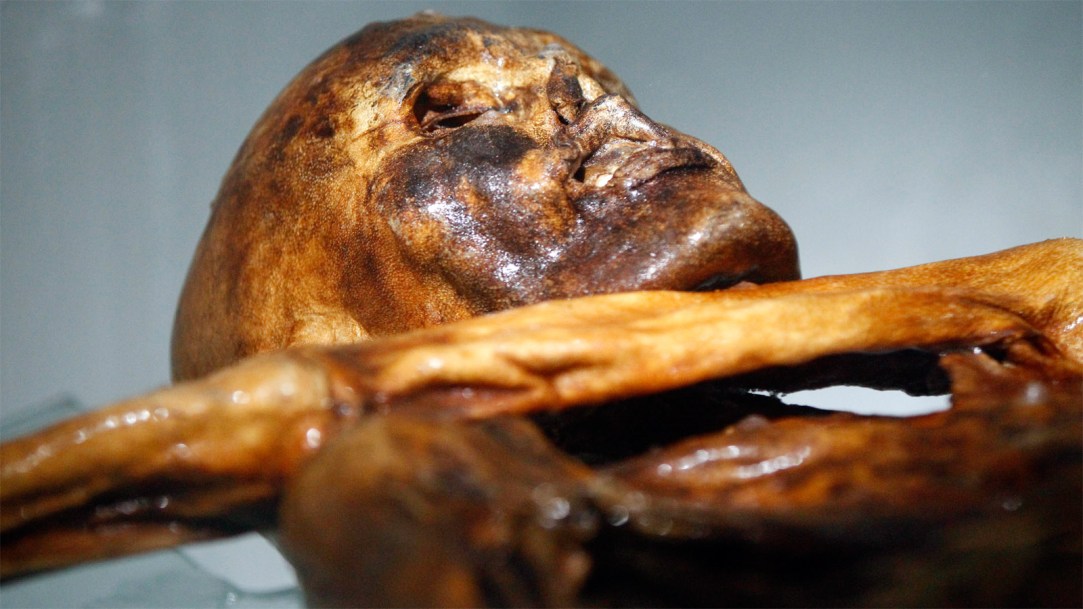
Researchers found newly discovered yeasts in skin samples, meltwater inside the mummy, and in its stomach contents. That means that these extremely specialized organisms adapted to the cold. Genetic tests also revealed that they are similar to strains found in extremely cold places, such as Antarctica. This implies that the yeasts originated in glacial environments and may have been with the mummy for thousands of years.
“The coexistence of ancient, endogenous gut microbes and modern, psychrophilic colonizers highlights the potential for ongoing microbial activity even at sub-zero temperatures,” the researchers wrote. “These findings underscore that maintaining strict environmental parameters is essential to prevent these specialized microbial communities from transitioning from latent persistence to active microorganisms.”