



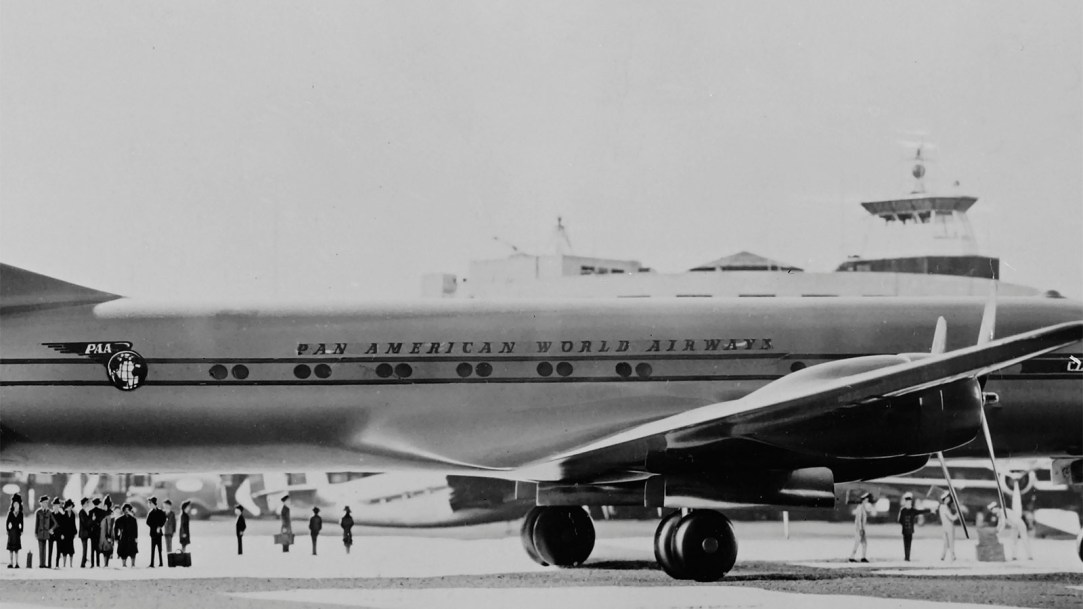
Searchers have finally found the wreckage of a historic Pan American World Airways plane crash that killed 52 people after 74 years. The crash is significant in aviation history because it led to all future flights beginning with a safety briefing.
On April 11, 1952, Pan Am Flight 256A crashed into the Atlantic Ocean. They never discovered the wreckage until this month, when they found it off the coast of Puerto Rico, about 2,000 feet below the surface of the water.
The DC-4 was transporting 64 passengers and 5 crew members from San Juan to Idlewild Airport in New York, now known as John F. Kennedy International Airport. Shortly after takeoff, the pilots lost both right-side engines, and the plane went down about 10 minutes into the flight. Just 17 people on board the plane survived.
The plane split into two pieces and sank within about three minutes of crashing. Many of the deaths resulted from the fact that passengers struggled to find life jackets, and the crew struggled to deploy life rafts. Back then, airlines did not require flight attendants to perform safety demonstrations as they do today.
“There was no demonstration of where the exits were, where the flotation devices are. And so in all of that chaos and all that panic, 52 people drowned in and around this plane,” Expedition Unknown host Josh Gates told TODAY.
An aviation search team recently found the plane’s wreckage
Fast forward 74 years, and an aviation search team, using sonar and high-definition images, has finally found the Pan Am plane, known as the Clipper Endeavor. Discovery Channel’s Expedition Unknown will detail their efforts in an upcoming episode.
The expedition to find the wreckage was led by the Air/Sea Heritage Foundation. They had been working to find the plane since 2019.
“It was really out of reach in 1952, and it really took until now for the technology to catch up, to be able to reach down,” said Air/Sea Heritage Foundation President Russ Matthews.
Over two days last month, researchers gave them the chance to locate the aircraft using autonomous underwater drones, which they typically use to explore mineral and gas fields. On their first attempt, using previous research to narrow down the search area, they found the wreckage of Pan Am Flight 256A.
“Whether you’re going on vacation, going home for the holidays, or you’re a business traveler — every time you set foot on a plane, you owe a debt to what happened to Clipper Endeavor,” said Gates.