



iStockphoto / Frank Goma / Frank Goma
record-setting invasive Jaguar Guapote fish species in South Florida freshwater lake
The state of Florida is home to over 500 non-native species of fish and wildlife and there are another 1,000+ invasive plant species on top of that. Some invasive species like the Burmese python or Lionfish dominate national headlines, while others like the Jaguar Guapote fish is native to Central America from Honduras to Costa Rica, fly under the radar.
Despite being an invasive species, the Jaguar Guapote fish was made eligible for state fishing records here in my home state of Florida back in 2012. It took five years before the the first state fishing record for Jaguar Guapote was certified in 2017 and then that record has stood pat until this month when 16-year-old Xzavier Peon of Miami broke the record while fishing around Westwood Lakes with live bait.
Florida Teen Sets State Fishing Record For Invasive Jaguar Guapote Species
The canals and lakes around Miami are notorious meccas for anglers seeking exotic species because they are home to a wide array of invasive fish species like the armored catfish, bullseye snakehead, clown knifefish, jaguar guapote, and of course, the peacock bass. The latter has transcended its status an invasive species and has anglers traveling from all over the country, and world, to catch peacock bass throughout South Florida.
When 16-year-old Xzavier Peon first hooked up on the record-setting Jaguar Guapote he thought it was a peacock bass. He told Florida Fish and Wildlife (MyFWC) “when I hooked it, I thought it was a peacock bass. But once the giant jaguar came up I knew that it was a state record almost instantly. We started freaking out once we realized it was a state record.”
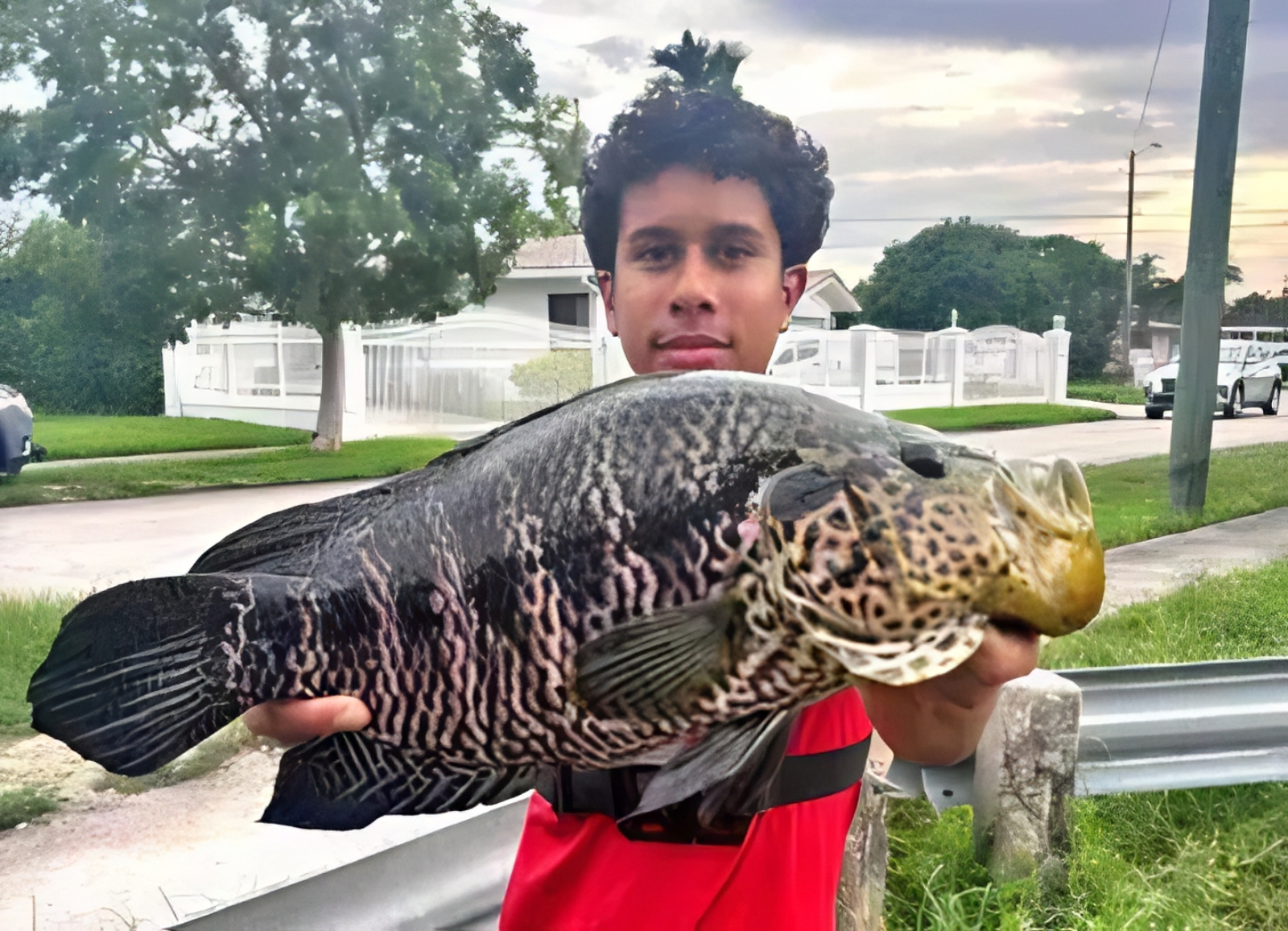
new Florida state fishing record for the invasive Jaguar Guapote species caught around Miami in South Florida
This new state record tipped the scales at 3.02 pounds and measured 16 inches long. Pure muscle and fury. They fight!
Interestingly, the IGFA fishing world record for the Jaguar Guapote species was caught in Florida despite this species being native to Central America, from Honduras to Costa Rica. That world record fish weighed 3 pounds, 11 ounces and was caught by angler William T. Porter back on September 10, 2006. This was prior to the state of Florida recognizing state fishing records for this invasive species and thus it was eligible for the fishing world record but not as a Florida state record at the time.
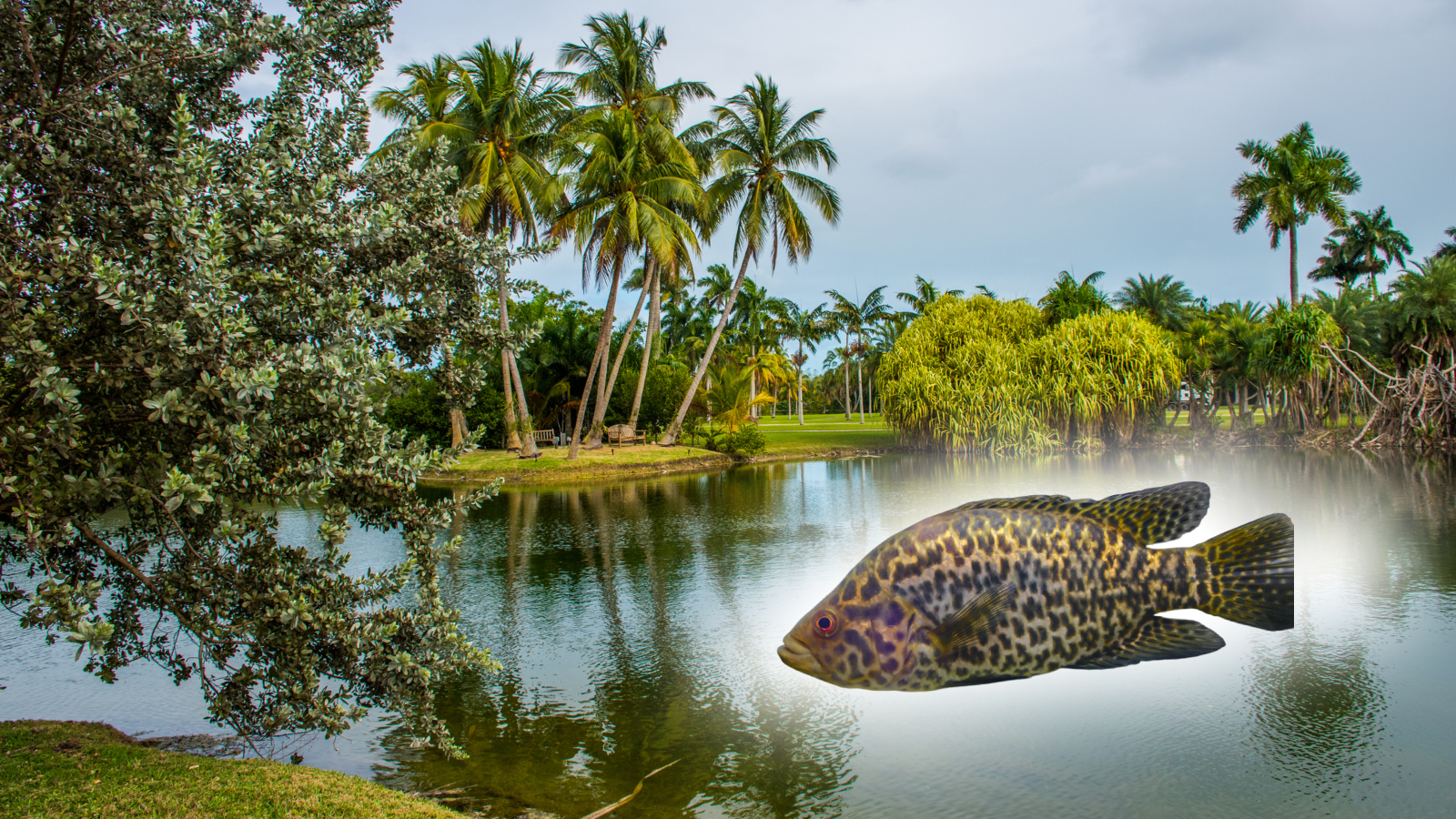
These vibrant freshwater cichlids are a popular aquarium species. They also go by many names in addition to Jaguar Guapote. So if you have ever heard them called jaguar cichlid, managuense cichlid, managua cichlid, guapote tigre, Aztec cichlid, or spotted guapote it is all the same subspecies of freshwater cichlid, the Parachromis managuensis.
This is the type of ecosystem one would expect to catch this fish in its natural environment:
These fish primarily feed on smaller fish which makes live bait fishing around the canals of Miami the ideal method for landing one. And that will also give you plenty of chances at catching peacock bass and the other prized invasive species of South Florida. It is also worth noting that largemouth bass often prey on juvenile juagar guapotes so this species can also make for great bait itself under the right conditions.
What to do with all the invasive species?!
Earlier today I came across a recent video from Rosie Moore, MSc. (@rosiekmoore on Instagram) which caught my attention. South Florida has been inundated by invasive Burmese pythons in recent years which wreak havoc on the local ecology.
Similar to the problem on near-shore coral reefs throughout Florida, where lionfish flourish because they have no natural predators and in the case of lionfish, they are well protected. There really isn’t anything in the wild that has made it its mission in life to eradicate Burmese pythons yet. We have seen videos of alligators tangling with them in the wild and raptors eating small snakes but in this clip, they are feeding invasive python meat to alligators and the gators love it.
It certainly would be interesting if field biologists throughout South Florida were able to train alligators over time to crave python meat. Enlisting natural predators in the fight against invasive species would be huge!