



iStockphoto / Eric Canha-Imagn Images
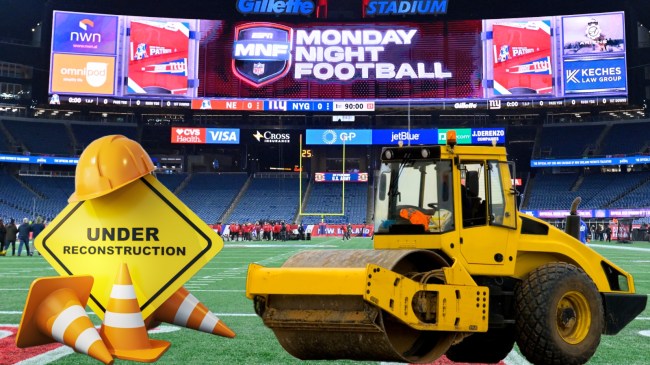
Gillette Stadium grass is being replaced with turf after the World Cup.
The grass used for the World Cup at Gillette Stadium has been removed to be replaced with turf. Images of the change are now circulating social media.
The move reignites debate surrounding NFL playing surfaces and player safety.
Is grass better than turf? Research appears to support that claim. It had no impact on the Patriots‘ decision.
Gillette Stadium removed its grass.
The natural grass surface installed at Gillette Stadium for the 2026 FIFA World Cup has officially been removed.
Back to artificial turf after hosting seven World Cup matches in Foxborough.#FIFAWorldCup | #Boston pic.twitter.com/JP1az1413X
— Caleb Pongratz (@CalebPongratz10) July 11, 2026
Seven World Cup matches were played in the venue throughout the tournament, as it was one of 11 US stadiums to host games this summer. Like many others, Gillette Stadium had to switch from turf to grass for the event.
Fifa’s Quality Program has very strict standards for ball rolling, bouncing and shock absorption. They take into account that natural playing surfaces are dependent on their surrounding conditions such as climate or soil composition and are particularly designed to assist managers and administrators in their decision-making during the tendering, installation and maintenance of football pitches within their given realities. Every stadium must be consistent.
FIFA likes natural grass. Many around the NFL would prefer their league take a similar stance on playing surface. John Harbaugh, Sean Payton, and Mark Davis are all included in that bunch. Fans and players have voiced their opposition to turf, too.
Is natural grass safer than turf?
Safety is the issue. In a 2023 study, research showed a “higher rate of foot and ankle injuries on artificial turf” compared to natural grass. Numbers from a separate study looking at the 2012-2016 seasons supported those findings.
That project looked at NFL foot and leg injuries during regular season games. It found 16% more injuries per play on turf than grass. It found an even higher risk of non-contact injuries.
The authors concluded that if all games had been played on grass during that period there would have been 319 fewer foot and leg injuries. Looking only at non-contact injuries the risk was even higher, about 20% more injuries per play.
Despite the evidence and outcry for natural grass, Gillette Stadium will return to turf for the upcoming season. Costs may play a role with grass being a bit more expensive to maintain.
Many don’t believe the savings are enough to risk player safety. The Patriots are rejecting those concerns to prep for the 2026 season.