



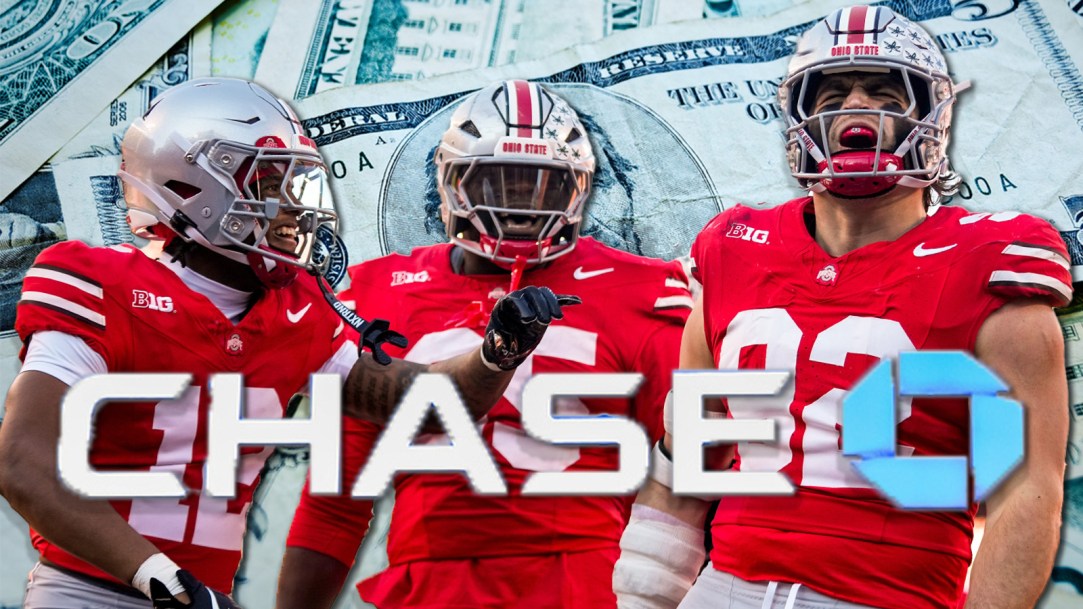
Ohio State announced a landmark partnership with JPMorganChase worth approximately $17 million annually. All 36 men’s and women’s varsity programs will wear a Chase patch on their jerseys.
The deal is being paid for, indirectly, through outrageous overdraft fees that fall largely on the shoulders of low-income families.
Although this is not an exact one-to-one comparison, the math adds up. The lowest-income clients of Chase Bank are paying for the Buckeyes to wear a patch on their college football jerseys.
Ohio State signed a jersey patch deal worth ~$17 million per year.
The NCAA voted to unearth a new revenue stream for its constituents at the end of January. Beginning Aug. 1, 2026, Division I teams are allowed to place up to two patches of no more than four square inches on uniforms for regular-season games. That is in addition to the logos that are already allowed for the uniform manufacturers. As of now it will not apply to the postseason.
More than 30 schools have already landed a deal to feature a jersey patch. Some schools signed an agreement for only specific sports. For example, DePaul will feature Desert Cactus on its basketball uniform and BYU will feature Entrata on its football uniform. They will not feature those same sponsors on other uniforms for other sports.
Other schools, like LSU, Kansas, Illinois and Oklahoma State signed comprehensive jersey patch deals. That includes Ohio State.
The Buckeyes announced the most lucrative partnership to date. It designates Chase as the new jersey patch partner across all 36 men’s and women’s varsity programs and provides new resources to support student-athletes through NIL opportunities.
“The comprehensive partnership between Ohio State and JPMorganChase is centered on enhancing the student-athlete experience, with a strong emphasis on financial education, student-athlete financial councils, career development, and long-term personal success. Through dedicated programming, student-athletes will have access to financial literacy resources, advisory support, and tools designed to prepare them for life beyond competition.”
According to Pete Thamel, this deal is expected to yield nearly $17 million per year. That is the most in college athletics right now. It pays more than the Los Angeles Clippers’ deal with Aspiration, the Cleveland Cavaliers’ deal with Goodyear and the 76ers’ deal with StubHub. That is a lot of money.
JP Morgan Chase charges outrageous overdraft fees.
Before we continue down this path, I must reiterate that this is not a one-to-one comparison. However, the numbers that exist provide an astonishing reality.
The United States government rolled back federal protections on overdraft and non-sufficient funds (NSF) fees in May of 2025. President Trumped signed a resolution that nullified a Consumer Financial Protection bureau rule that would have capped bank overdraft fees at $5. Banks are allowed to charge whatever amount they so choose. They are not limited.
As a result, many of the country’s largest banks increased their take. American families paid more than $12 billion in overdraft and NSF fees in 2025. That is up there with the largest total amount of fees collected in a single year, ever.
According to the National Consumer Law Center, JPMorganChase charged ~$1 billion in overdraft fees in 2025. It charges $34 for each transaction that overdraws the account by $6 or more. It allows up to three overdraft fees per business day for a total maximum of $102 per day. The total amount of fees collected fall disproportionately on Black households, lower-income households, and households limited education.
Meanwhile, JPMorganChase will pay ~$17 million to Ohio State per year. That is approximately 1/58th of the total overdraft fees it collected in 2025. Chump change in the grand scheme of things. Barely makes a dent!
If we are to consider this reality, low-income households are indirectly paying for the Buckeyes to wear a Chase jersey patch.