



iStockphoto / IMAGN IMAGES via Reuters/Denny Medley
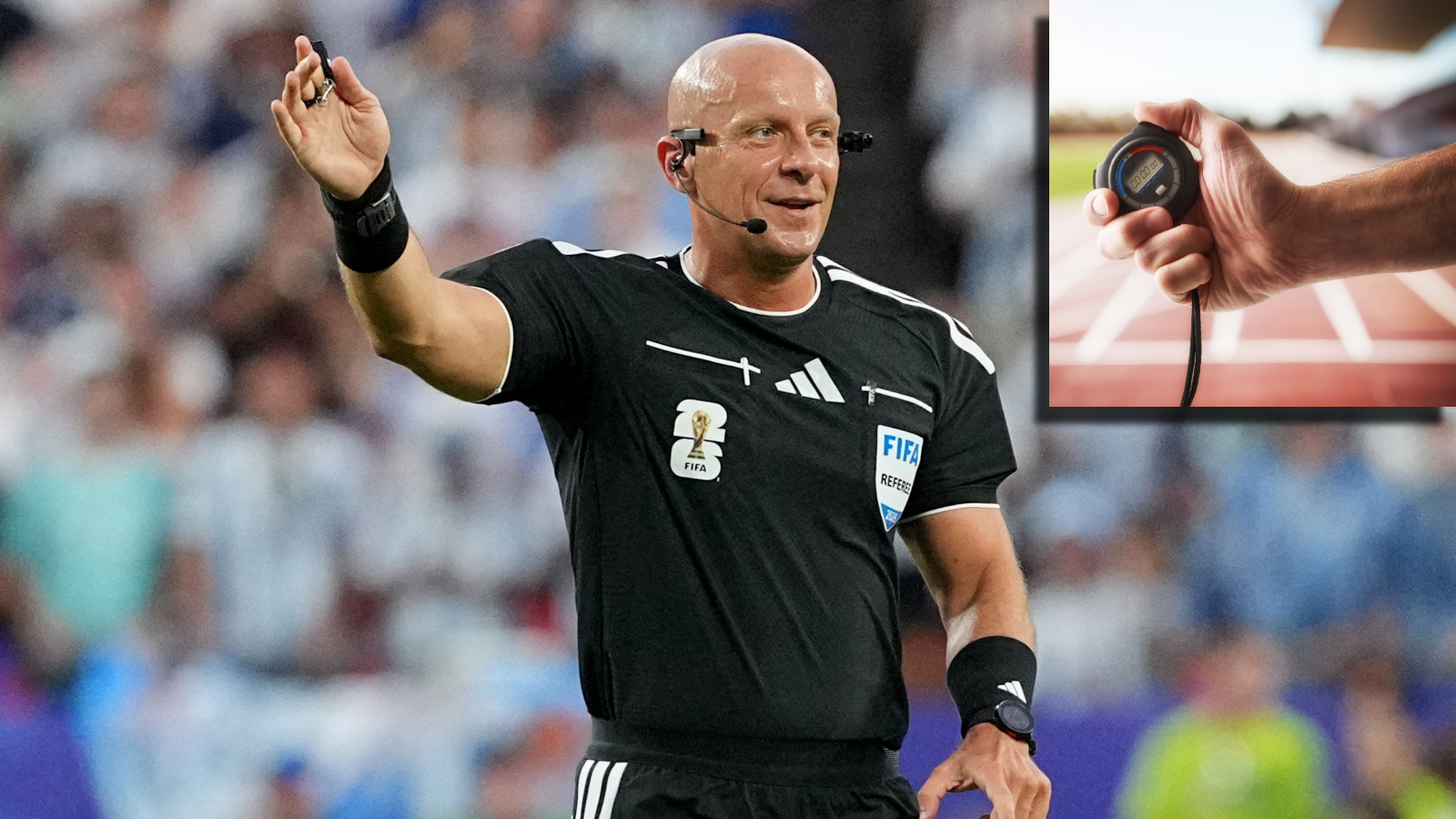
June 16, 2026 Referee Szymon Marciniak next to a track and field time trial stopwatch
Being an elite soccer referee at the highest levels is an incredibly demanding job. Not only must you always put yourself in position to make a correct call, you have to constantly keep up with running side by side amongst some of the fastest athletes on earth. Erling Haaland was clocked at a sprint speed of 22.5 MPH last season in the Premier League and Lionel Messi has reached 21.4 MPH in the past.
On average, a FIFA referee will run between 6-8 miles (10-13 kilometers) over the course of a match, constantly oscillating between sprinting and walking, going 0-to-60 the entire time. And these refs must stay in peak physical condition to keep up with the world’s best soccer players which also means FIFA puts them through rigorous physical testing to ensure they can hang for all 90+ minutes. This FIFA referee fitness test is required for all refs at the elite level.
What Is The FIFA Referee Fitness Test And Could You Pass It?
The FIFA Referee Fitness Test is required for any ref participating not just in the World Cup but at any high level FIFA matches. It has two main components with an optional third.
Those two main components are all-out Sprinting and then repeated Track Intervals to test endurance and speed side by side. I’m curious how many of you think you could pass these tests with flying colors and furthermore, when is the last time you got on a track and ran laps?
Part 1: Sprints
This test uses electronic gates as timers. The first gate is 1.5 meters after the start line and then they must sprint 40 meters in 6.00 or less seconds.
This is repeated 6 times. If a current/potential referee fails and runs slower than 6.00 seconds on one of the six trials they are given a seventh try and the failed time is dropped. If they run two segments over 6.00 seconds they fail the test. There is an accompanying audio file that goes along with these tests, an example of it can be heard here on YouTube, so participants can keep pace with the test.
There is then a 10 minute (or less) rest between this test and the next one.
Part 2: Intervals
This one takes place on a classic oval track. Refs must complete 40 consecutive intervals of running/sprinting 75 meters followed by a 25 meter walk, in attempt to simulate the pace of refereeing an actual match.
The track workout totals up to 4 kilometers (10 laps around 400m track). Refs must complete each of the 40 consecutive 75-meter sprinting portions in 17 seconds and the 25-meter walks are 20 seconds.
Part 3: Yo-Yo Test (Optional)
For this one, cones are set up around a field/pitch with 20 meters between alternating red and yellow cones in a zigzagging pattern. Refs then sprint from yellow to red, with a rest after 40 meters, for a total of 2,040 meters in the test.
This one is optional and it is also the least popular/least standardized of all the tests because it is difficult to set up and administer properly. More can be read about the Yo-Yo Test here.
If we’re being honest though, this one looks miserable. On paper I didn’t think it sounded too difficult but then watching the video of their attempts above it looks like absolutely zero fun whatsoever.
So what do you think, could you pass the FIFA Referee Fitness Test today? Would you need some training? Let me know what you think down below in the comments section!