



REUTERS/Luisa Gonzalez
One thing you may have noticed while watching the World Cup is that the broadcast is referring to the stadiums they’re located in and not their actual names. Gillette Stadium has been called “Boston Stadium,” for example, while MetLife has been referred to as “New York/New Jersey” stadium.
In addition to New York/New Jersey and Boston, other American stadiums that have been “de-branded” during the tournament at AT&T Stadium (Dallas), SoFi Stadium (Los Angeles), Arrowhead Stadium (Kansas City), Levi’s Stadium (San Francisco Bay Area), Lincoln Financial Field (Philadelphia), Mercedes-Benz Stadium (Atlanta), Lumen Field (Seattle), and Hard Rock Stadium (Miami).
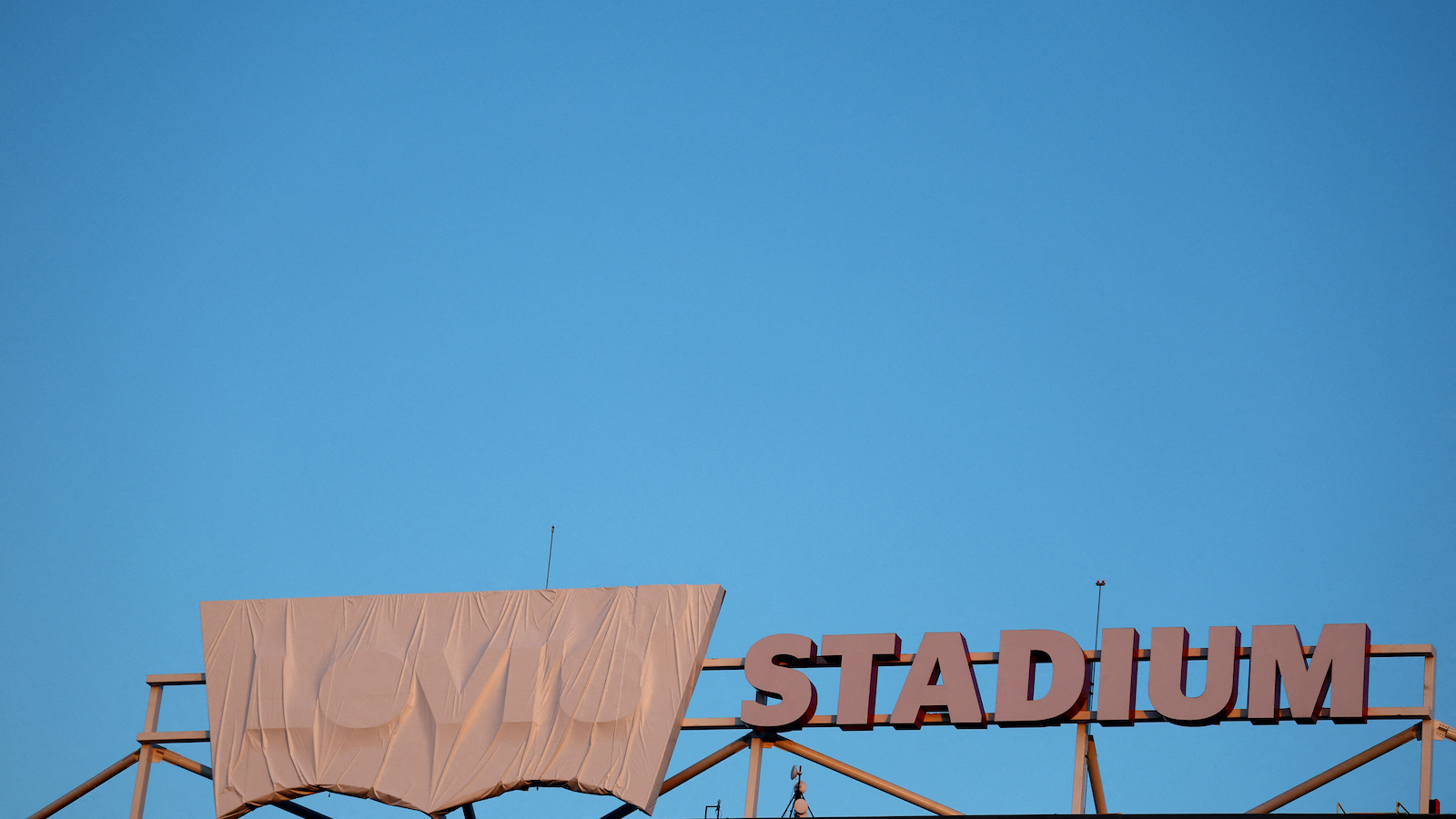
Out in San Francisco, a banner was put over the “Levi’s” at Levi’s Stadium to cover up the corporate sponsorship. Levi’s got creative, though, as they shaped the banner into their company logo.
FIFA requires all World Cup stadium to be “de-branded,” resulting in the stadiums being referred to by the city they exist in rather than their actual names
Given that it’s the FIFA World Cup, FIFA — the international governing body of of association football — and their sponsorships take precedent, and as a result, required all World Cup stadiums to be free of references to corporations that aren’t FIFA sponsor.
“The motivation behind FIFA’s insistence on commercially clean venues is protecting the exclusivity for which its sponsors are paying handsomely. The governing body expects to generate $1.8 billion in revenue from the sale of marketing rights in 2026, almost all of which is associated with the men’s World Cup,” the Sports Business Journal reported last year.
“Industry sources have put the value of top-level FIFA Partner deals between $150 million and $200 million per four-year cycle, with tournament-specific designations costing as much as $100 million.”
Chris Canetti, president of the Houston 2026 World Cup Host Committee, told the outlet that his committee budgeted more than $1 million to meet FIFA’s guidelines.
“We’ve got some exterior signage to cover and probably some concourse stuff, but FIFA is going to do a lot of branding,” Canetti said. “FIFA is already decorating to make it look the way they need it to look in the service areas and the player tunnels and all that kind of stuff.”
While FIFA ensuring that World Cup stadiums are free of any outside corporate sponsors is nothing new, it’s proven to be a unique challenge in the United States given the way that corporations have entwined themselves with American sports culture.