

When you leave the dealership in your new car, you might think that the deal is over.
However, one woman recently learned that it isn’t always the case. Now, she’s issuing a warning to anyone in the market for a new car.
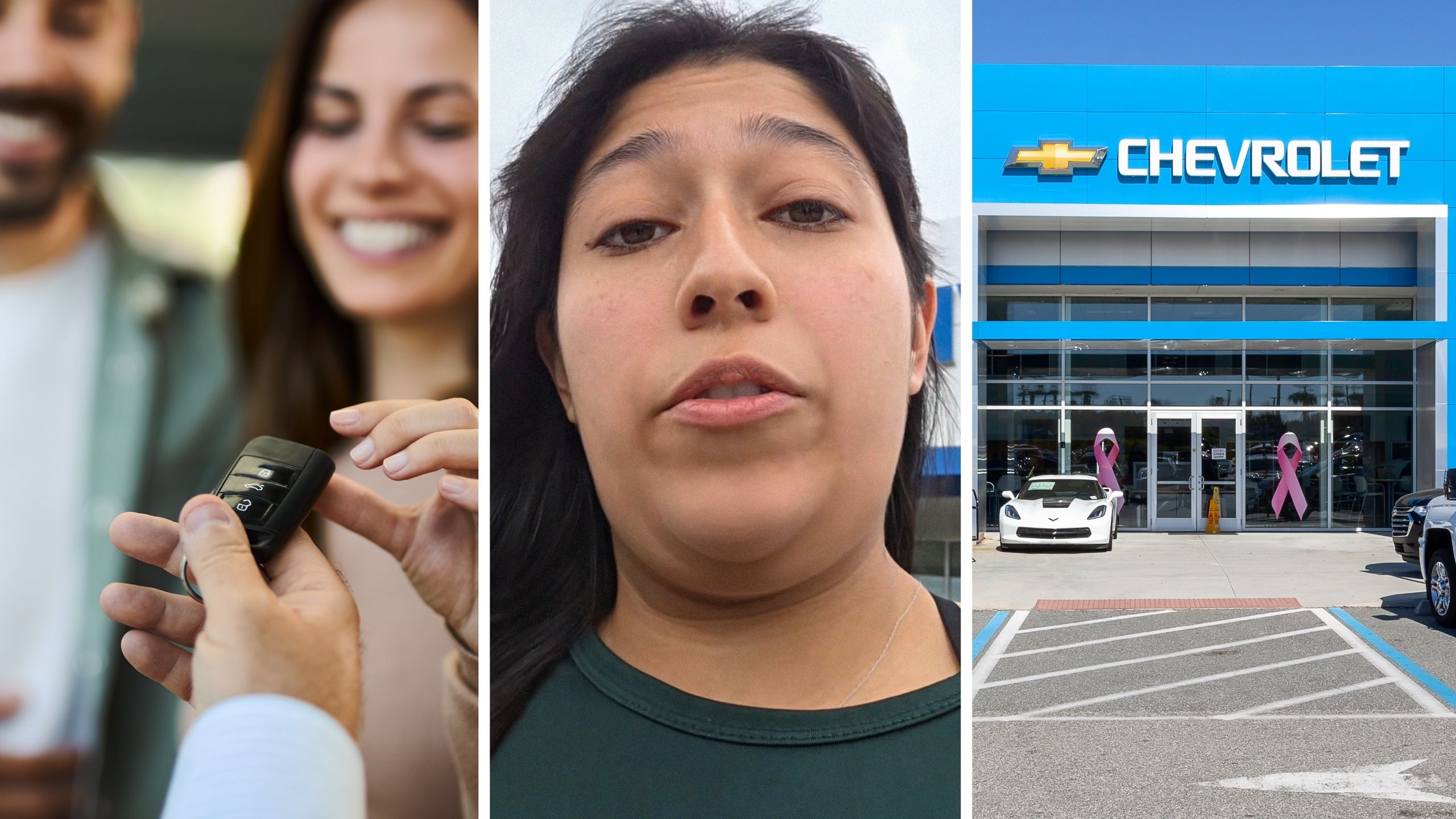
In her first video on the topic, TikTok user Nat (@tishok00) shows herself standing outside of Keating Chevrolet in Conroe, Texas.
“Please, don’t ever come to Keating Chevrolet,” she starts.
What Went Wrong With This Car Purchase?
According to Nat, she and her husband visited the dealership on February 19 to buy a car. She says they brought in their documents, went to the finance office, and completed all of the relevant paperwork.
After completing this process, she says she was given a buyer’s copy of her deal, a receipt for her $5,000 down payment, and a promise that the rest of the documents would be sent via email. In her eyes, this meant the deal was completed.
“Basically, we leave that night, we think, we know we got our new car; we’re approved,” she says. “Everything was done.”
Compounding this feeling was a call she got the next day from the lender. Confusingly, however, Nat was told that she needed to provide verification documents—documents she says she already gave to the dealership.
Undeterred, she reached out to the dealership. They informed her that the documents simply needed to be provided again for verification. So, she provided the documents and received what she thought were the final details of her deal.
“They told us our payments, told us we were paying $425 a month, told us that everything was already finalized, and told us that they were gonna get in contact with the dealership and that everything was gonna continue,” Nat says.
Problems Emerge
Despite having what she believed to be the final details of the deal, she says the dealership kept contacting them to ask for additional information, such as her husband’s driver’s license and a reference sheet. After sending this information multiple times, she says the dealership was still not satisfied—and so, her husband decided to go to the dealership directly.
When he arrived, he was greeted with some unwelcome news.
“They tell us that none of the lenders that they sent all of our information to have approved us— that, basically, the car is not ours and that we cannot drive the car,” Nat recalls.
This effectively left her husband stranded at the dealership with all of the items that were in the car, such as car seats, strollers, and other baby items.
The next day, the couple returns together. While the general manager is not present, she says that staff attempted to resolve the situation by linking them with the finance team and telling them they could have a loaner car—a promise that is soon revoked.
They Try To Cancel The Deal
Frustrated, Nat says she wants to wind back the deal. In response, the workers tell her she needs to return when the general manager is in.
This puts Nat in a difficult position. To start, her family is now without a vehicle, as she had her old vehicle towed after purchasing the new one. Not only that, but the shopping of her deal to multiple creditors has caused her credit to have several hard inquiries.
All of this, she realizes, is in part due to the kind of deal she signed.
“To my new buyers, do not sign a ‘conditional delivery agreement,’” she advises. “Don’t. I wouldn’t even recommend you buying a car from a dealership at this point.”
In another follow-up, she says she was able to cancel the deal and get her money back.
What Is A ‘Conditional Delivery Agreement’?
It’s difficult to determine Nat’s exact circumstances, given that we don’t know everything about the original deal.
That said, she’s not the first to complain about conditional delivery agreements. For context, a “conditional delivery agreement” is where a dealership allows you to take a car home under the condition that financing will be secured. The dealership can tell you what your payment is likely to be, but the final details are worked out after you leave the dealership. This is sometimes called “spot delivery.”
Sometimes, this works fine for both parties. The dealership is able to secure the financing they originally discussed. At the same time, the buyer can drive their car before and after financing is secured.
However, there can occasionally be issues. For example, dealerships can pull a trick that the Consumer Financial Protection Bureau dubs “yo-yo financing.” This is where a customer signs a conditional delivery agreement, then is told that they can only be offered a loan “with a higher interest rate, a longer term, a larger down payment, or a combination of those terms.”
In this situation, or in situations like Nat’s, buyers are generally entitled to cancel the deal. They can also receive their down payment back.
Commenters Don’t Like It
In the comments section, users noted that financing issues were common with dealership deals.
“They never had a lender to begin with that’s why they kept running your credit. When no lender wanted to take the deal they asked for it back,” said a commenter. “This is your blessing because if a lender did accept the contract chances your interest rate would have been extremely high. You would have end up paying triple.”
“Same with me. Signed off on a low interest rate. Got [my] bill and the interest rate was over 13% and refused to deal with me after I found out, and said that was the best they could do even though I signed a contract for a much lower interest rate! Will never use them again!” exclaimed another.
“This is a common thing now. U get pre qualified based off the income and info u provide,” shared a third. “If the lender finds discrepancies in the paperwork then the loan is a no go.”
@tishok00 DO NOT BUY A CAR AT KEATING CHEVROLET! @Keating FRAUD! SCAM! SPREAD AWARENESS!
BroBible reached out to Keating Chevrolet via email and Nat via TikTok direct message and comment.