




The U.S. Centers for Disease Control and Prevention (CDC) has issued a warning that an outbreak of a parasite that causes explosive diarrhea and an infection called cyclosporiasis, has now spread to 17 states. Several species of the microscopic parasite Cyclospora cause cyclosporiasis.
So far, the CDC has received reports of 145 cases of cyclosporiasis acquired in the United States between May 1, 2026 and June 16, 2026. All of these people became sick after eating food in the United States and did not report any travel during the 14 days before they got sick.
The highest number of cases reported by the CDC thus far is in New York, Illinois, and Texas.
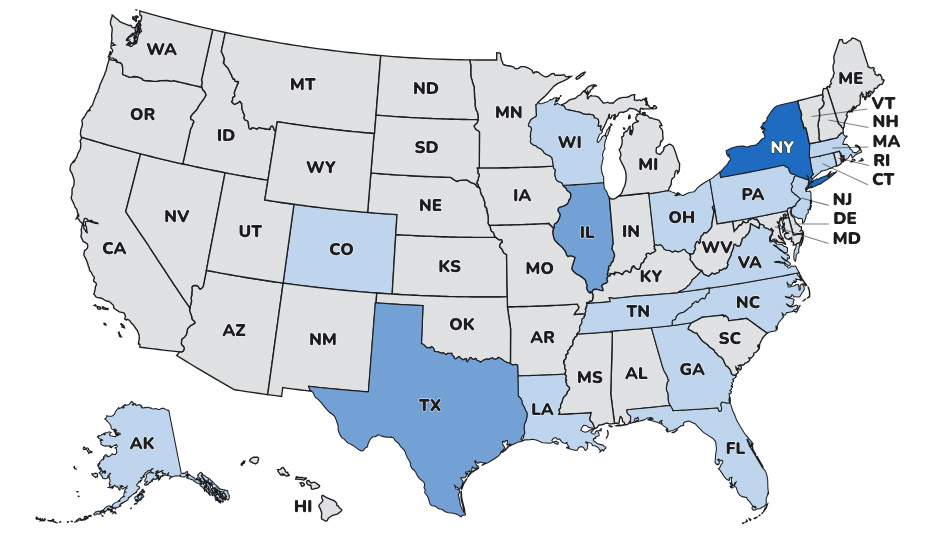
“Cyclosporiasis cases may not be limited to these states with known cases,” the CDC wrote. “The true number of people sick with cyclosporiasis was likely higher than the number reported. This is because some people recover without medical care and are not tested for Cyclospora.”
Michigan is tracking many more cases than the CDC has reported
Case in point: The Michigan Department of Health and Human Services (MDHHS) and Michigan Department of Agriculture and Rural Development has reported that they are actively investigating the potential source of the “large and growing outbreak” of cyclosporiasis cases confirmed in Monroe (70), Lenawee (33), Washtenaw (21), Wayne (12), Shiawassee (7), Jackson (7) and Livingston counties.
Additionally, 24 cases were reported by health officials in 11 other Michigan counties, including Detroit, according to Click on Detroit. “Michigan typically identifies 50 cases a year,” a spokesperson for MDHHS said.
People can become infected by consuming food or water that contains the parasite. The parasite infects the small intestine and usually causes watery diarrhea with frequent and sometimes explosive bowel movements.
The CDC reports that the time between becoming infected and becoming sick is usually about one week, but can range from two days to two weeks or more. It is not usually life-threatening; however, if not treated, the illness may last from a few days to over a month.