


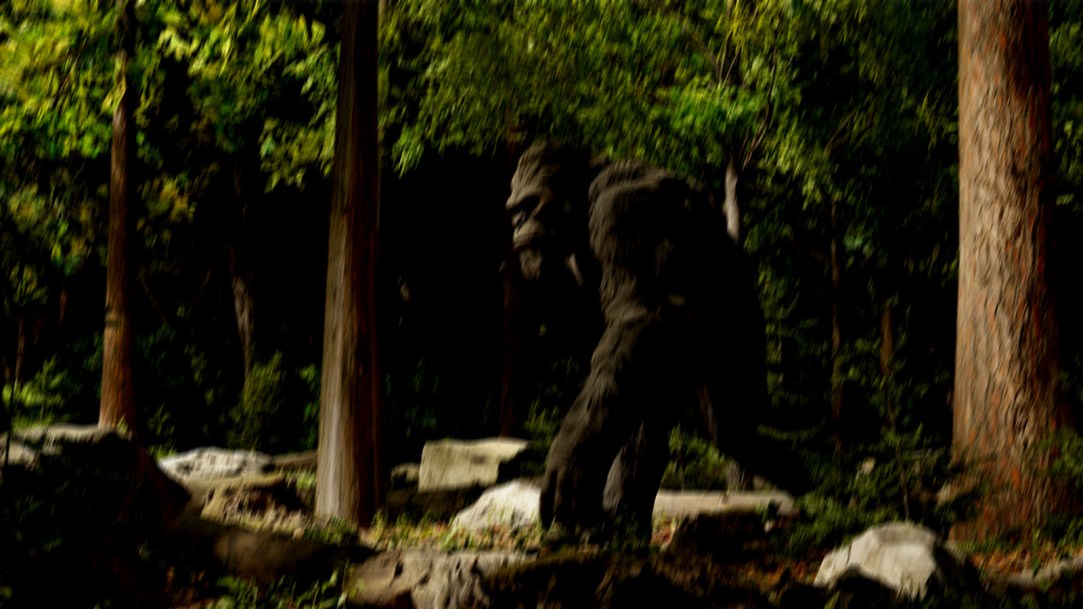
Have you ever wondered where Bigfoot might live? A new study attempts to answer this question by identifying the best places in North America to search for the mysterious creature. Some of the locations identified as potential Bigfoot habitats may surprise you, as they are far from the Pacific Northwest, where most reported Bigfoot sightings have occurred.
The in-depth study by the folks at Canada Sports Betting analyzed reported Bigfoot sightings, forest cover, state population and other climate-related factors to estimate the chances of a person encountering the creature in each of the 50 U.S. states and 13 Canadian provinces and territories. It also released a list comparing Bigfoot activity in metropolitan areas across the country, and the results were surprising.
The state of Washington has the highest chance of Bigfoot sightings in North America. The study calculated Sasquatch spotting scores for all locations in North America and found that Washington had a 4.61% score, with 9.17 reported sightings per 100,000 people. (Of note: Washington also topped a recent study listing the biggest hot spots for spotting UFOs in the U.S. and Canada.)
West Virginia ranked second to Washington, with a 3.79% probability of spotting the creature, followed by Oregon (3.38%), Idaho (2.78%), and Arkansas (2.48%).
Finishing off the top 10 were Montana (2.47%), Maine (2.33%), Yukon (2.28%), British Columbia (2.15%), and Alabama (2.09%).
Some surprises appear near the top of the rankings
Washington, the number one-ranked state for sightings, isn’t a shock to most Sasquatch enthusiasts. The state has extensive forests, and decades of reported encounters have led many to consider it Bigfoot’s home. Along with Oregon and Idaho, the Pacific Northwest did well in this new study.
West Virginia’s forest coverage also creates ideal conditions, ranking it the second-best state to search for the mythical creature. However, the study also produced some unexpected results.
Arkansas ranked fifth for Sasquatch sightings, with Montana and Maine just behind, not the usual places one might expect to have a Bigfoot sighting. Alabama rounded out the top 10 and also proved to be an unlikely habitat for the legendary creature.
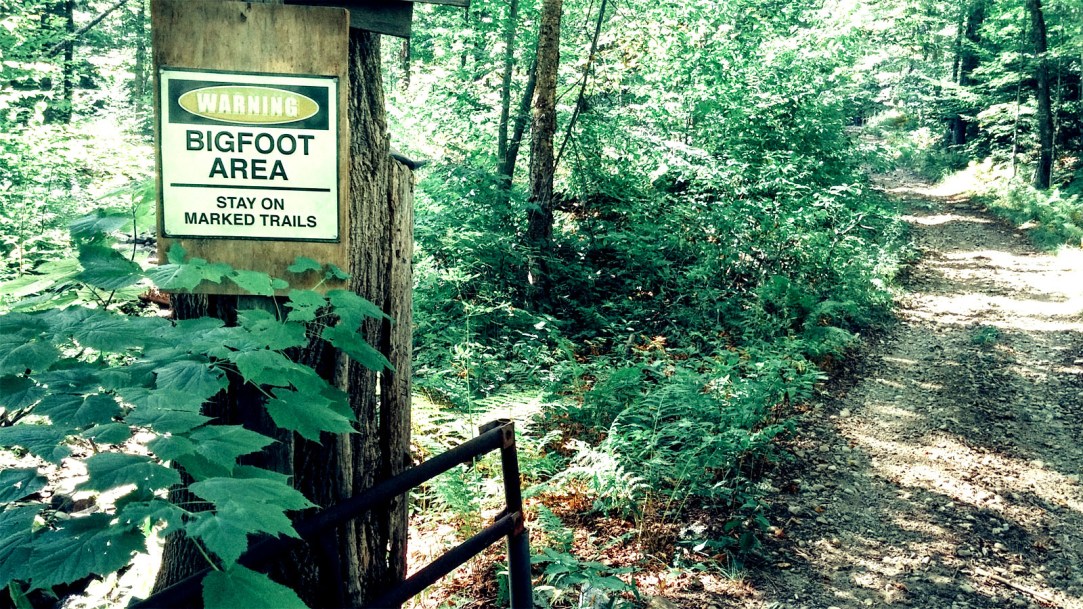
Bigfoot in the U.S.: The cities with the best chances of a sighting
Bigfoot is also found in many metropolitan cities across the U.S., and the researchers have compiled a list of the 10 top hotspots among America’s biggest cities.
According to Canada Sports Betting researchers, Grants Pass has 23.90 sightings per 100,000 residents. Using the provided Bigfoot-spotting percentages, Grants Pass has a spotting score of 1.96%.
Flagstaff, Arizona, ranks second with a score of 1.88%, followed by Glens Falls, New York, with a spotting score of 1.88%. Longview and Wenatchee, Washington, completed the top five.
Rounding out the top ten list of cities where you can supposedly best go in search of the creature were Redding, California; Walla Walla, Washington; Weirton and Huntington, West Virginia; and Pittsfield, Massachusetts.
Does the study prove Bigfoot exists?
While certainly interesting, these numbers do not provide a scientific probability of finding Bigfoot. The percentages are relative scores for reports, population, forest coverage and average temperatures for each location. Importantly, the statistics do not prove Bigfoot exists.

While the creature has been given at least 58 different names, including Bigfoot, Sasquatch, Yeti, Yowie, Skunk Ape, Grassman, Momo, Orang Pendek, Ebu gogo, Monkey Man, and Wendigo, there is no scientifically verified evidence proves it actually exists.
However, despite there being no scientific evidence that proves the creature exists, the study gives those intrigued by the legend some of the best places to start searching for the creature. So, if it does exist and roams the forests of North America, it’s most likely to be found in Washington.