



EA Sports
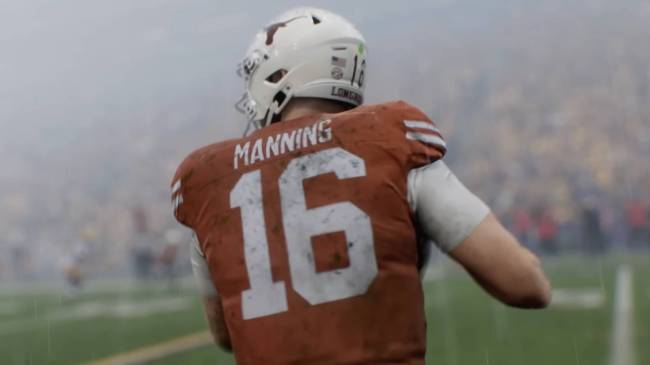
Arch Manning in College Football 27
It’s been two years since EA Sports brought its college football franchise back from the dead while largely living up to the hype surrounding its resurrection. However, fans are not thrilled with a major change to its approach to microtransactions that’s being introduced in College Football 27.
EA Sports released its first college football video game all the way back in 1993, and the NCAA Football franchise had a massive legion of devoted fans before the publisher pulled the plug in the wake of a lawsuit that determined it had illegally harnessed the name, image, and likeness of college athletes.
NCAA Football 14 (which came out in 2013) was the last game released before the moratorium began, but in 2021, another legal ruling opened the door for its return after the Supreme Court ushered in the NIL Era. Later that year, EA Sports confirmed it was working to bring the franchise back, and in 2024, the 11-year drought came to an end with the release of College Football 25.
The title was not only the best-selling video game of the year but became the best-selling sports video game ever released, and fans were clamoring to play it to the point where the publisher made a killing thanks to people who paid extra to get access three days before it was officially released.
EA is fairly infamous for the microtransactions it relies on to boost its profits, and while they were largely avoidable in the first two editions of College Football, many fans are furious to learn that is not the case with the third.
EA Sports is facing backlash for injecting microtransactions into Dynasty and Road to Glory mode in College Football 27
College Football 25 gave players the opportunity to spend real money on virtual items via its Ultimate Team mode, but microtransactions were essentially avoidable if you decided to build a program in Dynasty mode or develop a player in Road to Glory.
That remained the case with College Football 26, which didn’t really do much to improve on its predecessor despite the upgrades EA Sports teased ahead of its release. Based on the initial reviews, the gameplay and presentation in College Football 27 (which will officially release on July 9th) has taken a big leap, but every single one I’ve come across focuses on a glaring concern: the arrival of microtransactions in offline modes.
Reviewers and people who’ve paid for early access to the game have highlighted the new options that popped up while playing Dynasty and Road To Glory, as there is now an opportunity to use “College Football Points” to speed up the progression of your attributes as a coach and a player (500 of them will run you $4.99, but there are bigger discounts if you buy them in larger quantiies).
i don’t like being blindsided by micro transactions and removing features hidden behind all the new shiny stuff
i like the game a lot. the devs did a great job. whoever made the micro transaction decision did not #CFBPlayDontPay pic.twitter.com/LVaS5wOW1m
— Bordeaux (@bordeauxyoutube) July 7, 2026
CFB27 is so fire but then I see this BS & it makes me sick😭🤮 pic.twitter.com/SnxWoLQHgr
— Gmanski (@gmanskiyoutube) July 7, 2026
That progression was previously and exclusively linked to skills points based on your performance, but that is no longer the case.
The leveling system has also seemingly been overhauled to limit how quickly you can improve, as one player asserted you’d need to make the College Football Playoff 150 seasons in a row to max out your coaching stats in a Dynasty (full disclosure: I have not had the chance to play the game yet, so I can’t verify the veracity of that claim).
EA has completely missed the mark with the Coach XP system in College Football 27 Dynasty.
To reach Level 100, you need approximately 2.5 million XP.
A full National Championship run earns just:
3,750 XP
+12,500 XP with the CEO ability
= 16,250 XP total
That means you’d need…— Saturday Studios (@SatStudiosGG) July 7, 2026
James Bordeaux, the College Football streamer whose tweet I included above, is leading a charge to push back against the change while championing the #CFBPlayDontPay and pledged to reject any sponsorship offers from EA Sports if the microtransactions aren’t rolled back.
It seems safe to assume the backlash will grow once the general public has the chance to play College Football 27 for the first time on Thursday, but we’ll have to wait and see how the powers that be decide to handle it.
UPDATE: EA Sports responded to some of the complaints in a message shared on Tuesday
EA has responded, but sounds like they’re gonna stand firm for now and double down on the changes with micro transactions
They’re also using creators to push their messaging without making a statement themselves or addressing anything
“the core coach level progression is… pic.twitter.com/YzE9StagHp
— Bordeaux (@bordeauxyoutube) July 8, 2026