



iStockphoto
Human remains were found under The Citadel football stadium.
Construction workers in Charleston, South Carolina unearthed an unexpected discovery while installing a drain field on the visitors’ side of Johnson Hagood Stadium, home of the Citadel Bulldogs football team.
Human remains were uncovered from around 50 gravesites. Whose are they?
While the headline may seem shocking, it’s not necessarily a surprise. The stadium was built on top of burial grounds in 1927. This is not the first instance in which gravesites have been found.
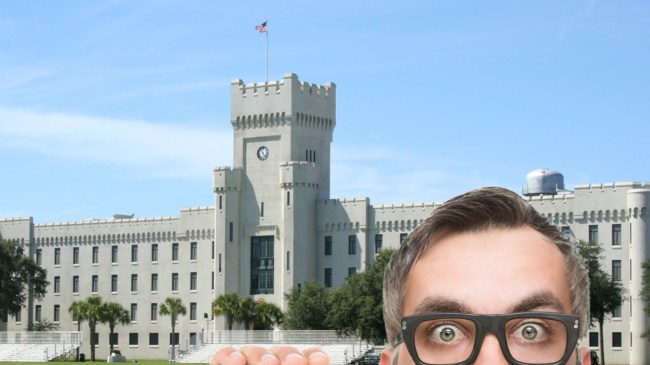
Citadel football stadium sits on top of a graveyard.
The school bought the stadium in the 1960s. Years before, the city built the venue atop Tower Hill Cemetery.
In 2004, Johnson Hagood Stadium was renovated. More than 10,000 seats were installed on the west side, as were luxury suites and a press box.
That year, 300 gravesites were discovered. It was then that the miliary college put in place a plan to “exhume and reinter the remains nearby on the south side of the stadium.”
A few years earlier, crewmen from the H.L. Hunley submarine were discovered underneath the stadium.
Fast forward two decades, and more improvements are on the way. More remains have also been unearthed.
Last year, the school introduced a plan to build permanent stands where temporary bleachers currently reside. The project will double capacity on the east side. Bathrooms will also be added. It should only add to the fan experience during football season.
Having grown up in the area, I can say that The Citadel’s football stadium is a cool spot. I’ve seen it firsthand on multiple occasions. It’s positioned on the Charleston peninsula a short walk from the school barracks.
The venue offers views of campus, the downtown skyline, neighboring communities, and nearby waterways. While picturesque in many ways, the graveyard uncovering also provides a layer of creepiness.
Whose remains are under the stadium?
The Post and Courier wrote more on the most recent discovery. It provided insights as to who the remains belong to.
The dead within these boundaries include a variety of groups from Charleston’s history, including enslaved Blacks, Irish immigrants, asylum residents, Confederate soldiers and sailors, mariners and infants.
For now, construction has been halted.
“All the operations stopped and were handed over to the archaeologist,” said Zach Kight, the site superintendent for Hill Construction, after finding the gravesite. “Our main goal is relocating these people in the most respectful way possible and getting them into a place where they can rest permanently.”
Once the relocation is complete, the project should resume.